
There's been a lot of discussion recently about context graphs as AI's next trillion-dollar opportunity. The core idea: enterprises need a new layer that captures decision traces — not just what happened, but why decisions were made and what precedents guided them.
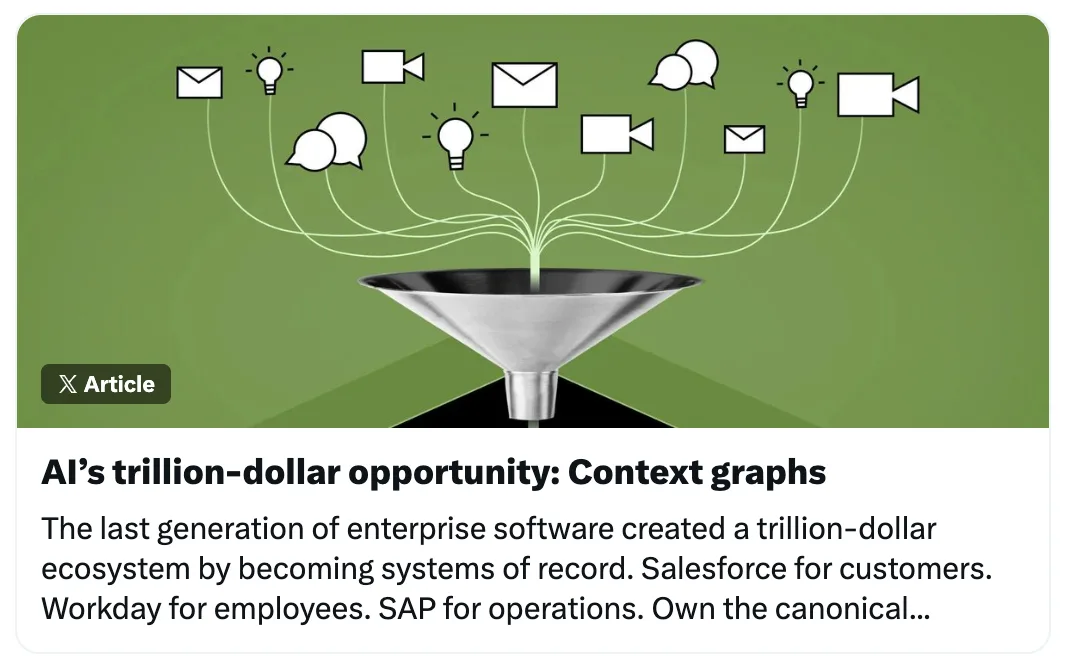
Traditional systems of record (CRMs, ERPs) capture outcomes: "20% discount approved." Context graphs capture the reasoning: the service incidents that triggered the exception, the precedent from last quarter's similar deal, the approval chain.
This matters. But it's focused on the wrong data source.
Our belief: The most valuable context graphs aren't built from internal decision traces. They're built from conversational intelligence.
Why systems of record are dying
Systems of record were built for a world where data entry was manual and structured data was king. But they capture obituaries, not living intelligence.
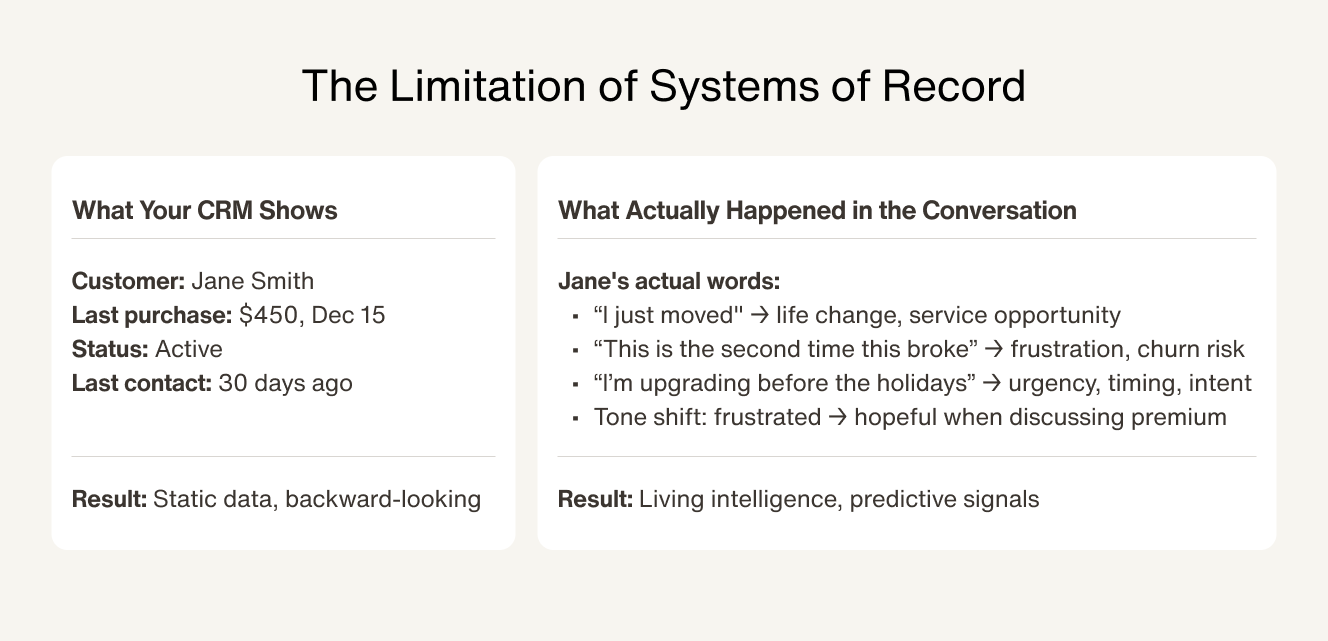
The CRM captured none of this. It will eventually show "upgraded to premium tier" weeks later, but by then the intelligence that mattered — the why, the emotional context, the intervention timing — is gone forever.
Another example: Your support ticket shows "Issue resolved, escalated to Tier 3."
What it doesn't show:
- Customer had three previous incidents in PagerDuty
- Account team flagged churn risk in Slack two weeks ago
- Customer is healthcare company with brutal procurement cycles (precedent: we always give 10% extra)
- VP approved exception based on ARR and relationship history
All that context — the reasoning that actually drove the decision — lives in Slack threads, people's heads, and deal desk conversations. The system of record captured the outcome but lost the intelligence.
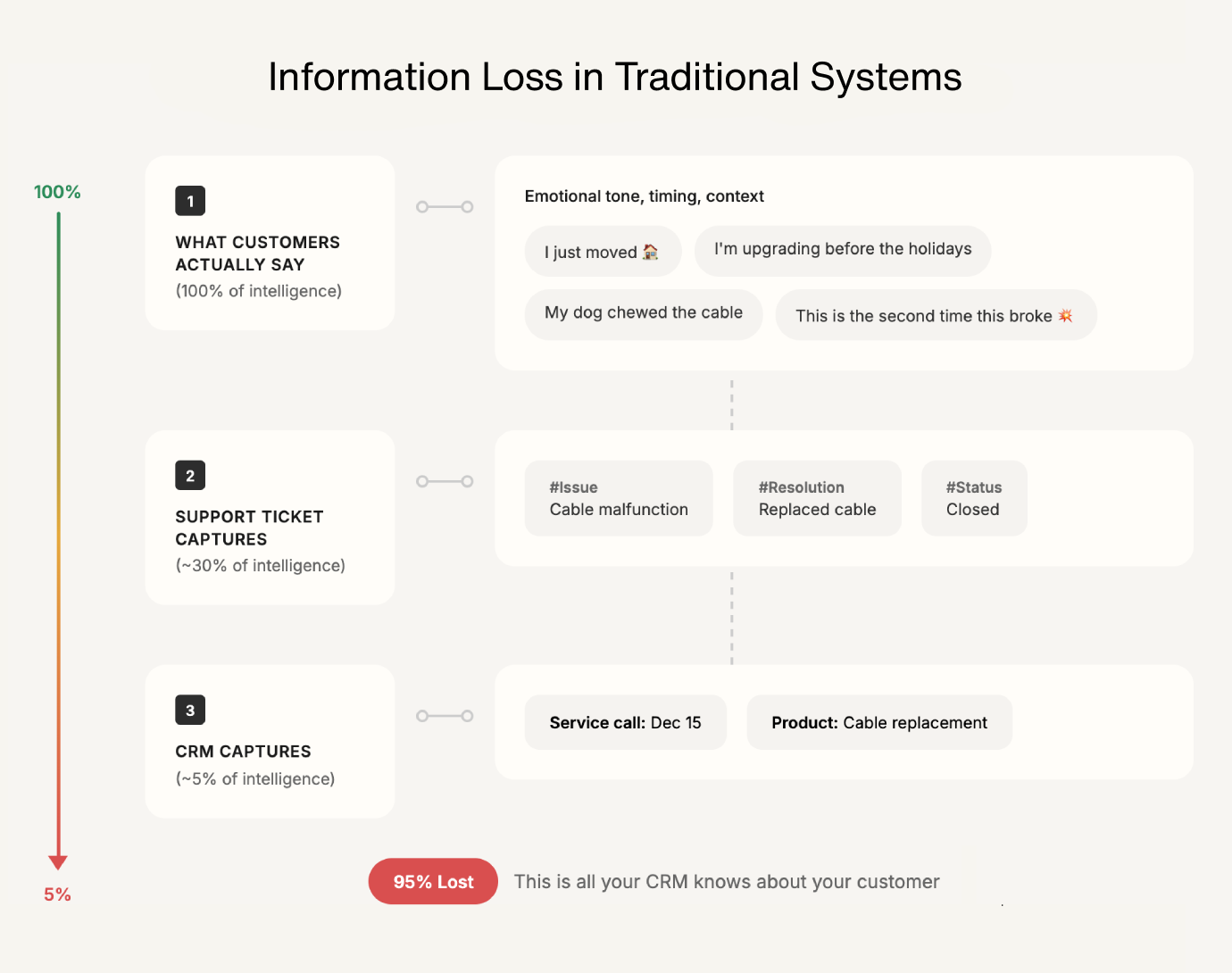
This is why systems of record aren't just insufficient — they're fundamentally the wrong architecture for the AI era. They were designed to document what happened, not to capture the living intelligence that predicts what's coming next.
The shift to conversational intelligence
Every customer interaction reveals signals that never make it into traditional systems:
- "This is the second time this broke" (frustration + repeat issue)
- "I just moved" (life change opportunity)
- "I'm upgrading before the holidays" (urgency + intent)
- "My dog chewed through the cable again" (repeat external cause, different response needed)
These aren't edge cases. This is the primary intelligence in your business. And it's all being lost because systems of record weren't designed to capture it.
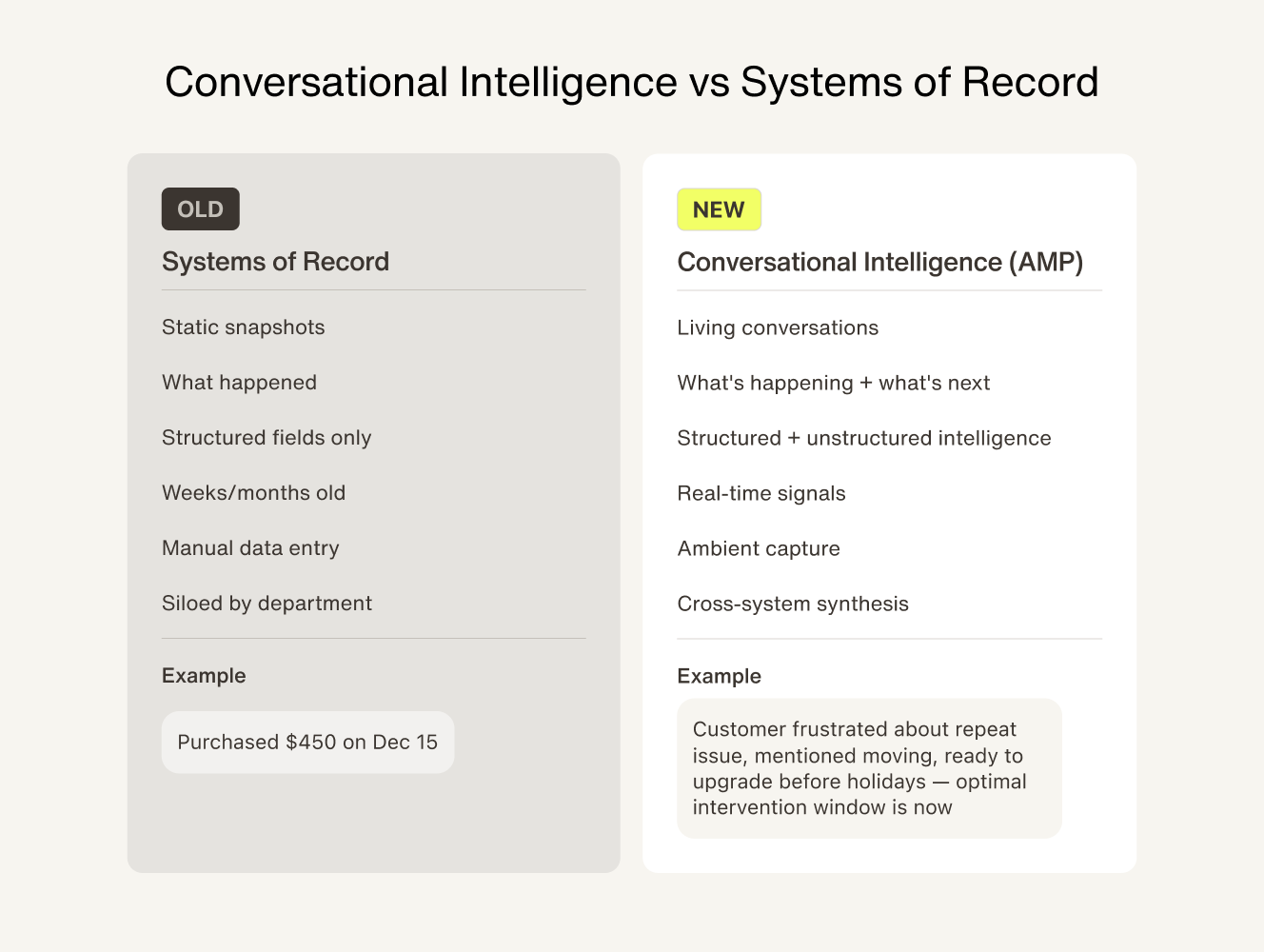
This is why we built AMP (Agent Memory Platform)
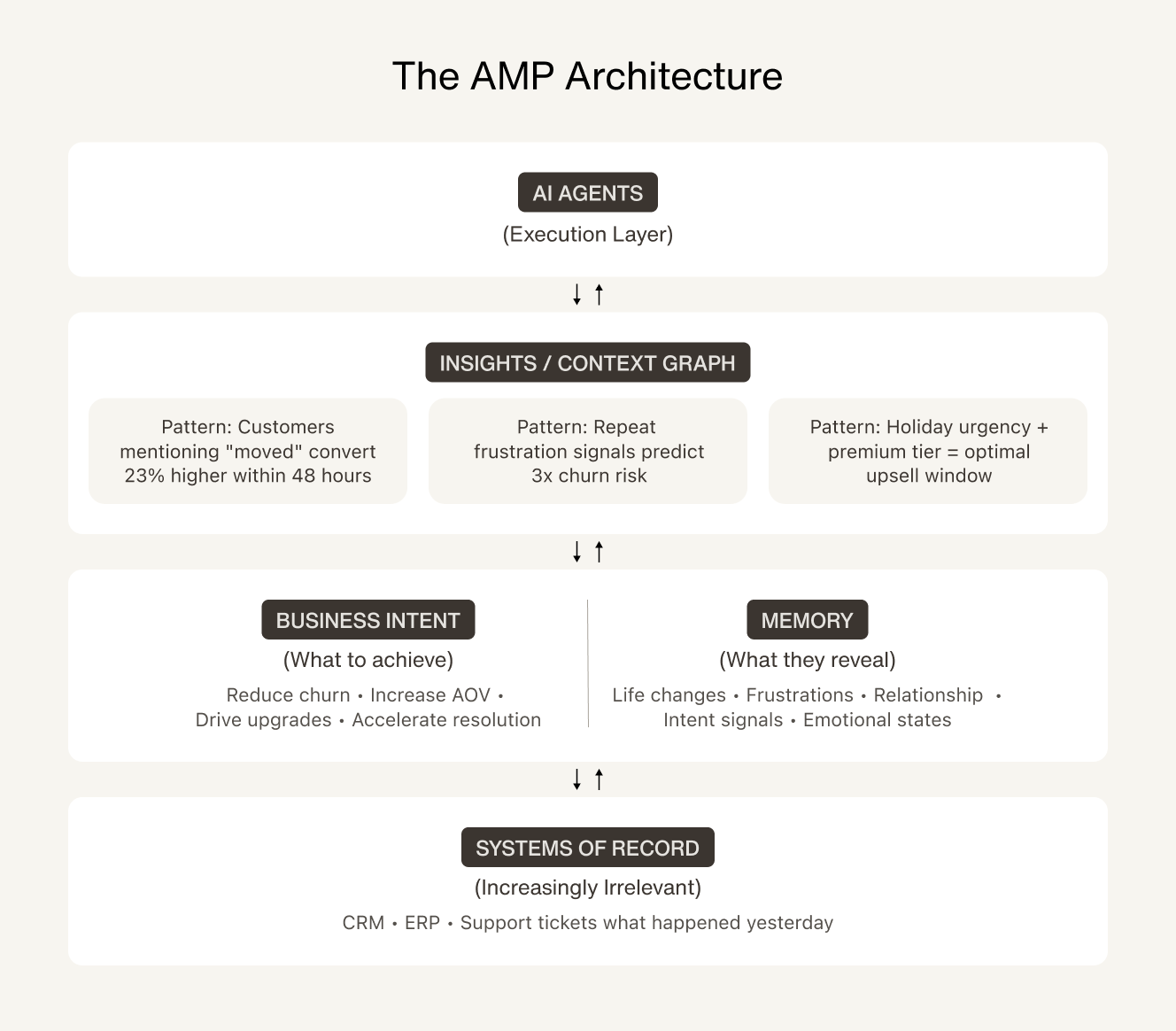
Agent Memory Platform (AMP) has three components that work together:
1. Memory — Conversational intelligence that captures what each customer reveals
Every interaction builds a living, evolving understanding of each customer. Not just purchase history, but the context: life changes, frustration patterns, emotional signals, intent. Memory captures what systems of record miss — the unstructured intelligence that actually matters.
2. Business Intent — Goals that give AI agents authority to act
Reduce churn. Increase AOV. Drive upgrades. Accelerate resolution. Business Intent connects what we know about customers to what we're trying to achieve. It's the compass that turns understanding into action.
3. Insights (Context Graph) — Patterns that emerge across millions of conversations
When you analyze conversational intelligence at scale, patterns emerge:
- Customers mentioning "moved" convert 23% higher when contacted within 48 hours
- Repeat frustration language predicts 3x churn risk
- Holiday urgency signals + premium tier = optimal upsell window
- Healthcare mentions of "procurement delays" signal 15% higher AOV potential with 10% discount
Why this matters
Context graphs built from internal operations tell you how your business makes decisions. Context graphs built from conversational intelligence tell you how your customers behave — what they need before they ask, which patterns predict outcomes, when to intervene.
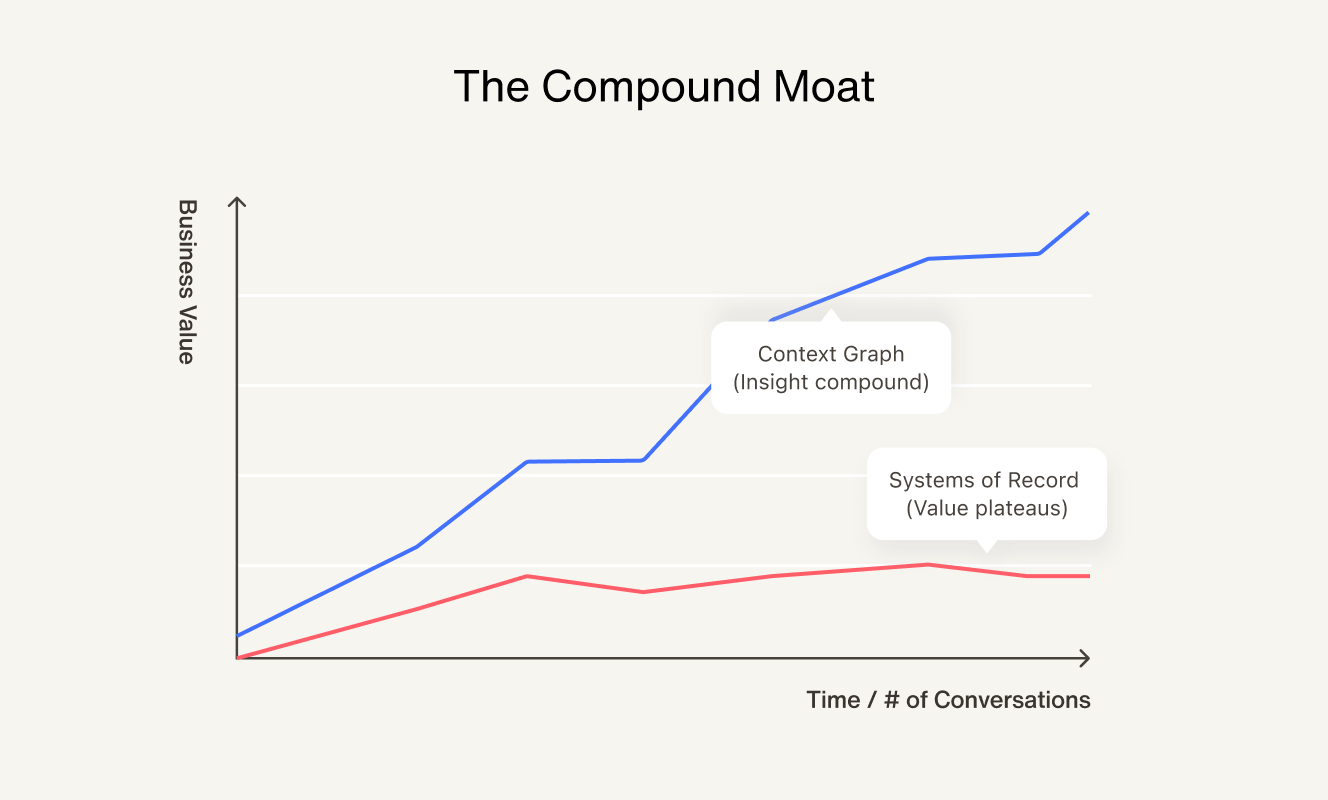
Your competitors can reverse-engineer your pricing. They can see your deal structures in your contracts. They can hire away your salespeople who know your processes.
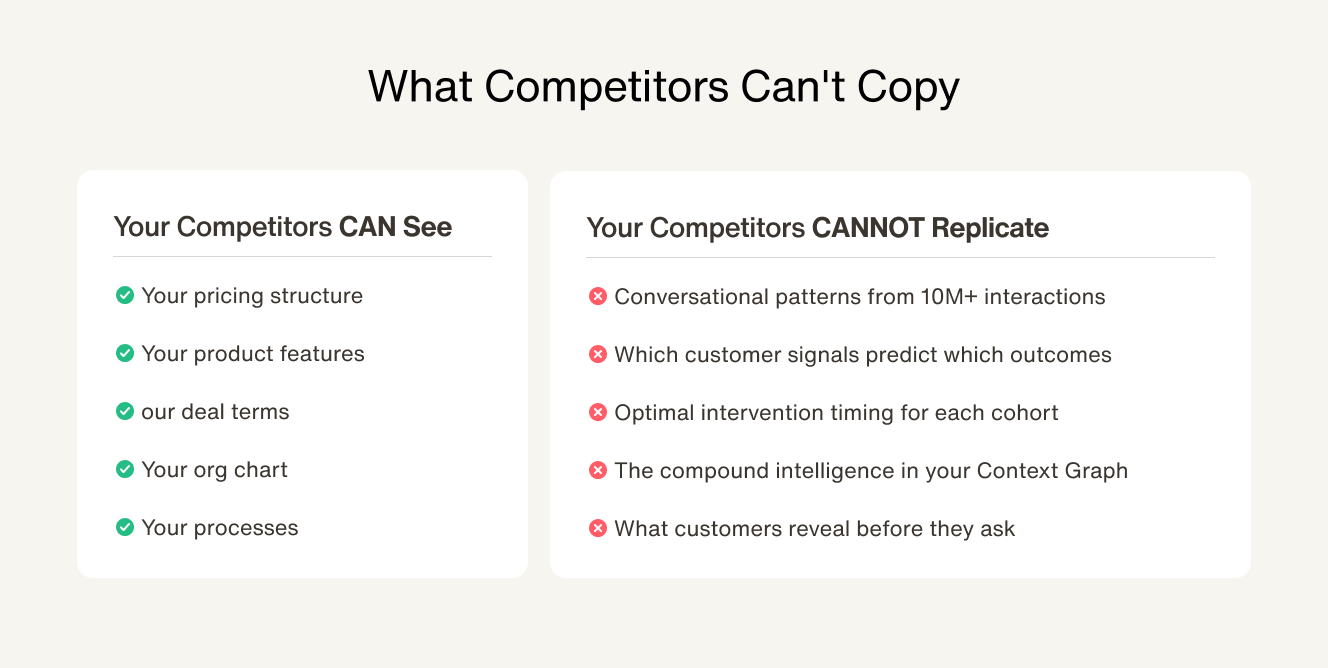
They can't replicate what you've learned from 10 million customer conversations.
The conversation isn't just data. It's where the most valuable context graph begins.
The companies that win will be the ones who understand that every conversation is a signal, and the patterns across those signals become the competitive moat that compounds over time.
Systems of record told you what happened yesterday. AMP tells you what's happening right now and what to do about it — because customers tell you what's changing in their lives before it shows up anywhere else.