

I keep having the same conversation with CX leaders.
They've deployed AI agents. The agents are handling thousands of conversations. And yet, when I look at their dashboards, I see the same old metrics: average handle time, deflection rates, CSAT scores.
It's like flying a jet with a propeller plane's instruments.
These metrics worked great when support was constrained by human capacity. But AI agents don't get tired. They don't work shifts. They cost the same whether a conversation takes 30 seconds or 5 minutes.
The challenge isn't that teams are doing bad work. It's that they're measuring AI performance with metrics that don't capture what AI does best.
The metrics we’ve relied on for decades are broken
First response time becomes meaningless when every message gets an instant reply. Ticket volume stops being a useful signal when the system handles unlimited conversations simultaneously. Agent utilization doesn't matter when humans only handle edge cases.
The metrics we've relied on for decades are fading. And new ones are taking their place.
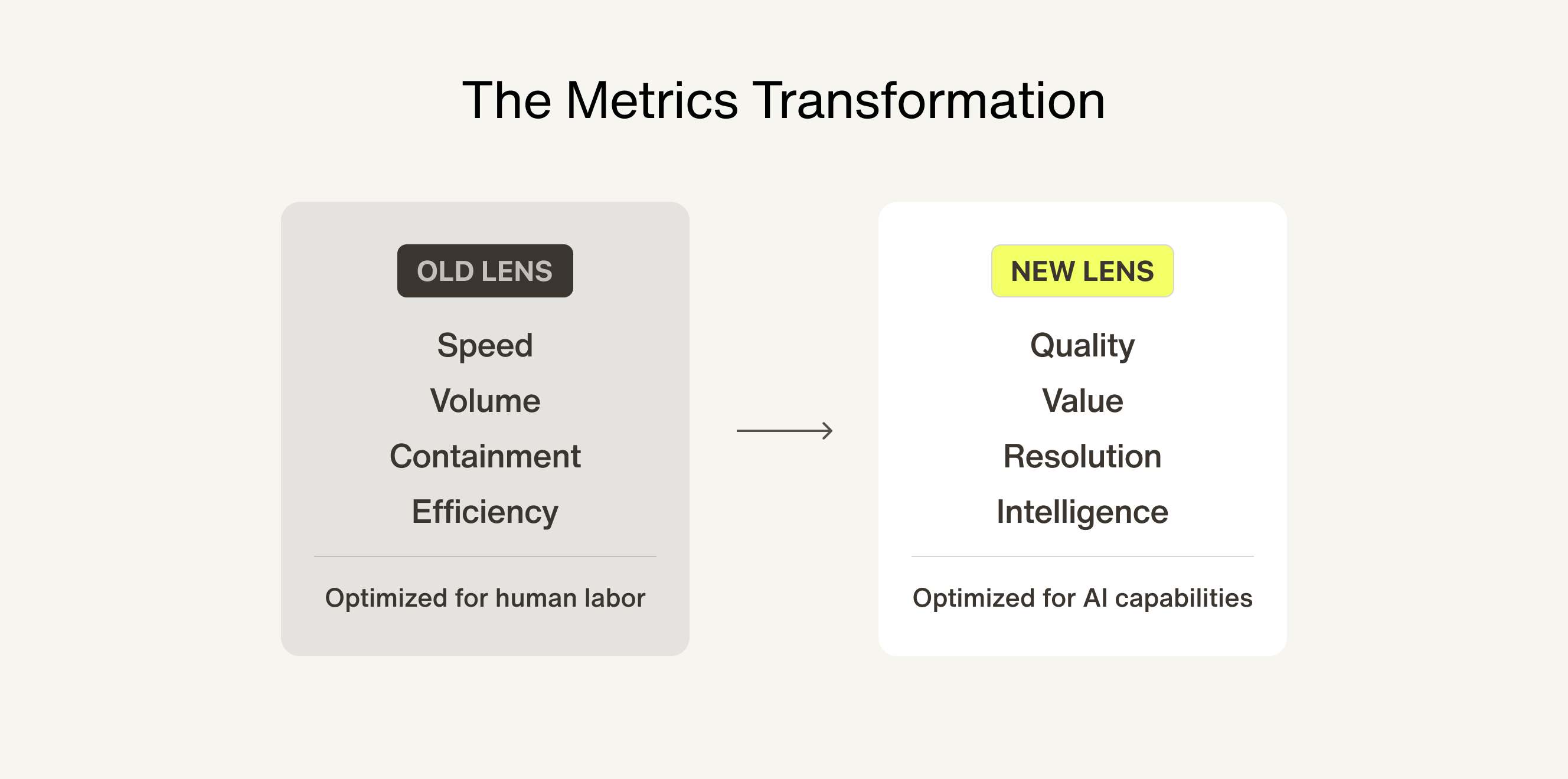
This isn't a minor adjustment. It's a complete reorientation of what success means. We're moving from measuring activity to measuring outcomes. From tracking speed to tracking value. From counting tickets closed to understanding problems solved.
Here's what that looks like.
Stop celebrating your deflection rate. Your customers aren’t.
Take deflection rate, the metric that's been the holy grail for chatbot teams. Did the bot prevent a ticket from reaching a human? If yes, success. If no, failure.
I've seen what actually happens with deflection-focused systems. A customer reports their account login isn't working. The system sends password reset instructions, and marks the conversation as resolved. Zero escalations. The dashboard looks great.
The customer? Still locked out because the real issue was their account was suspended for non-payment. They'll try again tomorrow, or switch to a competitor.
Compare that to a resolution-focused system. The AI checks account status first, identifies the suspension, explains the situation clearly, and offers payment options to restore access immediately.
Both conversations get marked as "contained" in traditional metrics. Only one actually solved anything.
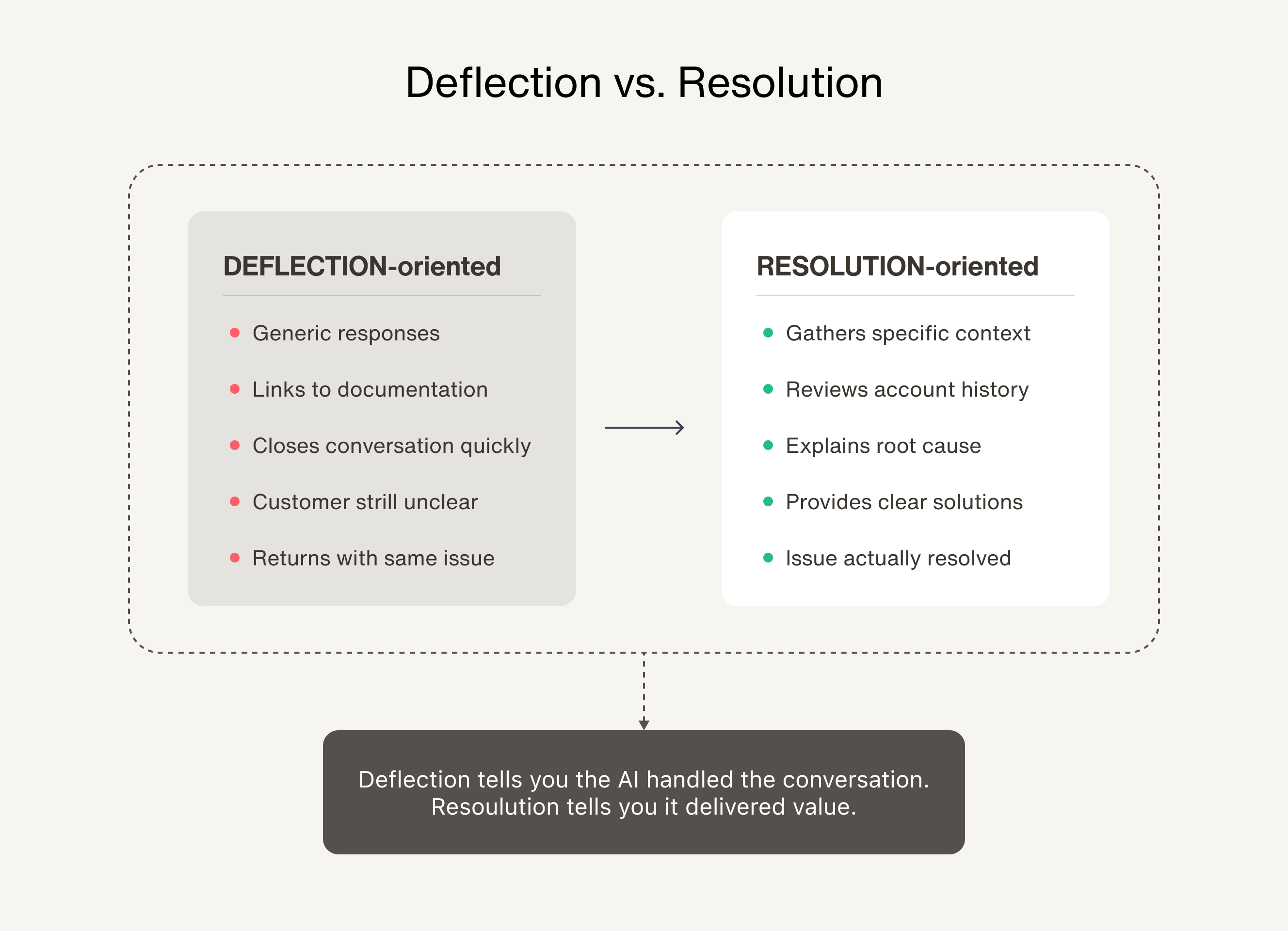
Resolution rewards AI for doing what it does best. Taking time to gather context. Asking clarifying questions. Connecting this conversation to the last three conversations with the same customer. Traditional support managers would see that as wasted time. With AI, it's where the real value happens.
The metric that matters? Resolution rate. Did the customer's problem actually get solved? Not ‘did we avoid escalation’ but ‘did we deliver value’.
CSAT is dead. Long live customer behavior.
CSAT was designed to measure human performance. You asked customers to rate their interaction because that feedback would affect coaching, training, or performance reviews. There was a social contract.
With AI, that contract breaks. Average response rates drop from 15% to 5%. The scores that do come in reflect frustration with the situation, not the quality of support.
But with AI you can measure customer experience across 100% of conversations, not just the 5% who respond.
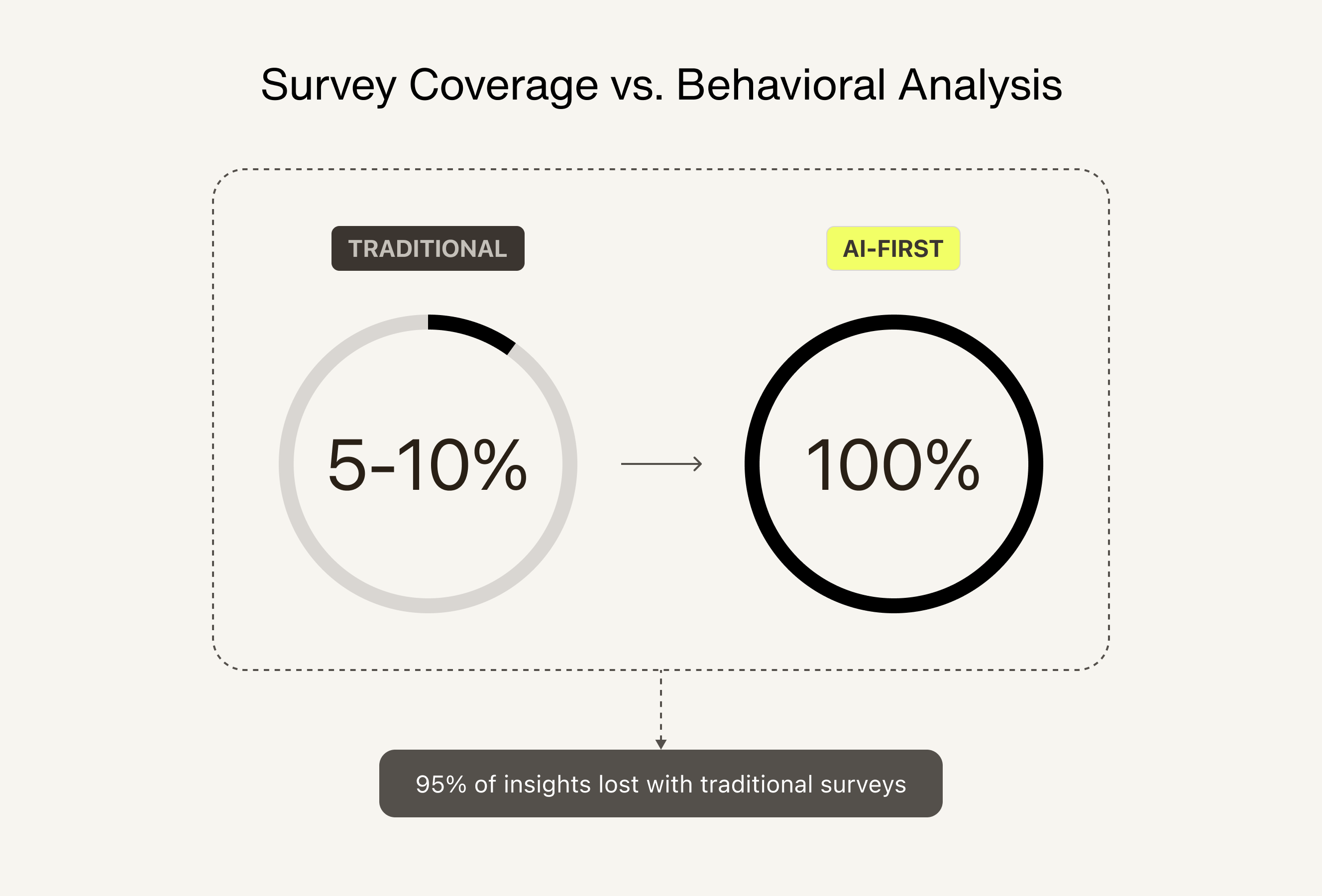
Instead of asking customers how they felt, you can observe how they actually behaved. Did sentiment improve through the conversation? How often do customers rephrase questions because they didn't get clear answers? What's the follow-up rate on the same issue?
Every conversation should be analyzed for sentiment, resolution quality, and customer effort. You're measuring outcomes across complete coverage, not guessing from a 10% sample.
Why a support ticket spike is the best news you could get
In traditional support, high volume meant trouble. Lots of tickets means lots of problems. The shift with AI flips that logic.
High volume often means customers trust the channel. They're coming back not just to fix issues, but to ask questions, explore features, understand their account better. Every one of those interactions makes the AI smarter. It learns patterns. It builds context about each customer. It gets better at predicting what someone needs before they even finish asking.
Low volume? That can actually be the warning sign. Maybe customers tried the AI once, got a bad experience, and decided it wasn't worth using again.
Volume isn't the problem or the solution anymore. What matters is whether those interactions create value.
The new scorecard for AI-first support
When teams ask me what metrics actually matter, I point them to four things.
- Customer Understanding: Does the AI gather the right information and use it correctly over time?
- Continuity: Does the experience stay coherent as customers move between channels?
- Outcome Quality: Do customers leave informed, confident, and less likely to return?
- Long-Term Value: Does the experience reduce friction and build trust over time?
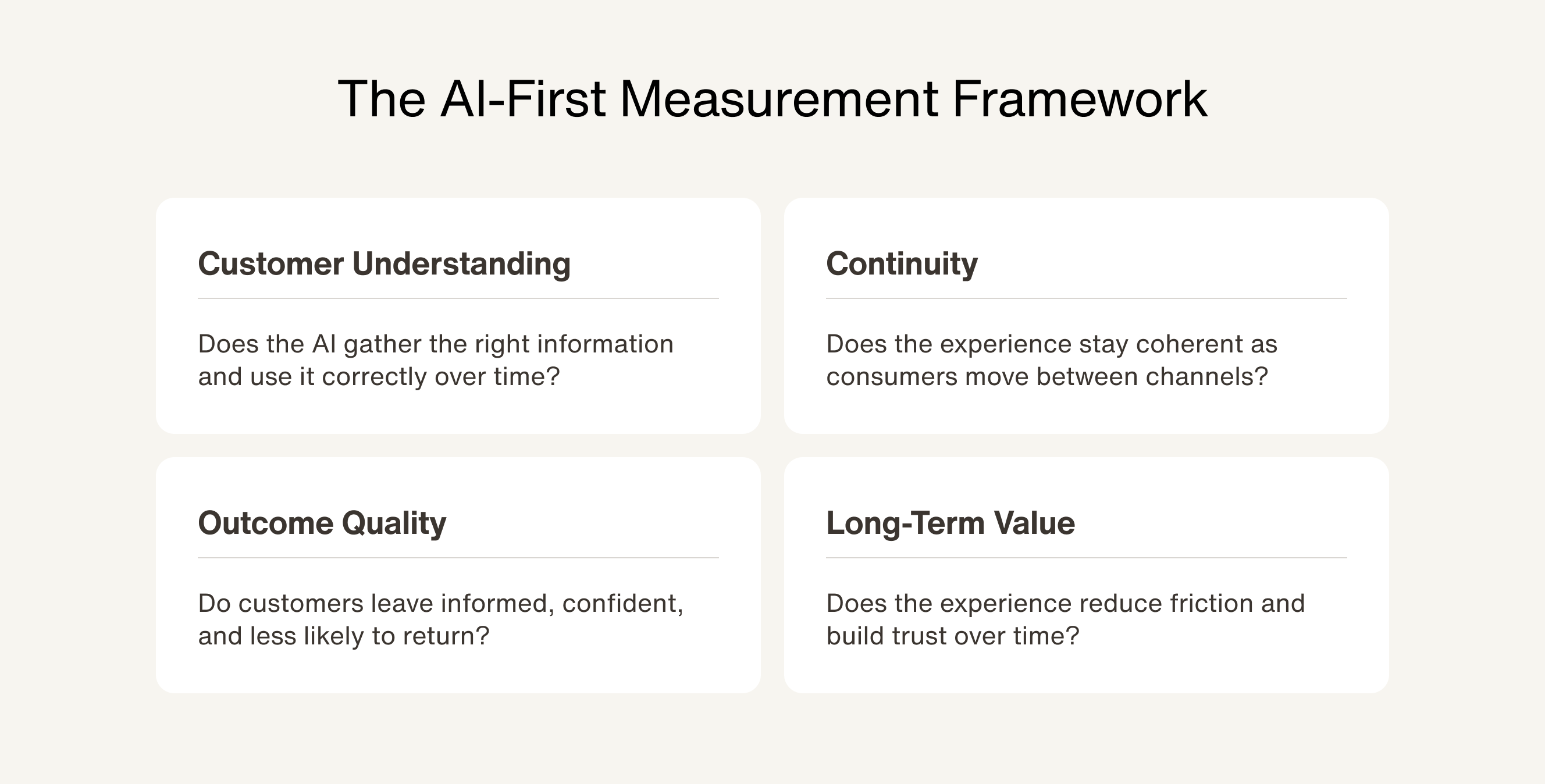
These aren't metrics you can pull from a traditional dashboard. But they're what actually predicts whether your AI support becomes a strategic advantage or just another channel to manage. Delight.ai makes these metrics visible—conversation quality, customer understanding, and resolution depth become measurable, not aspirational.
The teams that win aren't optimizing for today's dashboard. They're building measurement systems that will matter when AI handling 80-90% of interactions is standard across the industry.
The window is closing
Your competitors can copy your vendor, your prompts, your processes. What they can't copy is the learning.
After 10 million conversations, your AI knows things theirs doesn't. When to reach out. What language resonates. Which patterns predict churn. The intelligence compounds with every interaction—if you're measuring it. That's what we built delight.ai to do.
Customer experience has entered a new era. The metrics that got you here won't get you to the next step. The question isn't whether to change how you measure success. It's whether you will change fast enough to stay ahead.