

I've watched dozens of companies deploy AI agents. The pattern is always the same: impressive demo, confident launch, then a slow decline until customers start complaining. The AI knows everything, but it understands nothing.
Remember that school exercise where you had to write instructions for making a peanut butter and jelly sandwich? Then someone else followed your instructions literally. Word for word. The results were predictably chaotic. People were ripping open bags of Wonder Bread or spreading way too much jelly on the plate instead of the bread. Why? Because the instructions weren't explicit enough.
AI agents work the same way in that they follow instructions literally. They have access to every knowledge base article, policy document, or product specification and can retrieve information in milliseconds. But they don't know how to use that information the way your best human agents do. They don't have the institutional knowledge of the edge cases and unwritten rules that live in your team's collective memory. The knowledge shared by the watercooler that nobody ever wrote down.
The most successful AI deployments treat their agents like new hires, not new software. And just like new hires, AI agents need active management.
The set-it-and-forget-it trap
We've all seen the headlines about companies that went all-in on AI, dramatically reduced headcount, and initially touted impressive automation rates. Then things started breaking, customer satisfaction dropped and social media filled with screenshots of obnoxious AI interactions. The AI that was supposed to save millions is now a PR liability.
Take Klarna as the most public example. After vocally laying off their support team and replacing them with AI, they've faced ongoing challenges with AI accuracy and customer experience. The problem wasn't the technology, but rather the assumption that AI agents could operate without dedicated oversight, training, and continuous improvement.
Compare that to companies like Norse Atlantic Airways. They're not treating AI as a cost-cutting exercise. They see it as a fundamental shift in how customer experience operates. One that requires new roles, skills, and operational rhythms.
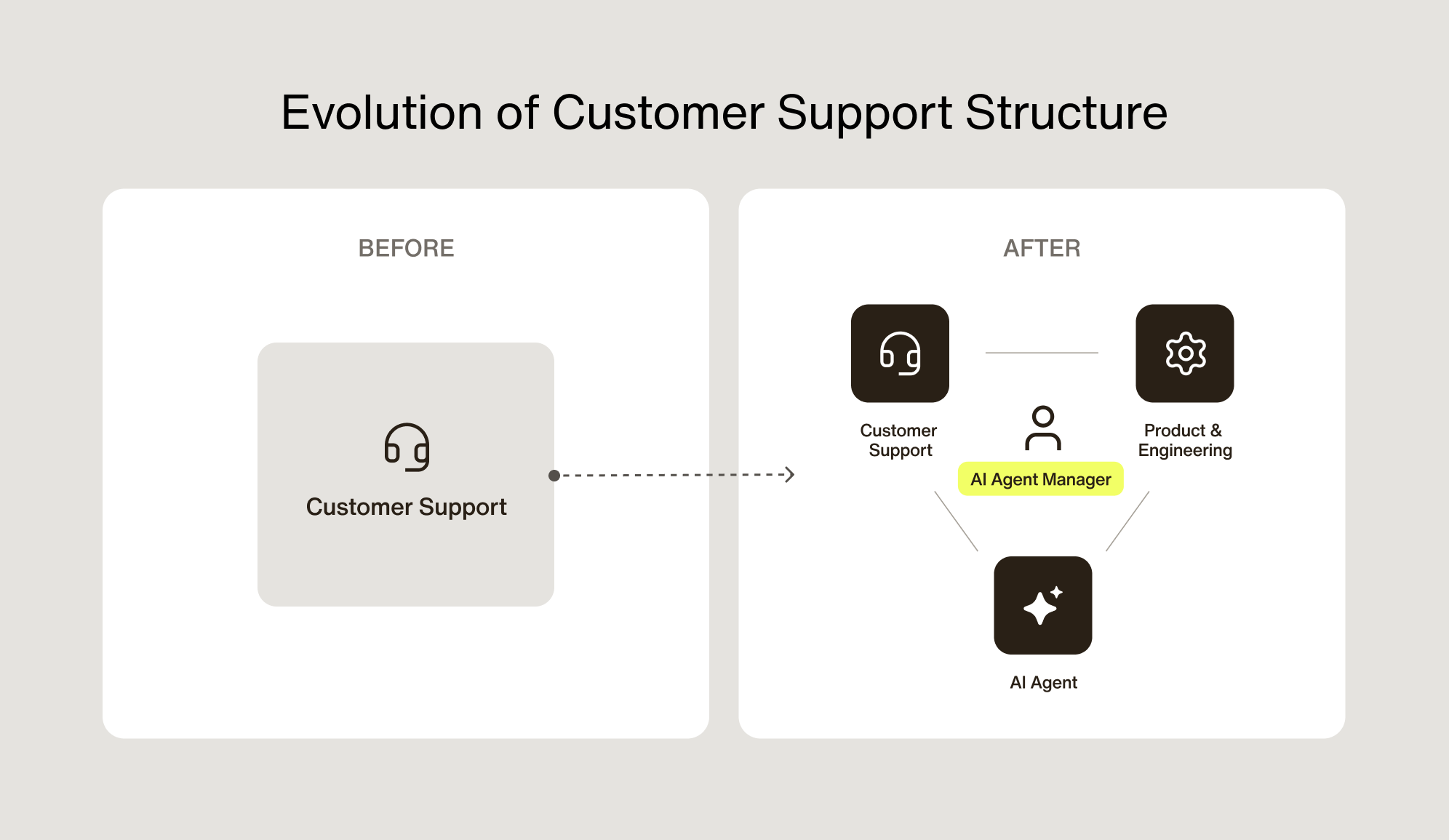
What changes when you manage AI like a team member
When you hire a human agent, you don't just hand them the knowledge base and say "good luck." You train them, give them feedback, and help them understand what "good" looks like. You coach them through difficult situations and update them when policies change.
AI agents need exactly the same things, it just needs to be delivered differently.
The problem is most companies treat AI like software, not like staff. They deploy it, watch the dashboards, and assume it's working. Content updates happen quarterly at best or someone refreshes the knowledge base when they remember. Maybe the prompts get adjusted when customers complain loudly enough.
But just like a human agent, AI needs continuous management. When products launch or policies change they require immediate knowledge updates. Edge cases surface patterns that should inform training. This isn't quarterly maintenance work, it's a daily operation.
This is where AI initiatives stall or fail outright.
Without active AI management, performance drift goes undetected. Resolution rates drop 3-5 percentage points over two months, but no one notices until customers complain.
After your product team launches a new feature and marketing announces it, customers start asking about it. But your AI has no idea it exists and for three weeks, it tells customers "we don't offer that" while your sales team is actively selling it.
Edge cases that your AI can’t handle pile up, so they go to your human agents. But those agents have no visibility into the patterns so they don't know that 40% of escalations this week are about the same confusing checkout flow. They just know they're overwhelmed and the AI "isn't helping."
And the institutional knowledge your team spent years building? The shortcuts, the judgment calls, the "we handle this situation differently" wisdom? It lives in people's heads and Slack messages that your AI will never learn. Unless someone makes teaching it their job.
What the AI manager role actually looks like
This is a new job function which means there will be trial and error. What looks like success today might need adjustment in three months. That's not failure, that's just the reality of managing rapidly evolving technology in a live customer environment.
The AI manager sits at the intersection of technical capability and customer service expertise.
On the technical side, they need to understand basic prompt engineering to refine AI behavior. They should be able to interpret performance data and spot patterns to know when issues stem from knowledge gaps versus integration problems versus model limitations. And they need to be able to translate business requirements into AI capabilities.
On the CS side, they need to recognize where empathy and judgment calls matter most. They should be able to structure conversations that feel helpful and write content that’s both AI-readable and human-friendly, not robotic. They need to know what constitutes quality resolution versus just deflection.
Notice what's missing from that list. A PhD in machine learning, advanced coding skills, or data science expertise.
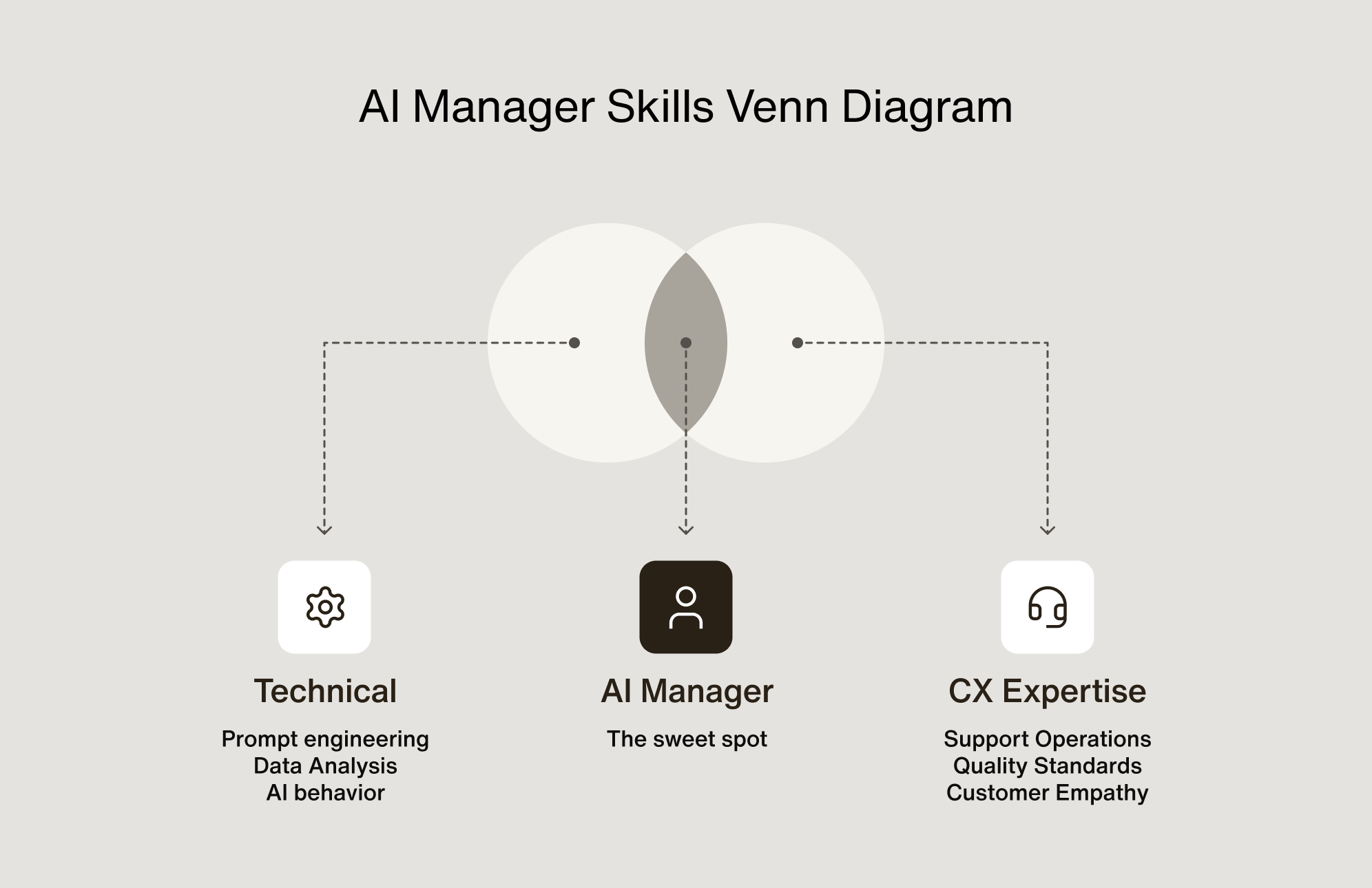
This isn't just a technical role with CS flavoring or a CS role with technical fluency.
The best candidates often come from product teams focused on customer experience, senior support roles, or CS operations. They understand how support actually works and what good CX looks like. The technical components can be taught with training and practice.
How to make this real in your organization
If you're serious about AI success, start by auditing who could transition into this role.
You want someone who understands your customer experience deeply and has the credibility to coordinate across CS, Product, and Engineering. They should be able to spot patterns, think systematically, and be comfortable with iteration.
Maybe it’s someone from CS operations who needs to learn prompt engineering or someone from Product who could better understand the reality of frontline support. Or maybe it’s a whole new team that blends both perspectives.
Whatever path you choose, give them real authority to update AI knowledge and behavior, prioritize improvement initiatives, and coordinate changes across teams. The AI manager can't be effective if they're constantly seeking permission on what the AI should and shouldn’t handle.
Plan for trial and error. This is new territory and there will be mistakes made so give grace for any errors and focus on learning from them quickly.
Start documenting everything that was previously institutional knowledge. If it's not written down, your AI agent doesn't know it. Capture the informal wisdom your human agents carry like escalation thresholds, VIP handling procedures, seasonal policy adjustments, and regional variations. This documentation benefits both AI and human agent training.
The real stakes
Customer trust is hard to earn and easy to lose.
Bad AI is obvious. It gives wrong answers, ignores context, and makes customers feel like they're talking in circles. Once customers experience that, you're not just dealing with a support issue, you're dealing with a trust issue that impacts every future interaction.
Good AI, on the other hand, feels human-like. It remembers context, adapts to situations, and makes customers feel heard. That level of quality doesn't happen by accident, though, it happens through active management, continuous refinement, and someone who wakes up every day thinking about AI agent performance.
You can be successful with AI
This isn't something to be afraid of, but it does require planning, intentional structure, and recognizing that AI agents are powerful tools that need guidance to deliver their full potential.
The companies succeeding with AI aren't the ones who went all-in fastest. They're the ones who approached it thoughtfully, built the right support structures, and treated AI implementation as an ongoing practice rather than a one-time project.
Your AI agent isn't set-it-and-forget-it technology. It's your newest team member that should be managed accordingly.
Want to learn more about building AI agents the right way? Explore delight.ai’s approach to enterprise AI agents for customer experience or read how Norse Atlantic Airways structured their AI team for success.