The hardest part of voice AI is changing hands.
Some calls reach a point where a person needs to step in: an exception needs approval, an order is at risk, or a qualified customer is ready to speak with someone.
By then, the useful facts are already in the conversation. The AI knows who is calling, what they need, what has been verified, and what has happened so far. A standard phone transfer can leave those facts behind.
The handoff itself happens live. The caller stays on the line while a second call is placed. The system has to know what answered, prepare the person who picks up, and connect the two sides at the right moment.
When no one is available, it needs to return to the caller and preserve a clear path for follow-up.
Today, we’re introducing Intelligent Voice Handoff to manage that path from beginning to end.
Delight keeps the caller on the line while it reaches the person who will take over. If someone answers, Delight briefs them before connecting the caller. If the transfer doesn’t connect, Delight can leave a message, update the caller, and create a case for follow-up.
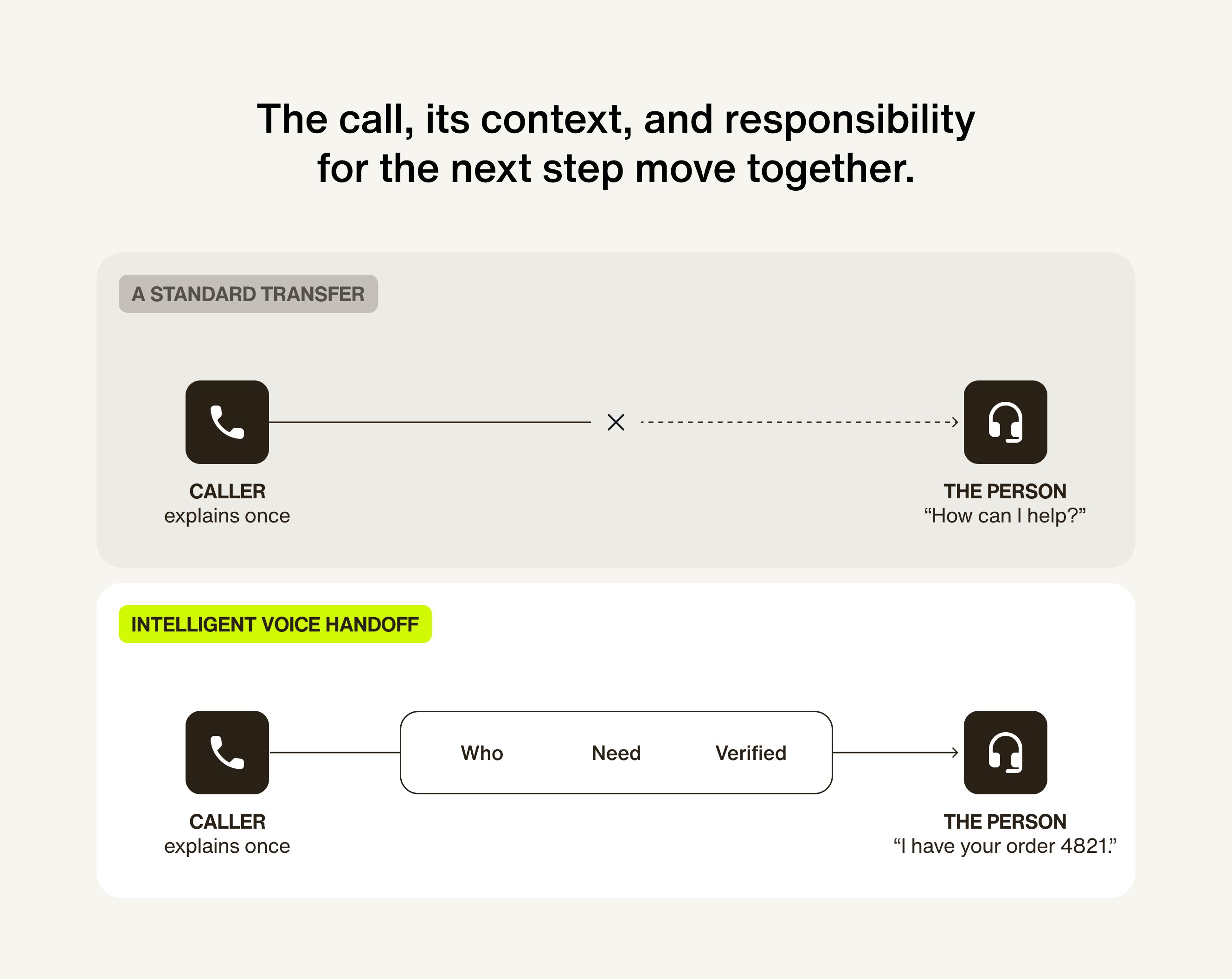
Four capabilities behind every handoff
Intelligent Voice Handoff brings four capabilities into one live workflow:
- Warm Handoff keeps the caller connected while Delight reaches and prepares the person taking over.
- Context Sync carries the conversation into the handoff through a spoken briefing and, where supported, a connected ticket.
- Answer Detection checks whether a person or voicemail answered before the caller joins.
- Handoff Recovery handles busy lines, unanswered calls, and voicemail while keeping the caller informed.
Together, they cover the complete transfer: someone takes over with context, or the call moves into a clear follow-up path.
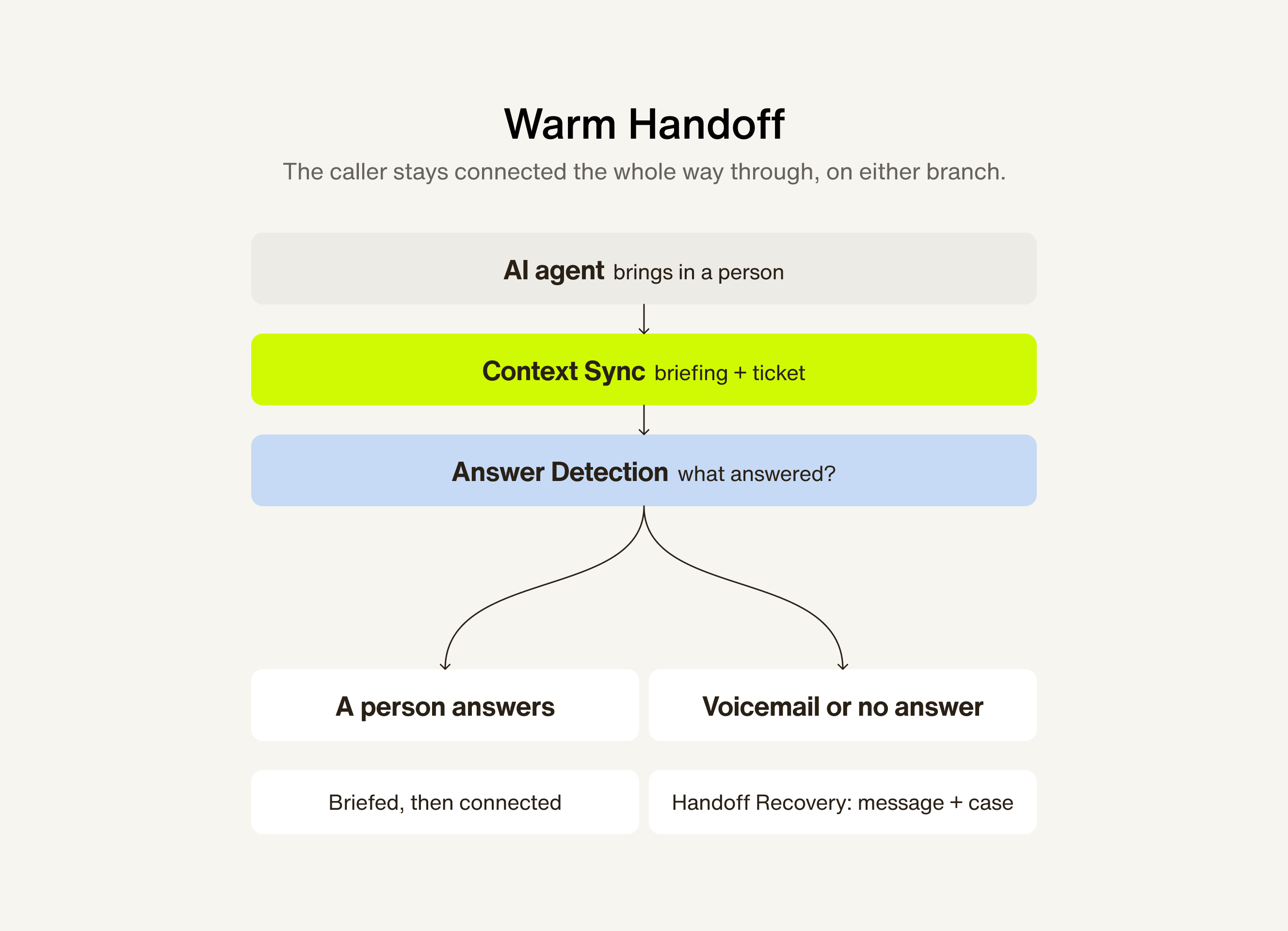
Warm Handoff: Prepare the person before connecting the caller
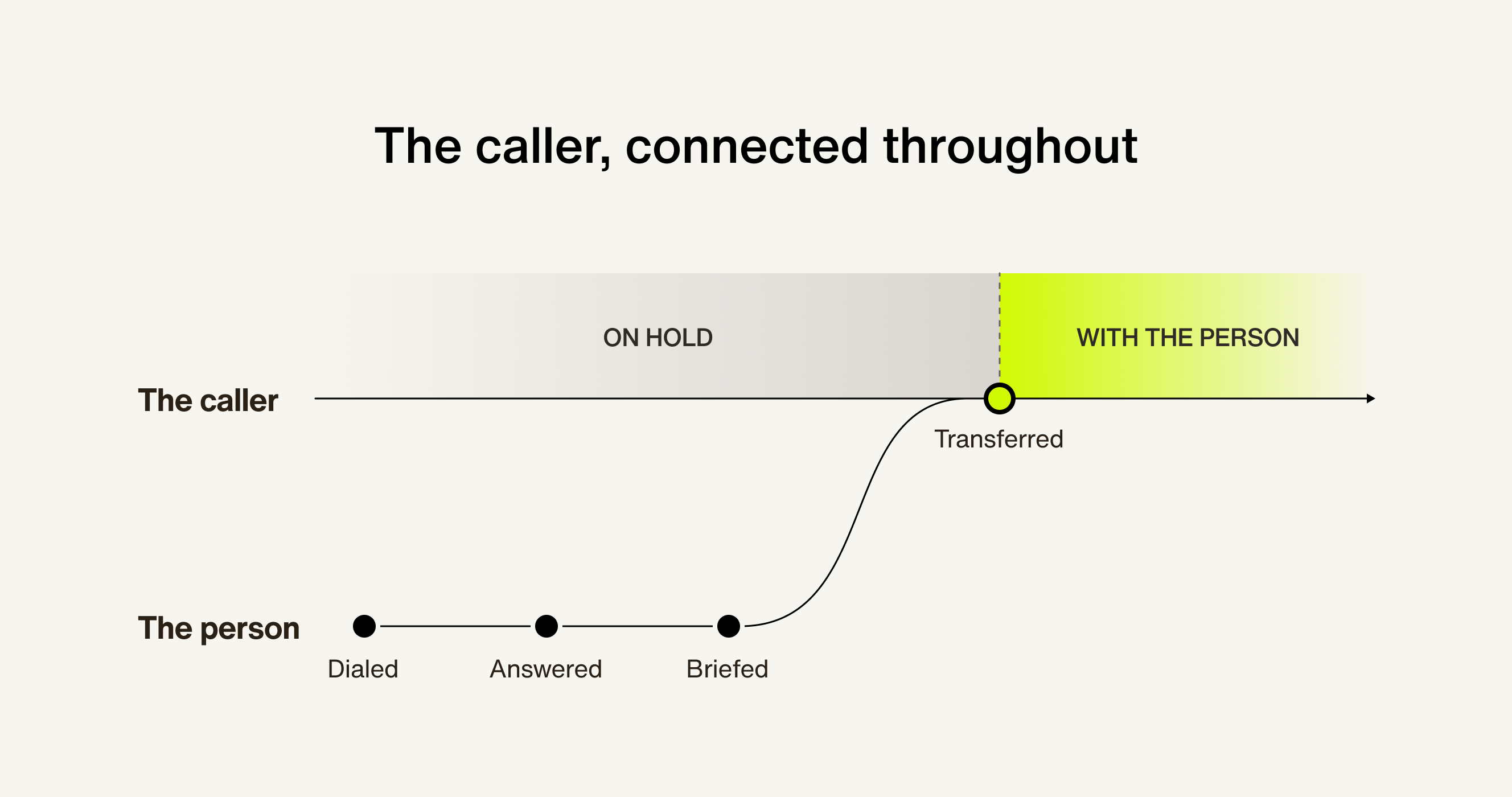
Warm Handoff keeps the caller on the line while Delight reaches the person or department taking over. As the caller hears hold audio, Delight briefs the person who answers on why the caller is there and what has already happened, then brings the caller into the conversation.
Each handoff is tracked from the first transfer attempt through connection, giving teams a clear view of transfer success and caller wait time.
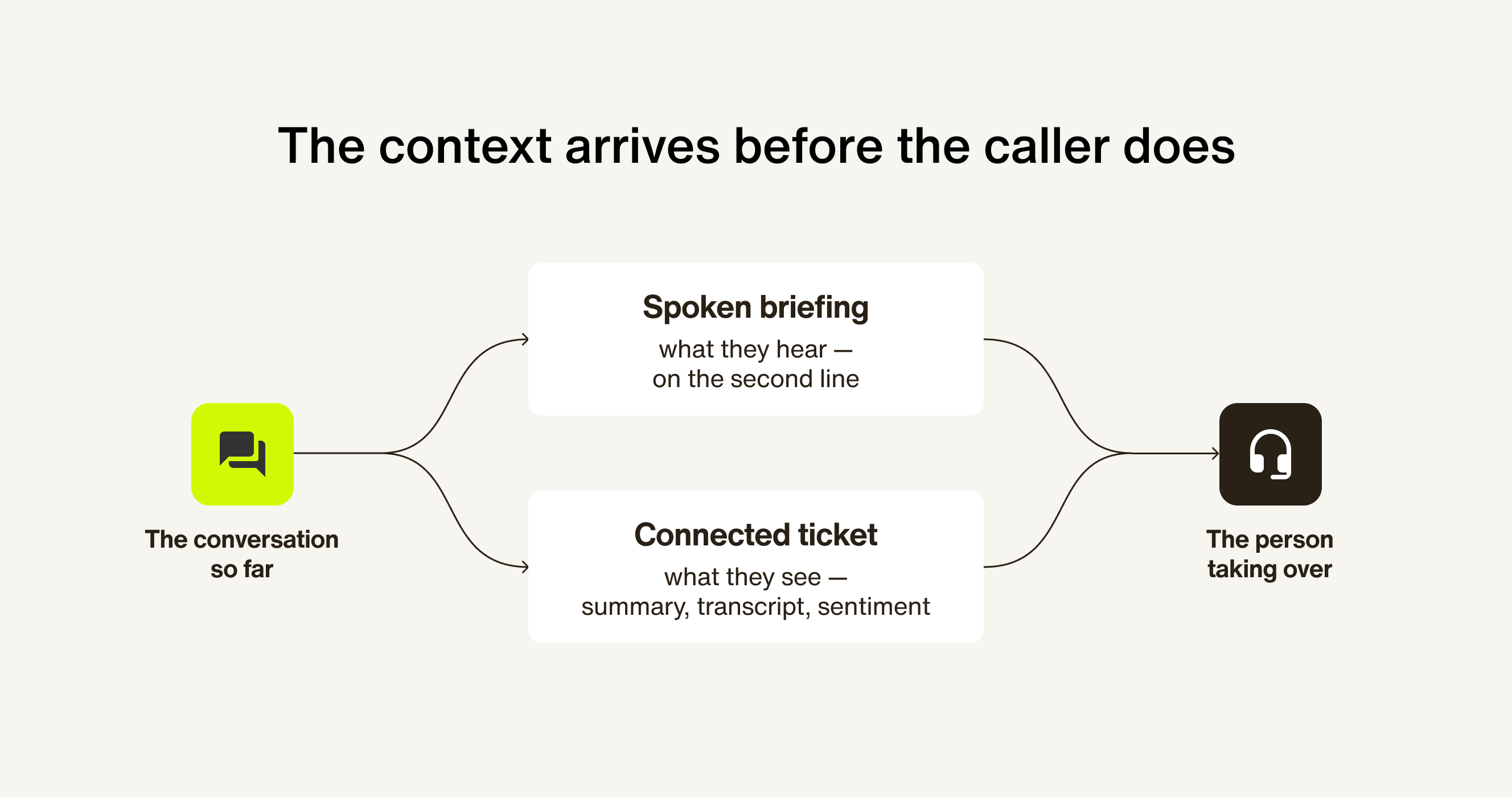
Context Sync: Bring the conversation into the handoff
Context is part of Warm Handoff. Context Sync is how Delight gets it to the person taking over.
The first path is the phone itself. Delight speaks a short briefing on the second line before the caller joins. Because the briefing travels as speech, it can reach any destination with a phone number, including desk phones and on-premises systems that can’t accept data from an integration.
The second path is the connected helpdesk or contact center. Where an integration is available, Delight can open a ticket with the summary, transcript, and sentiment before the transfer begins.
The spoken briefing gives the person what they need for the live call. The ticket gives them the full record in the system where they work.
Answer Detection: Know what answered before acting
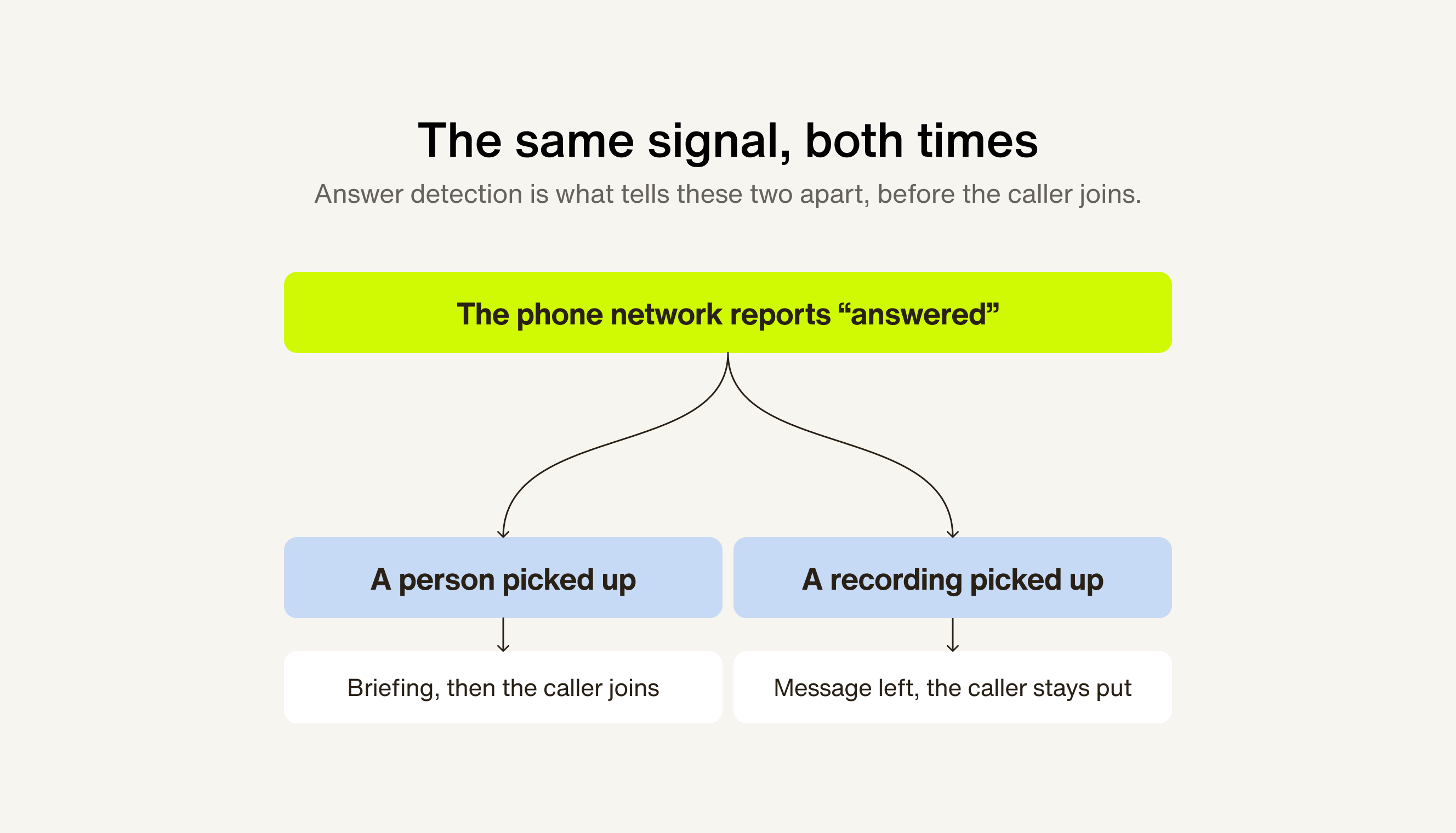
A phone call can be answered without reaching a person. Voicemail may pick up, and the phone network will still report a connection.
Answer Detection checks the second line before Delight brings in the caller. It combines answering-machine detection, voicemail checks, and the timing of the first response to determine what answered.
A department line may also answer with a menu. For a destination Delight has been configured for, it can send the keypad entries the menu asks for and carry on to the right person.
When a person picks up, Delight gives the briefing and connects the caller. When voicemail answers, the caller stays on the original line while Delight follows the voicemail path.
That decision happens before the caller enters the second conversation.
Handoff Recovery: Keep the call moving when no one is available
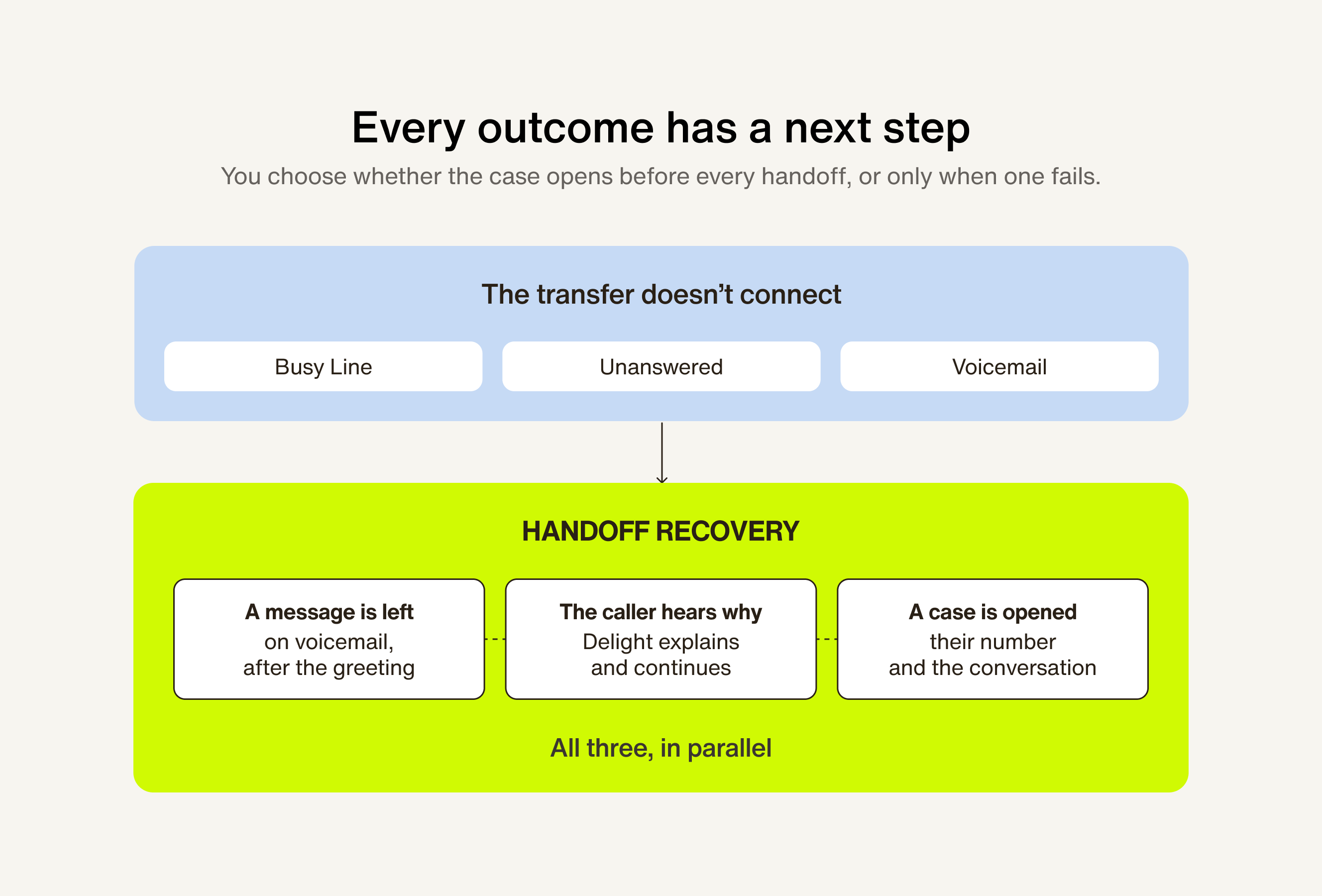
Busy lines, unanswered calls, and voicemail are normal parts of phone support. Handoff Recovery gives each outcome a next step.
When Delight reaches voicemail, it can wait for the greeting and leave a message. When the second call doesn’t connect, Delight resumes the conversation with the caller and explains what happened.
Delight can also open a case with the caller’s number and the conversation so far. Teams can choose to create the ticket before every handoff or only when a connection fails.
The caller knows what to expect. The team knows whom to call and why.
Built for the phone system already in place
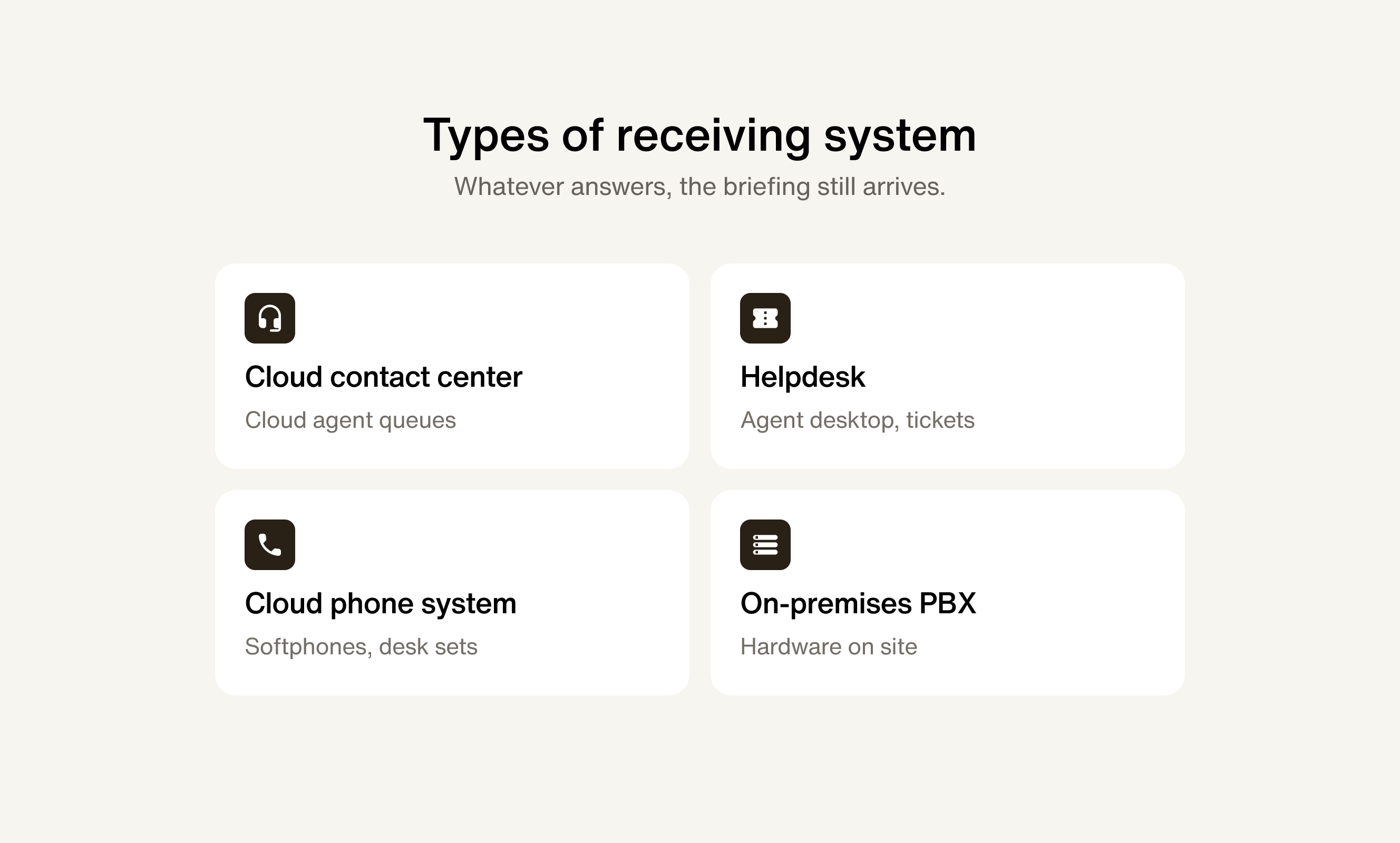
Enterprise phone environments rarely follow one standard. A company may use cloud contact centers in one region, desk phones in another, and an on-premises PBX somewhere else.
Intelligent Voice Handoff works through ordinary phone calls, so the receiving system doesn’t need a new interface to hear the briefing. Connected integrations add the ticket and conversation record where available.
Delight supports handoffs into systems including Zendesk, Genesys, Amazon Connect, RingCentral, Cisco Finesse, and Zoom Phone. Teams can improve the transfer without replacing the phones and contact-center tools they already use.
Bring in human judgment without losing the work
People should enter a call where their judgment adds value: approving an exception, handling a sensitive case, protecting a sale, or deciding what should happen next.
Intelligent Voice Handoff prepares them for that moment. The person who answers can continue from the work Delight has already completed. When no one answers, the caller and the team still have a clear next step.