Voice AI can help your team book jobs, manage appointment changes, and follow up with customers. This guide explains how to assess the opportunity for your business, choose a provider, and prepare your first agent to go live.
Your best starting point depends on where your team needs help. That might be handling new inquiries during the afternoon rush, booking visits after the office closes, or reaching customers with outstanding estimates. Each requires different information, rules, and support from your team.
This guide makes those choices easier. We’ll show how an agent handles a booking call, how it connects to your scheduling system, and which decisions remain with your staff. You’ll see seven use cases to choose from, with guidance on when each makes sense and what needs to be in place.
Then we’ll look at how to evaluate providers. You’ll learn what to ask them to demonstrate, how to test their handling of difficult calls, and what to agree on before a pilot begins.

Where voice AI has impact
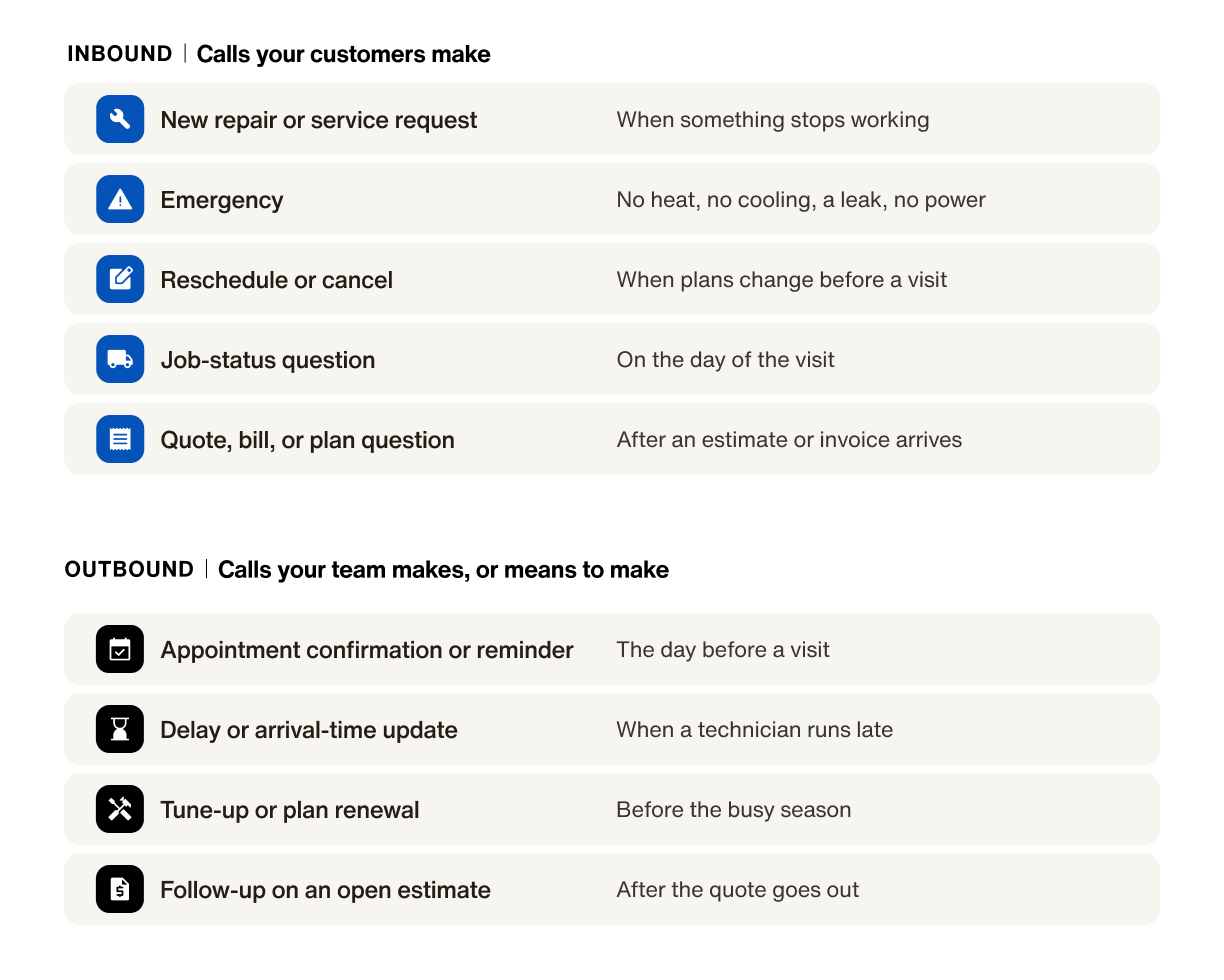
Calls to a home service company tend to fall into a handful of types: a new repair or service request, an emergency such as no heat or an active leak, a request to reschedule or cancel, “when is my technician coming?”, and questions about quotes, bills, or maintenance plans. Each follows a set path. A repair request needs a name, an address, a description of the problem, an urgency decision, and a time. A status call needs the job and its current arrival window. Because the steps repeat, an agent can follow them using your rules and your schedule.
Outbound calls follow set paths too: appointment confirmations and reminders, delay and arrival-time updates, tune-up reminders and plan renewals, and follow-ups on open estimates. These are the calls your team places, or means to place when there’s time.
The rest of this section looks at each place jobs slip away.
When nobody picks up
82% of US consumers say they’d call a competitor if a business didn’t answer.
— CallRail survey of 1,000 US consumers, 2025
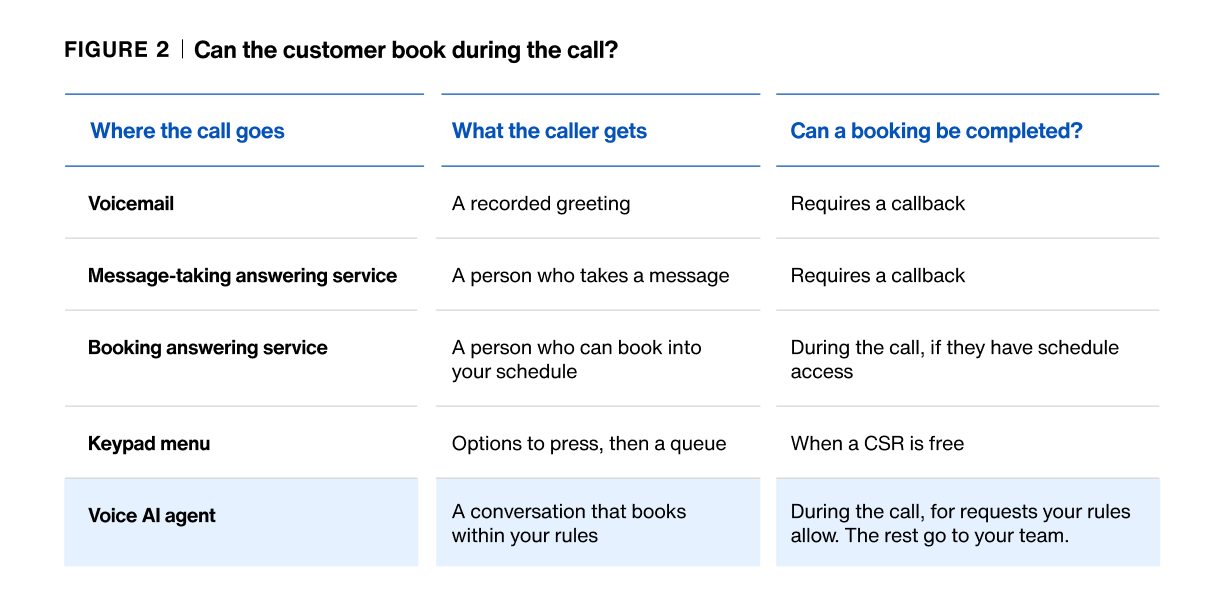
When your office closes, what happens to a customer who wants to book? Can they secure an appointment, or do they have to wait for someone to call back?
That wait can mean losing the opportunity. In Invoca’s home services call data, fewer than 3% of callers sent to voicemail left a message.
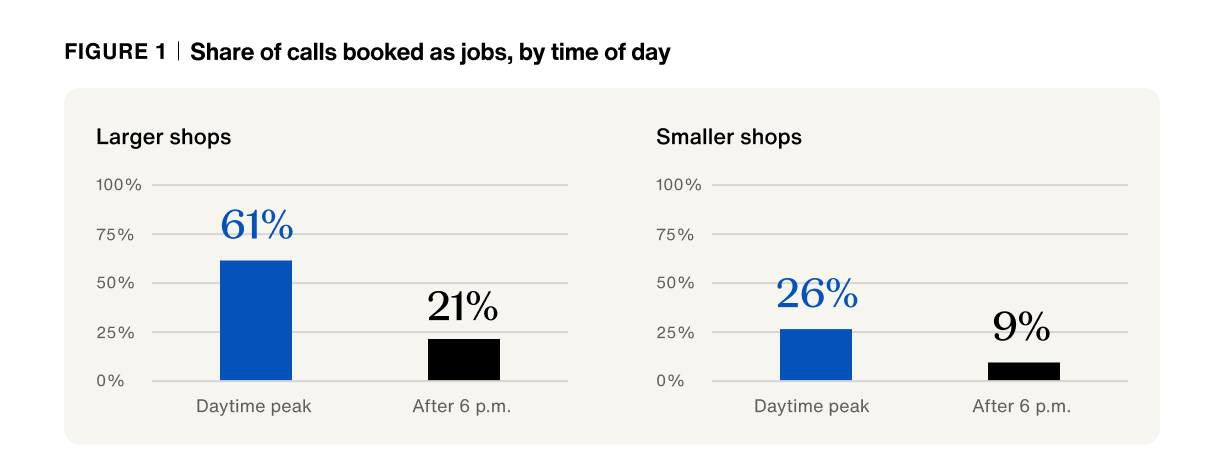
Booking rates also vary sharply by time of day. ServiceTitan’s 2022 study found that larger businesses booked 61% of calls at their daytime peak, compared with 21% after 6 p.m. Smaller businesses showed a similar pattern.
Look at your own evening and weekend calls. How many were requests you could have booked, and how many never reached your team? If customers wait for a callback just to schedule routine work, after-hours booking is worth evaluating. The worksheet at the end of this section helps you find where the opportunity is.
When a call ends without a booking
A homeowner calls to arrange a repair. Someone takes their name, address, and details of the problem, then promises a callback. Your call report records an answered call. The homeowner still has no appointment.
Some answering services can complete bookings; others take messages. The useful distinction is how much of the request they can finish during the call. A voice AI agent also needs access to your schedule and clear booking rules to confirm an appointment.
Review a week of service requests. Note which were booked during the call, which needed a callback, and why. That shows which delays an agent could fix and which come from a full schedule.
When follow-up calls never get made
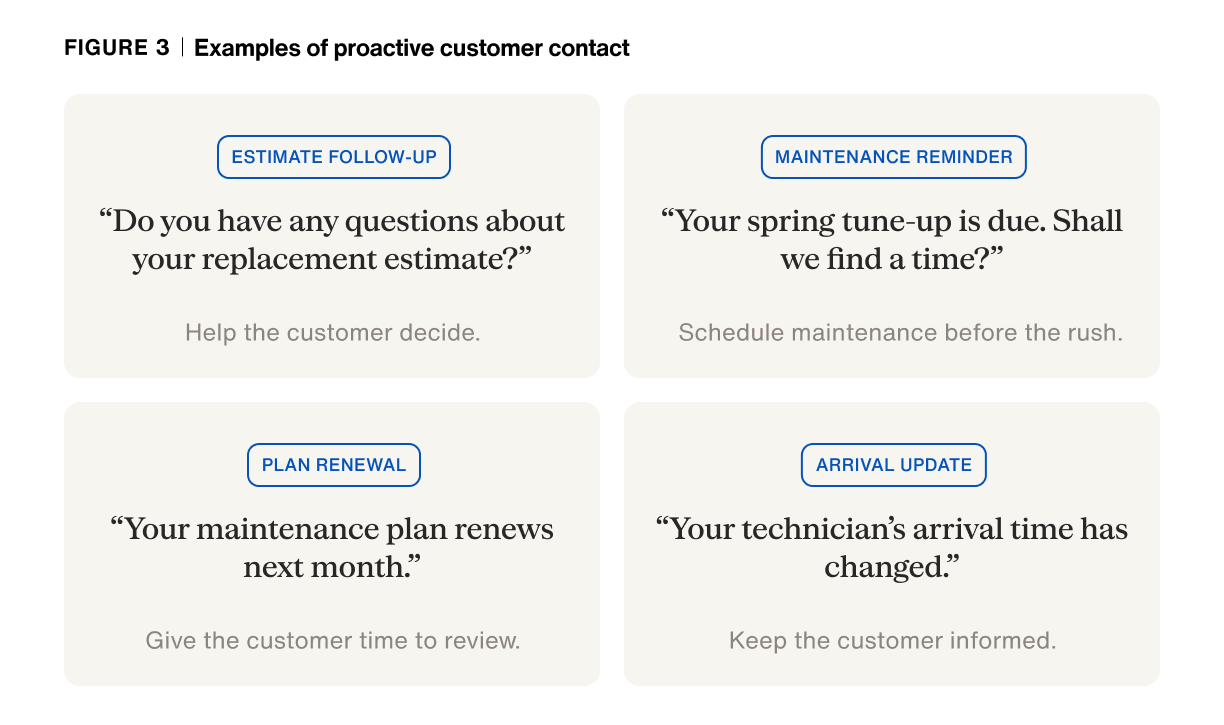
When incoming calls keep your team busy, outbound follow-up can slip. Estimates wait for a response, maintenance reminders go unsent, and customers approaching renewal may never hear from you.
These conversations serve different purposes. An estimate follow-up can help a customer move ahead with a job. A maintenance reminder can fill appointments before peak season. A timely delay update can keep an existing visit on track and save another call to your office.
Voice AI can help your team make these contacts consistently, using customer records, job status, and the rules you set. Start by identifying which follow-ups are overdue and what completing them would achieve.
What this means for your business
Voice AI can help with three kinds of unfinished work: calls your team cannot answer, booking requests that need a callback, and customer follow-ups that keep getting postponed.
The opportunity depends on where that work builds up in your business. You may need more coverage after hours, help during busy periods, or a reliable way to follow up on estimates and renewals.
The next section shows how an agent handles a booking call, including when it brings in your team.
What an agent needs to complete the work
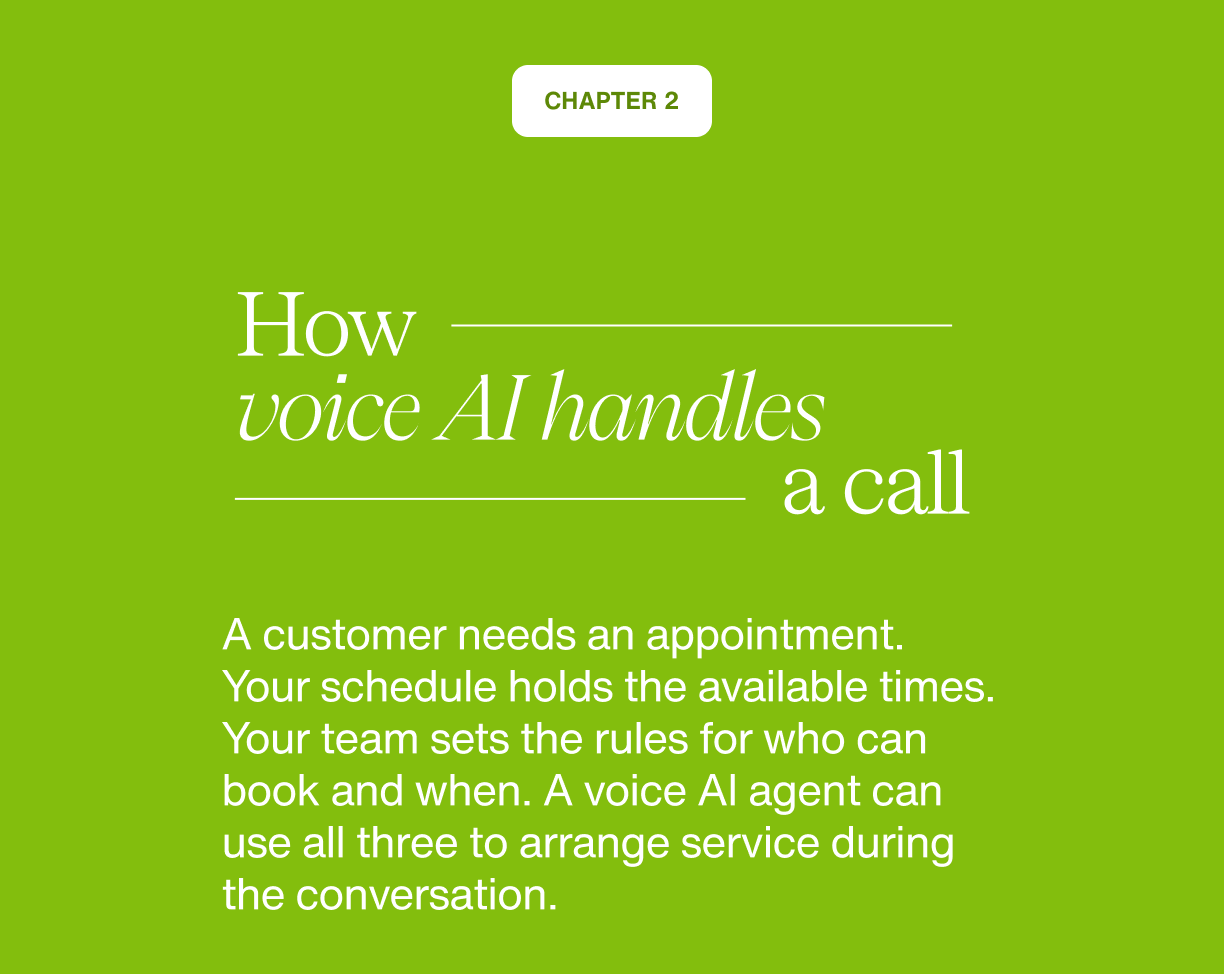
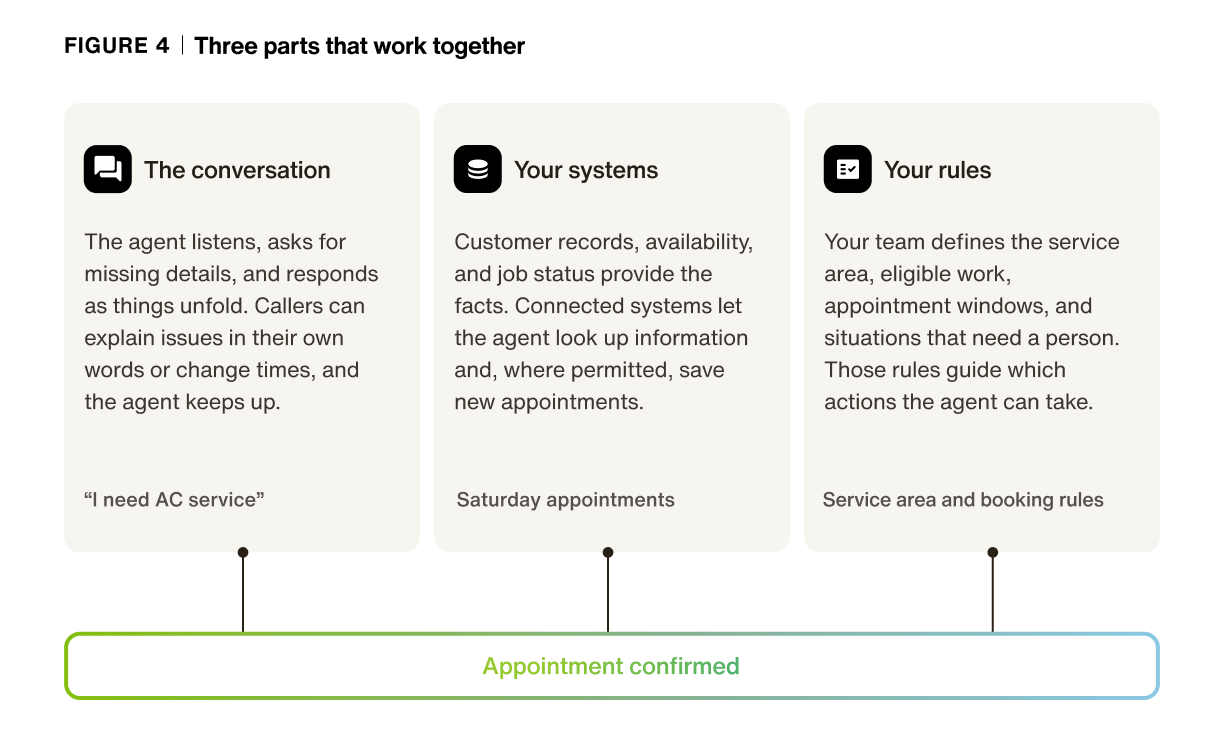
Voice AI combines a spoken conversation with access to business information and permission to act. For a service business, three parts matter.
What happens during a booking call
Dana calls after the office has closed to arrange an AC repair. Here is an illustrative booking flow for a request the business allows the agent to handle.
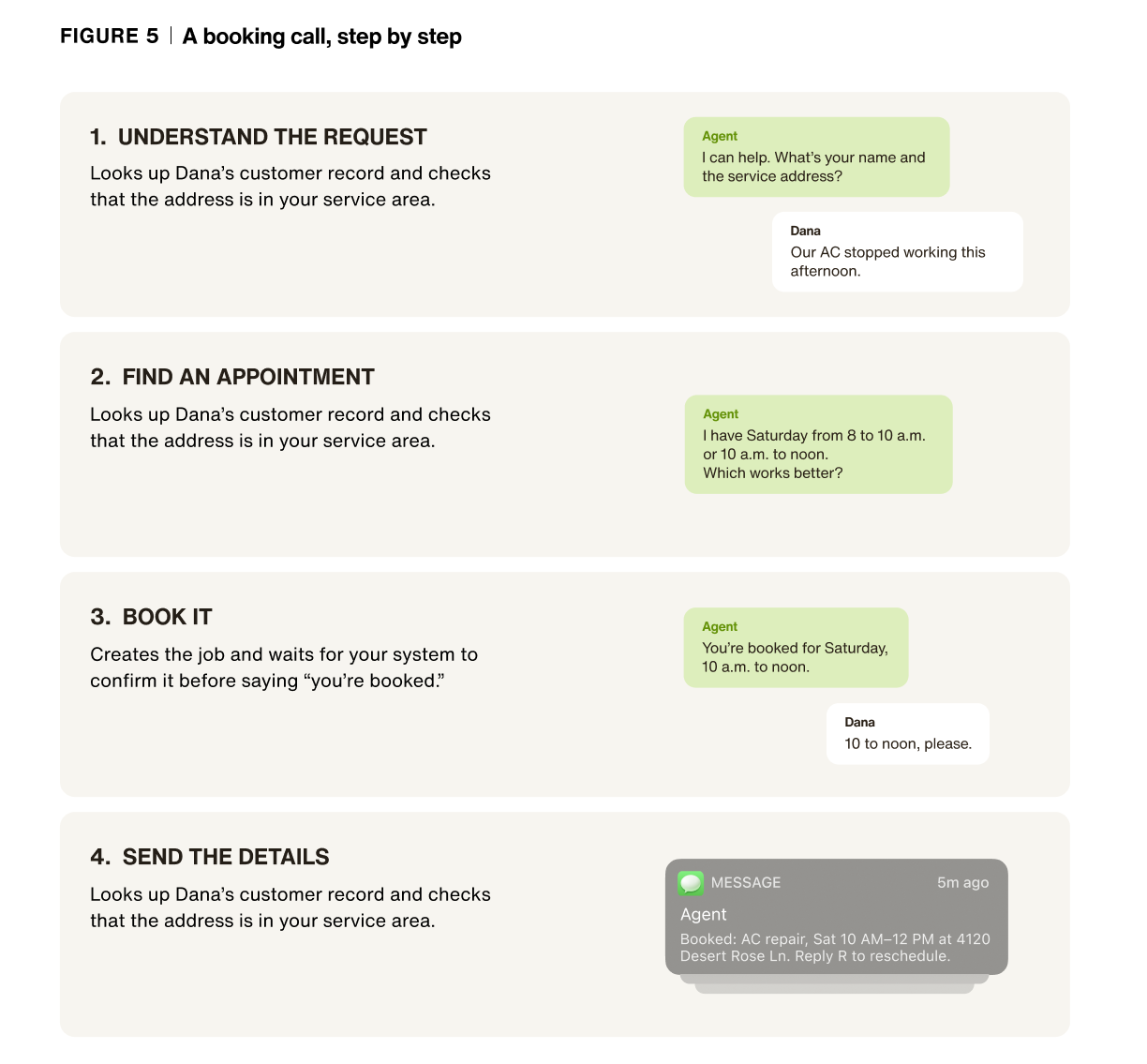
By the end of the call, Dana has an appointment. The job is in your system as an AC repair at 4120 Desert Rose Ln, Saturday from 10 a.m. to noon, marked as booked by the agent during the call and confirmed. It sits on your schedule like any other job, and your team can see what was discussed.
How it works with your systems
The agent needs access to the information and actions each task requires. The phone connection carries the conversation; connections to your business systems let it do the work.
For booking, your field service management system, the software your team uses for customers, jobs, and scheduling, remains the place where appointments are recorded.
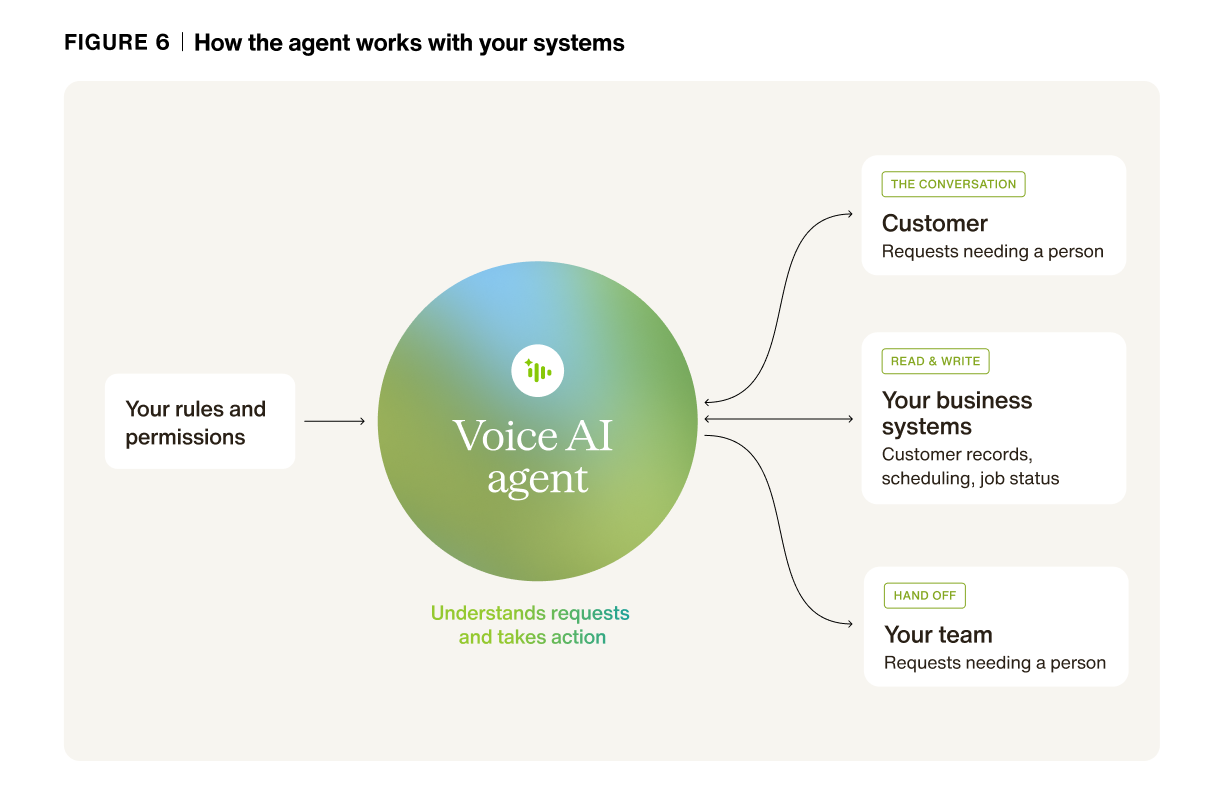
To complete a booking, the agent needs permission to check availability and create the appointment in your scheduling system.
Beyond booking: When the agent makes the call
Booking is one application. Once an agent can use customer records, scheduling, and job updates, it can also call customers.
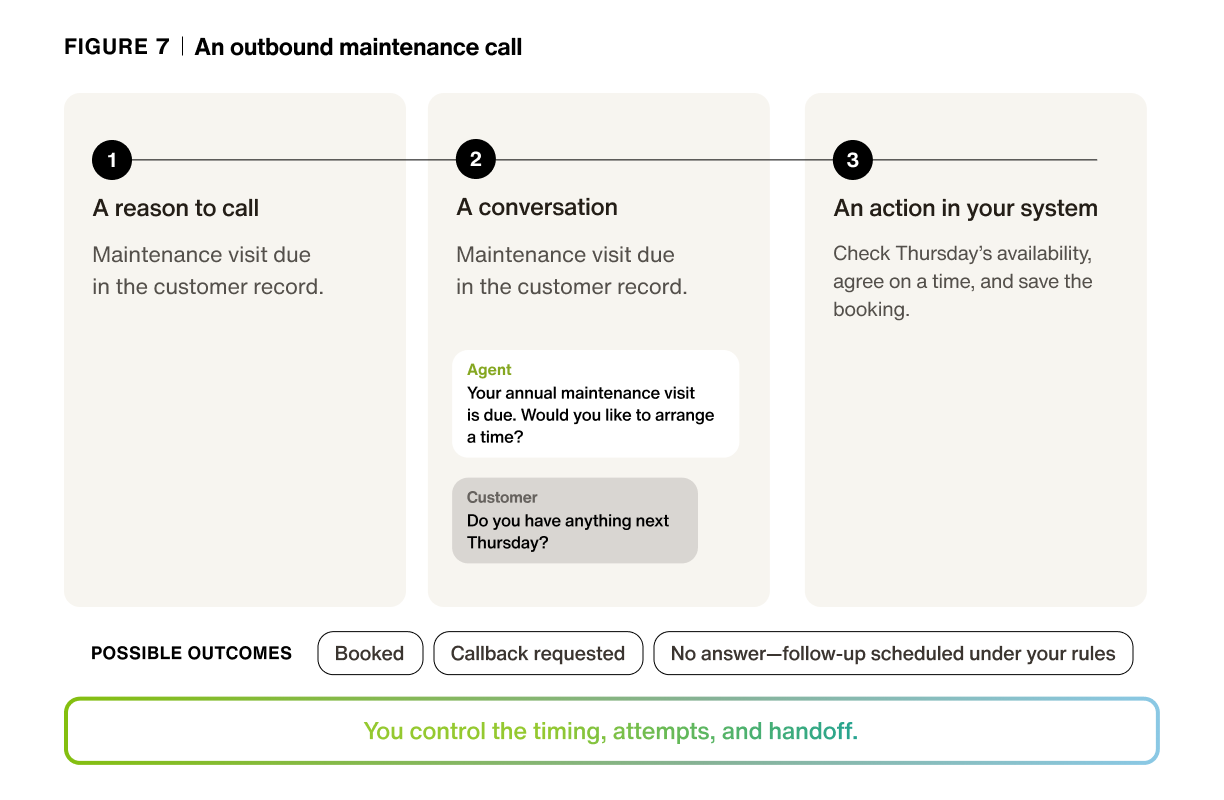
Your systems already hold reasons to contact customers: a maintenance visit is due, an estimate is awaiting a decision, or an appointment has changed. An outbound voice AI agent can call when the conditions you set are met and help the customer take the next step.
Take a customer whose annual maintenance visit is due. The agent calls, explains the reason, and asks whether they would like to schedule. If they’re ready, it checks availability, offers suitable times, and records the confirmed appointment. If they have a question that needs your team, it passes on the question and the context.
The conversation can end in several useful ways: an appointment booked, a callback requested, or a customer preference recorded. Your team can see what happened and what still needs attention.
You decide who can be contacted, what triggers the call, when calls may happen, and how unanswered calls or requests for a person are handled.
How this works at Dr. Cool Services
Dr. Cool Services, a Las Vegas HVAC and home services company, uses delight.ai’s voice agent to book HVAC service in English and Spanish. The agent identifies the customer, gathers the details, finds an appointment, and confirms the booking. When a call drops, it calls back to continue, and complex warranty questions go to the team with the call context. Dr. Cool also uses proactive outreach for maintenance scheduling.