

Key takeaways
- Delight.ai is my top pick because its demo asked what was wrong and quoted a price before booking. These initial questions ensure both the customer (me) and the business know the scope and cost before anything is confirmed.
- Most other demos that I called stalled before a booking, a handoff, or a follow-up, and the only one that did book never asked what my problem was.
- Per-minute prices leave out the large language model (LLM), voice, and phone carrier charges that decide what each resolved call costs you, while Delight.ai prices by resolved conversation.
The shortlist
- Delight.ai is best overall, especially for calls that need the right job details before the booking.
- Retell AI is best for fast, pay-as-you-go phone automation.
- Vapi is best for engineering teams building their own voice stack.
- PolyAI is best for high-volume enterprise contact centers.
- Bland AI is best for high-volume calling with private deployment options.
- Sierra is best for enterprise brands that want a managed, outcome-priced agent.
- ElevenLabs is best for creators and individuals who need prerecorded AI voices.
The best AI voice agents get the job right from the first call. To test 7 popular AI voice agents, I called every public demo I could find and asked to book a plumbing appointment. I posed as a buyer from a mid-sized home services company and recorded my findings firsthand.
I put every platform I could reach, including Delight.ai's AI voice agent, through the same call. Each ranking comes from my own calls, as well as what G2 and Gartner reviewers say after living with each platform.
What is an AI voice agent?
An AI voice agent is software that answers or places phone calls, understands open-ended speech, and takes action in your systems, like booking a service visit.
How is an AI voice agent different from IVR?
By contrast, an interactive voice response (IVR) system routes callers through fixed menus ("press 2 for billing") and sends anything off-script to a person.
The difference shows up the moment a caller goes off-script. A homeowner might say "my water heater's leaking and I'm out of town Thursday." An IVR (keypad menu) can't route that, but a capable voice agent can ask one follow-up question, check the schedule, and book the visit.
Most available AI voice agents can handle the initial conversation well enough, so they separate on 3 things that happen after the agent understands the request:
- Booking on the call means the appointment lands in the calendar before the caller hangs up, instead of a promise that someone will call back to confirm later.
- A clean handoff passes a summary to a person, so the customer doesn't have to repeat their leaking water heater story multiple times.
- Memory lets the agent recognize the same customer next week, whether they call again or send a text to reschedule their appointment.
Our guide to how AI voice agents work covers the basics of AI voice agents in more depth.
How did I test these AI voice agents?
I tested these AI voice agents by calling each vendor's public voice demo the way a buyer would on an exploratory visit to their site. On every call, I said I was from a mid-sized home services company and asked to book a plumbing appointment.
A public demo isn't a production benchmark, but it's the first thing a buyer experiences. For the purposes of this article, I'm classifying these demos as a fair read on how much a vendor trusts its product in an unscripted conversation.
On each call, I paid attention to the same five things:
- Whether the agent asked why I needed a plumber before asking for a time.
- Whether I walked away with a booked appointment.
- How fast the agent responded, how it handled interruptions, and whether the voice sounded natural.
- Whether it kept track of details I gave it earlier in the call.
- Whether I could try the agent without booking a sales demo first.
Where a vendor had no interactive demo, I say so and lean on buyer reviews instead. I also read the G2 and Gartner Peer Insights reviews for every platform, because a 5-minute call can't show you what month six looks like.
How do the best AI voice agents compare?
The best AI voice agents compare most clearly on two things a buyer can check in minutes: One is whether you can test the agent yourself, and the other is what the agent did with a real booking request. You can see both in the table below, along with pricing models and G2 ratings.
The 7 best AI voice agents for customer service
The 7 best AI voice agents for customer service are ranked below by how each demo handled my plumbing call. Buyer reviews and published customer results fill in what a single call can't show.
1. Delight.ai (best overall)
Delight.ai is a revenue AI agent for voice and every channel around it. I put it first because its demo was the only one that scoped my call like a job before trying to book it.
The voice sounded natural, and the agent knew my use case from its first line. When I said I wanted an appointment, it asked why and what was wrong. Then it told me what the visit would cost before moving to the booking step.
None of the other demos helped me work out the job details first. Triage matters more than booking speed, in my opinion. When the agent settles the problem and the price before confirming, the customer knows what they're agreeing to and the business knows what job it's taking on. Only jobs that fit get booked, so fewer end in a cancellation, a surprise invoice, or a wasted trip.
The demo stopped before locking in a time, since each business sets its own rules for when Delight.ai confirms a booking on the call. Once it's connected to a scheduling system in a live deployment, Delight's agent books on the call.
This AI voice agent is built for background noise, accents, and interruptions, and it responds in under a second. It also features outbound calling, so a dropped call or an unfinished booking can trigger a callback that picks up where things left off. And because one memory follows each customer across voice and every digital channel, a homeowner who books by phone and texts a question the next day doesn't start over.
Here's how Delight.ai looks on strengths, watch-outs, pricing, and proof:
- Its strengths include intake that covers job details and pricing before booking, plus outbound callbacks and support for 29+ languages.
- It connects to contact center and helpdesk tools like Genesys, Zendesk, and NICE through its integrations.
- The public demo stops before confirming a time, so the best way to see on-call booking is a walkthrough against your own scheduling system.
- Pricing is based on conversations, and the Delight Desk helpdesk has a $0 seat fee, so you pay per AI resolution instead of per agent.
- Dr. Cool Services, an HVAC company, uses Delight.ai's voice AI agent to answer every call through peak season and book appointments in English and Spanish.
Delight.ai is rated 4.7/5 on G2 from 5 reviews, as of October 2026.
"Our customers don't want to navigate phone trees or wait on hold. They want to talk to someone who can help." Mark Farley, President, Dr. Cool Services, 2026
Delight.ai fits CX teams where getting the job details right on the first call prevents a wasted visit. It also fits teams whose customers return through another channel.
2. Retell AI (best for fast, pay-as-you-go phone automation)
Retell AI is a pay-as-you-go phone automation platform, and its demo was the fastest to book.
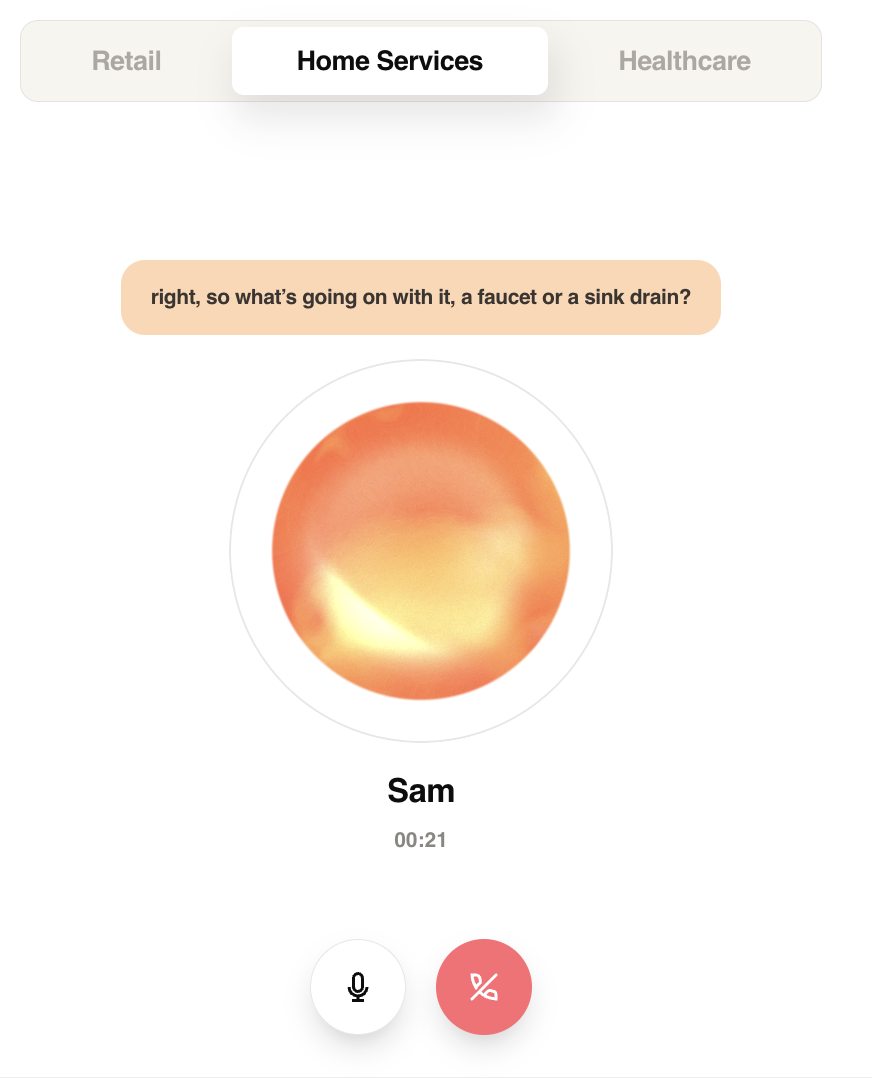
The demo asks you to pick a use case and enter your phone number before it calls you. The use case options weren't very descriptive, so it was hard to tell which one matched my plumber scenario best. I'd also rather not hand over my phone number just to try a demo.
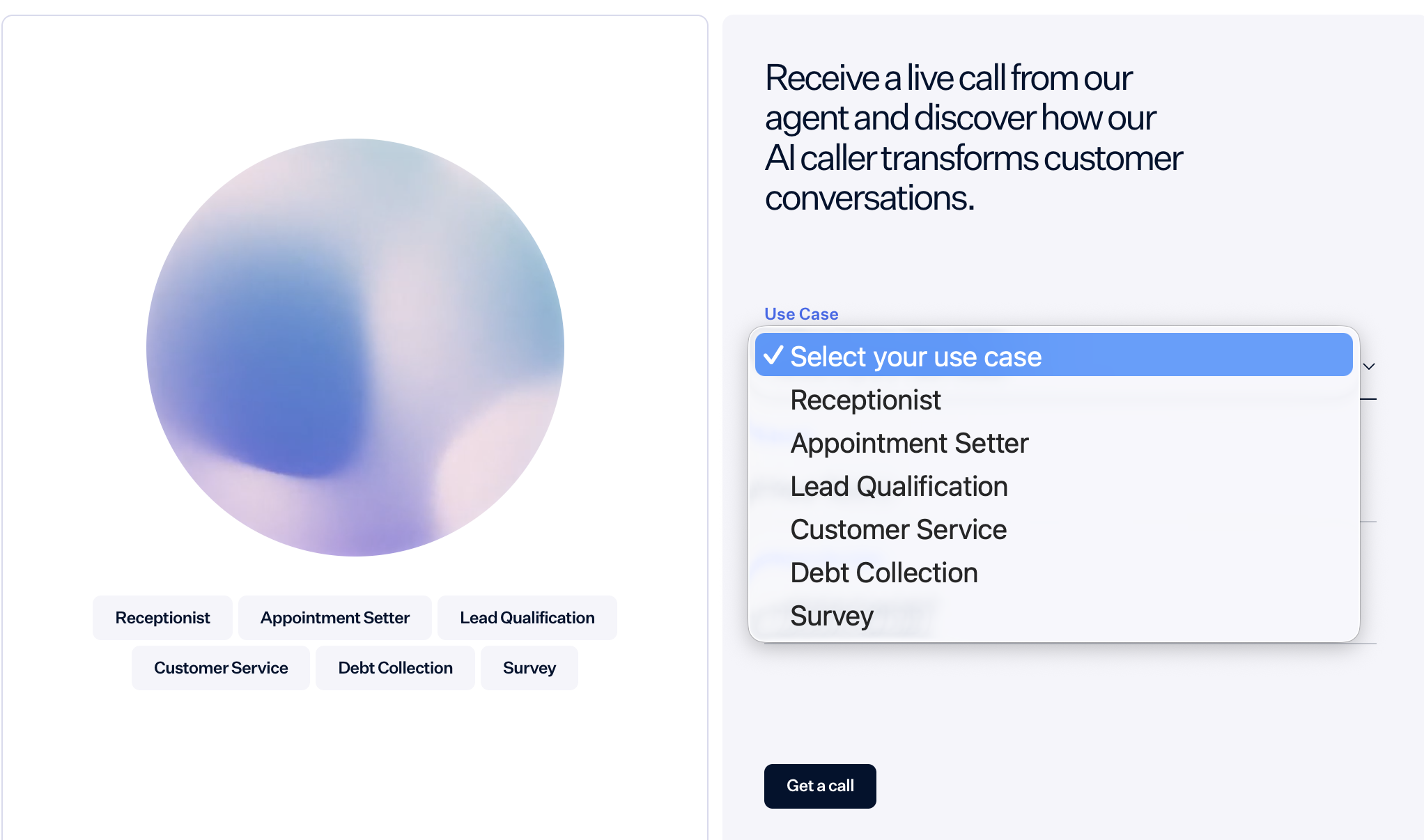
Once the call started, responses came back fast, and the voice sounded natural even with background noise on my end. When I interrupted, it adjusted quickly and picked the thread back up. I booked an appointment in under 2 minutes, but the agent never asked what was wrong with my plumbing. For a home services business, that's a job confirmed before either side knows the scope or the price.
When I asked for a person, it said someone would call me back, and I had to pry a little to get details about when and how I could expect a response.
The demo is the easy part, though. Getting Retell into production takes significant setup work, and most teams need operations or engineering help to connect the voice, model, and phone carrier and to tune the agent.
Here's how Retell looks on strengths, watch-outs, pricing, and proof:
- Its strengths are speed, natural interruption handling, and a self-serve start with $10 in free credits.
- G2 reviewers most often flag missing features (116 mentions), a learning curve (80 mentions), and costs that climb with volume (87 mentions).
- Pricing runs $0.07 to $0.31 per minute depending on the voice, model, and phone carrier, according to Retell's pricing page.
- Retell reports that Medical Data Systems handles 100% of its inbound calls on the platform with a 30% transfer rate.
- Retell is rated 4.8/5 on G2 from 2,639 reviews.
Retell fits operations and engineering teams that want phone automation live quickly and have the technical staff to tune it. Cost is the bigger risk at scale, because per-minute charges grow with every call your agent takes.
That's where Delight.ai differs. A CX team or even a small business owner can set up and edit the agent's workflows without filing engineering tickets. Pricing is also tied to resolved conversations instead of minutes.
Teams weighing a move off Retell can compare options in our Retell AI alternatives guide.
3. Vapi (best for engineering teams building their own voice stack)
Vapi is a developer voice platform, and its demo was fast and got further into a conversation than most. But the conversation design worked against me as a caller.
The agent cut me off, and after my second message it forgot I was booking a plumbing appointment. It asked me to pick a day for "my meeting" instead, and it skipped intake entirely, jumping to a time without asking why I needed a plumber. It also read short pauses as the end of my sentence and responded too early.
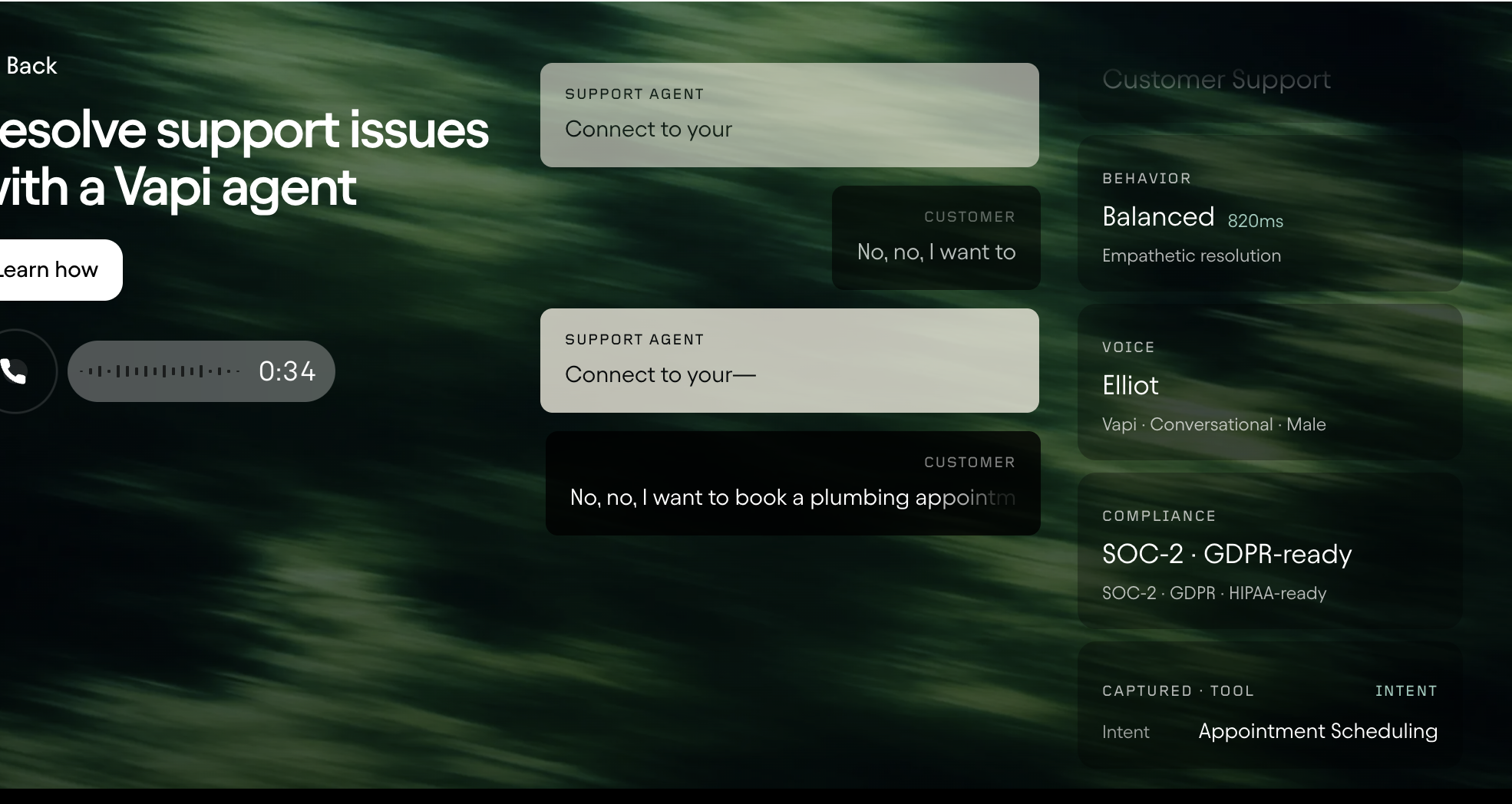
The voice tried so hard to sound human that it ended up sounding less natural. It used frequent "uh," "like," and "um" and made jokes like "sorry, I haven't had my coffee yet." The whole interaction felt very "uncanny valley".
Vapi also couldn't confirm the appointment on the call and said a team member would call me back. When I mentioned I always have an 8:30 a.m. meeting on Tuesdays, it didn't add that to its memory. No follow-up message arrived afterward.
Here's how Vapi looks on strengths, watch-outs, pricing, and proof:
- Its strengths are low latency and flexibility, since teams can bring their own model, voice, and phone carrier.
- Vapi's 15 Trustpilot reviewers rate it 2.4/5, with several citing surprise bills from model and phone carrier charges.
- Pricing starts at $0.05 per minute for hosting, according to Vapi's pricing page, and the AI model and phone carrier charges are billed on top at the providers' own rates.
- Health Insurance Portability and Accountability Act (HIPAA) coverage costs an extra $2,000 a month.
- Amazon Ring chose Vapi and routes 100% of its inbound calls through it, according to TechCrunch.
- Vapi is rated 4.2/5 on G2 from 3 reviews.
Vapi fits teams with engineers who want full control of the stack and will own the conversation design. Our guide on how to build AI voice agents walks through what that build involves.
4. PolyAI (best for high-volume enterprise contact centers)
PolyAI builds enterprise voice AI for contact centers, and it has some of the strongest enterprise references in the category. That made my demo experience more surprising.
I told the agent I was from a mid-sized company, and the call immediately failed. On my second try, I asked to book a plumbing appointment and waited about 5 seconds for a response. Then the agent ended the call at the transfer step without doing anything, 27 seconds in.
I tried the demo about 4 times, and it only ever handled 2 turns. The agent asked what it could help with, and I said I wanted to book a plumbing appointment. It replied "I can set that up for you" and then ended the call, every time.
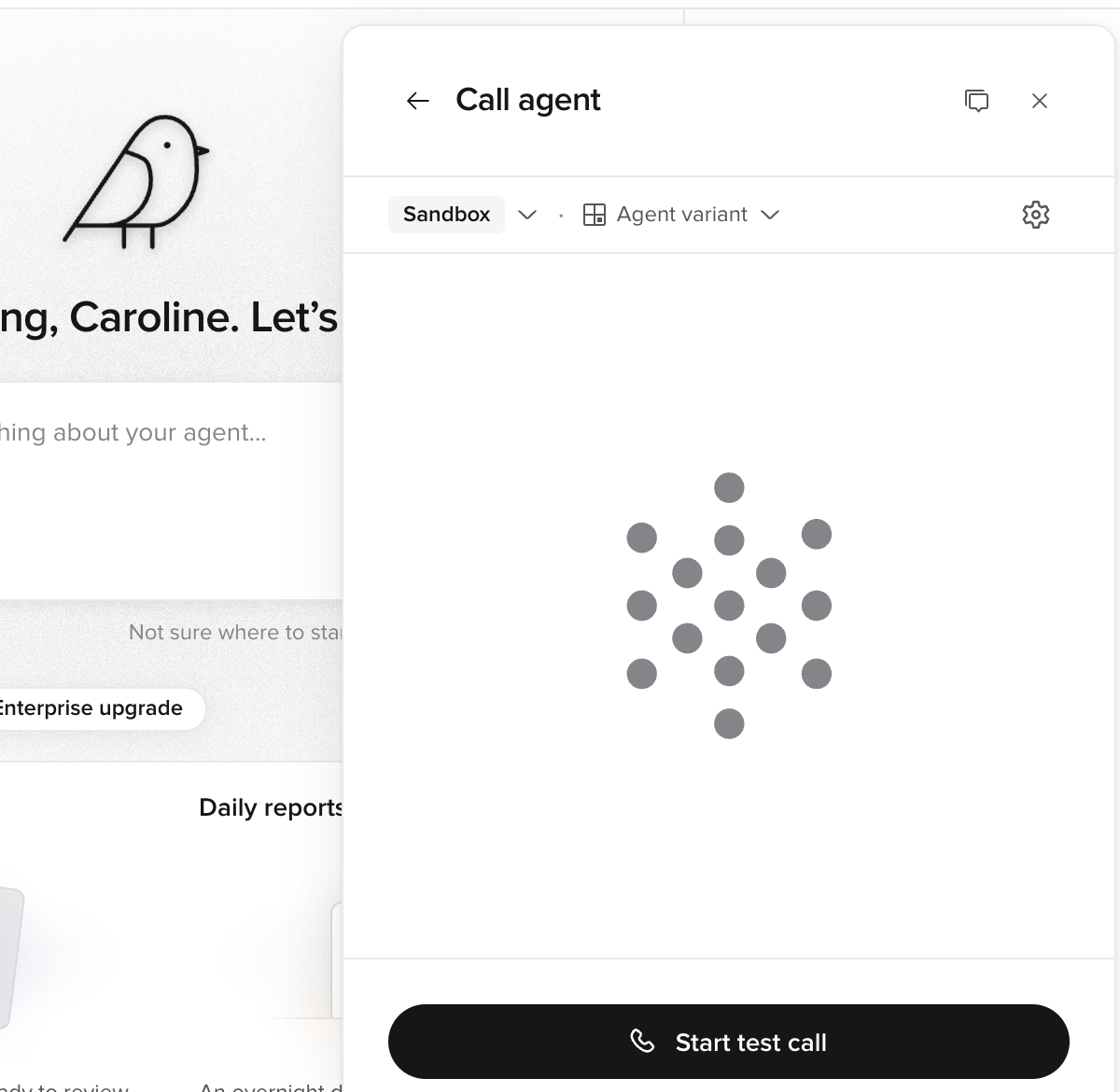
The voice also sounded clearly synthetic. I tried again in PolyAI's self-serve builder, which asks for your email and then opens straight into the platform. It showed a prompt to "improve your voice agent" with no guidance on how to test it, and when I went to test the call, it failed again.
Here's how PolyAI looks on strengths, watch-outs, pricing, and proof:
- It integrates with major contact center platforms, including Amazon Connect, Genesys, and NICE CXone.
- Enterprise reviewers on Gartner Peer Insights rate it 4.7/5 across 48 ratings.
- Reviewers mention lag and hard-to-predict pricing, and production pricing runs through PolyAI's sales team.
- Pricing is quote-only and billed per minute, according to PolyAI's pricing page.
- PolyAI reports that PG&E reached 67% overall containment and a 22% lift in customer satisfaction (CSAT) on outage calls, according to its PG&E case study.
- PolyAI is rated 5.0/5 on G2 from 12 reviews.
PolyAI fits large contact centers with the budget and time for a managed, sales-led rollout.
5. Bland AI (best for high-volume calling with private deployment options)
Bland AI builds enterprise phone agents with an on-premises option for enterprise customers, and its demo felt more like a guided walkthrough than a product demo. When I asked to book an appointment, the agent described its features instead of booking one.
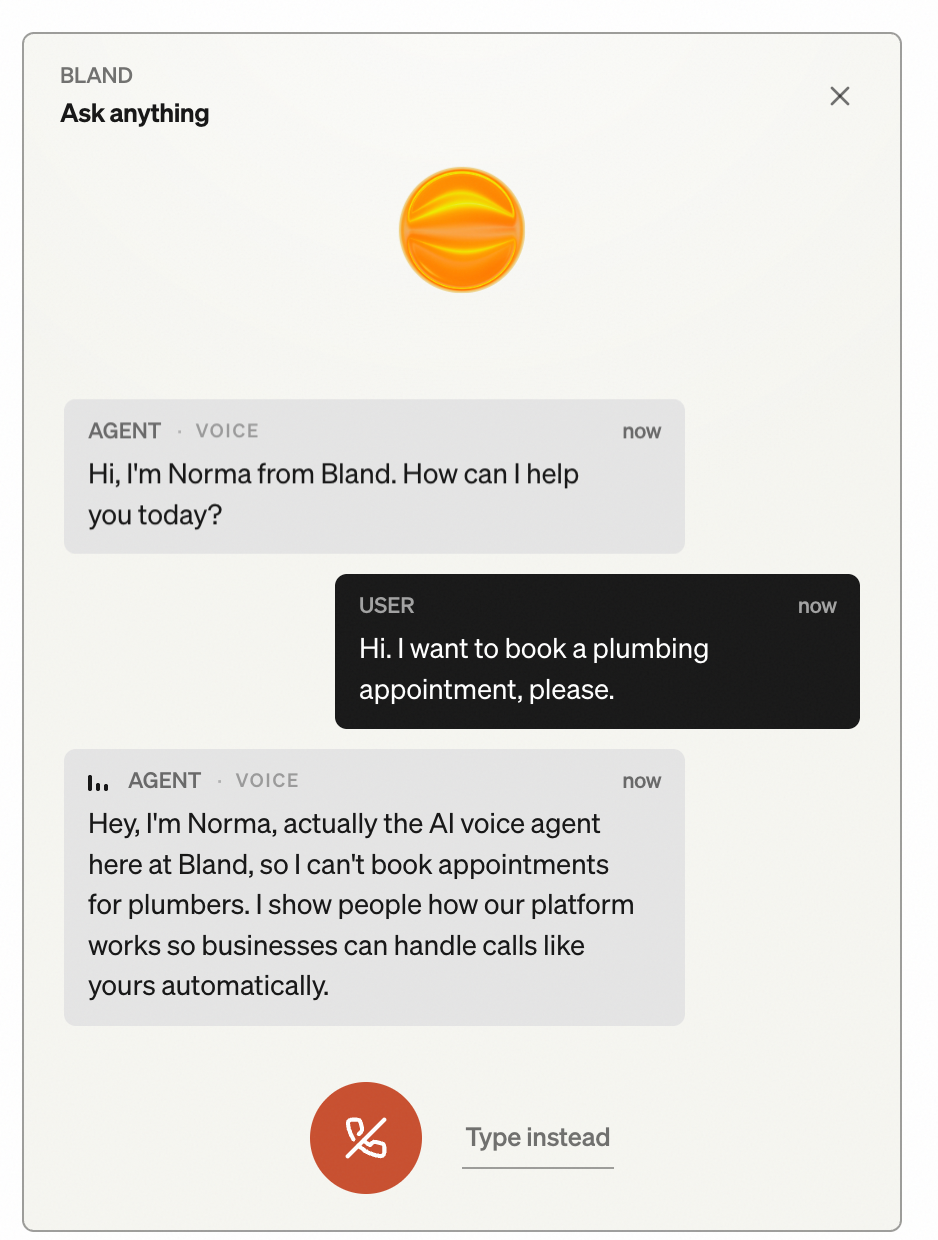
It told me it could book and confirm appointments on the same call, but it couldn't show me that in real time. Its responses ran long, and the audio was fuzzy enough that it never sounded human.
Here's how Bland looks on strengths, watch-outs, pricing, and proof:
- Its strengths are published pricing, on-premises deployment on its Enterprise plan, and memory that recognizes the same contact across calls and texts.
- G2 reviewers mention a learning curve and trouble pinpointing whether a problem sits in the prompt, the transcription, or the call flow.
- Pricing is $0.14 per minute on the Start plan, or $299 a month plus $0.12 per minute on Build, according to Bland's pricing page.
- Bland reports that the Idaho Housing and Finance Association saves $750,000 a year after replacing its IVR, according to its customer story.
- Bland is rated 5.0/5 on G2 from 11 reviews.
Bland fits technical teams running high call volumes that need control over where the agent is hosted.
6. Sierra (best for enterprise brands that want a managed agent)
Sierra is a managed enterprise agent platform with outcome-based pricing that I couldn't test. There's no public demo, so the only path is booking a sales demo. A guided demo can't show how an agent handles a caller who goes off-script.
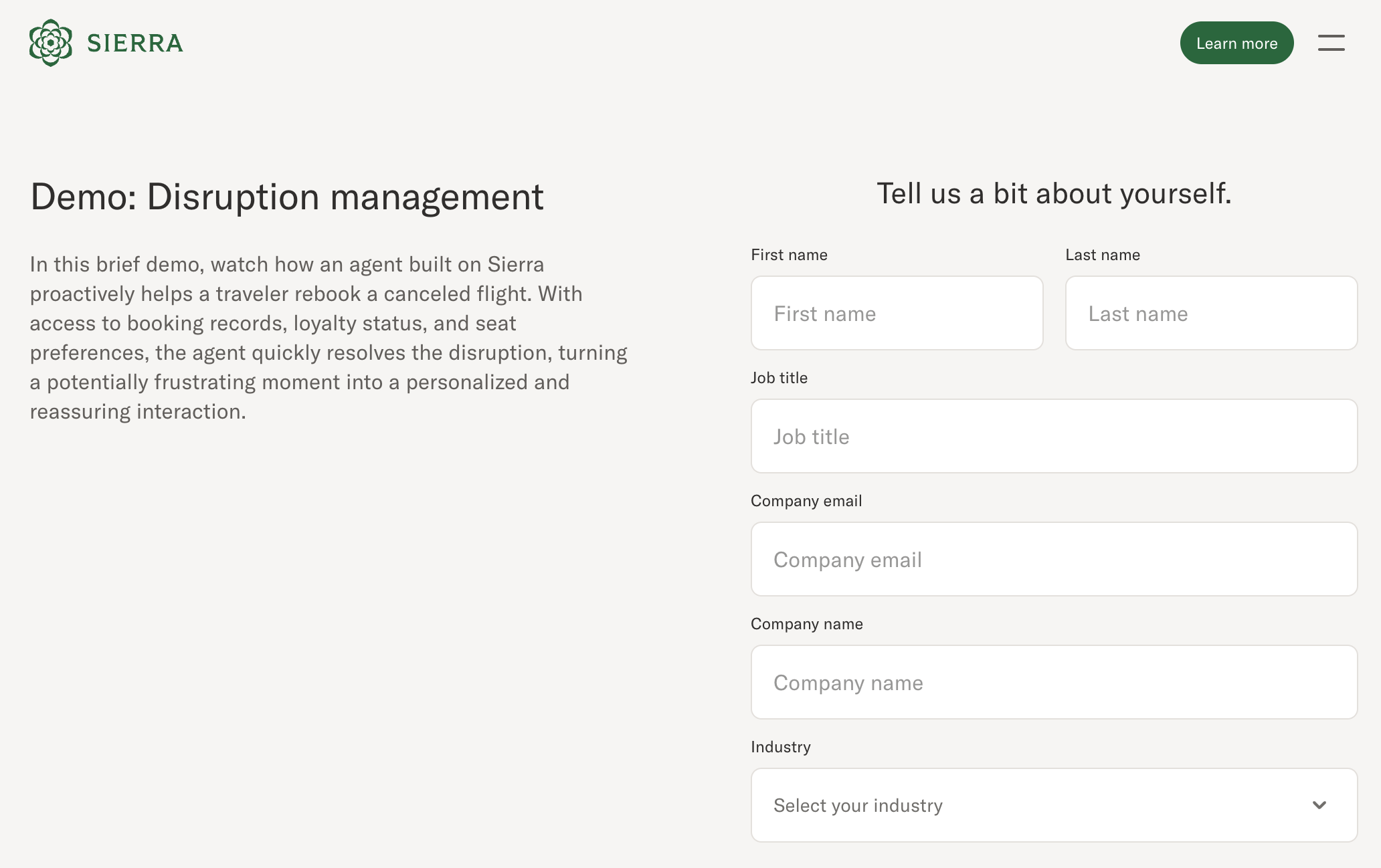
So I'm ranking Sierra on buyer reviews and public results only.
Here's how Sierra looks on strengths, watch-outs, pricing, and proof:
- Its strengths are coverage across voice and digital channels, plus outcome-based pricing that charges per resolved conversation instead of per minute.
- G2 reviewers most often mention trouble with complex questions and changes that need Sierra's team to make, and pricing isn't public.
- Sierra reports that Singtel's agent resolved 73% of mobile and home troubleshooting cases without a customer care officer.
- Sierra is rated 4.5/5 on G2 from 131 reviews.
Sierra fits large consumer brands that want a vendor-managed deployment and are comfortable buying without a hands-on trial. Our Sierra vs. Delight.ai comparison goes deeper on the differences.
7. ElevenLabs (best for creators who need prerecorded AI voices)
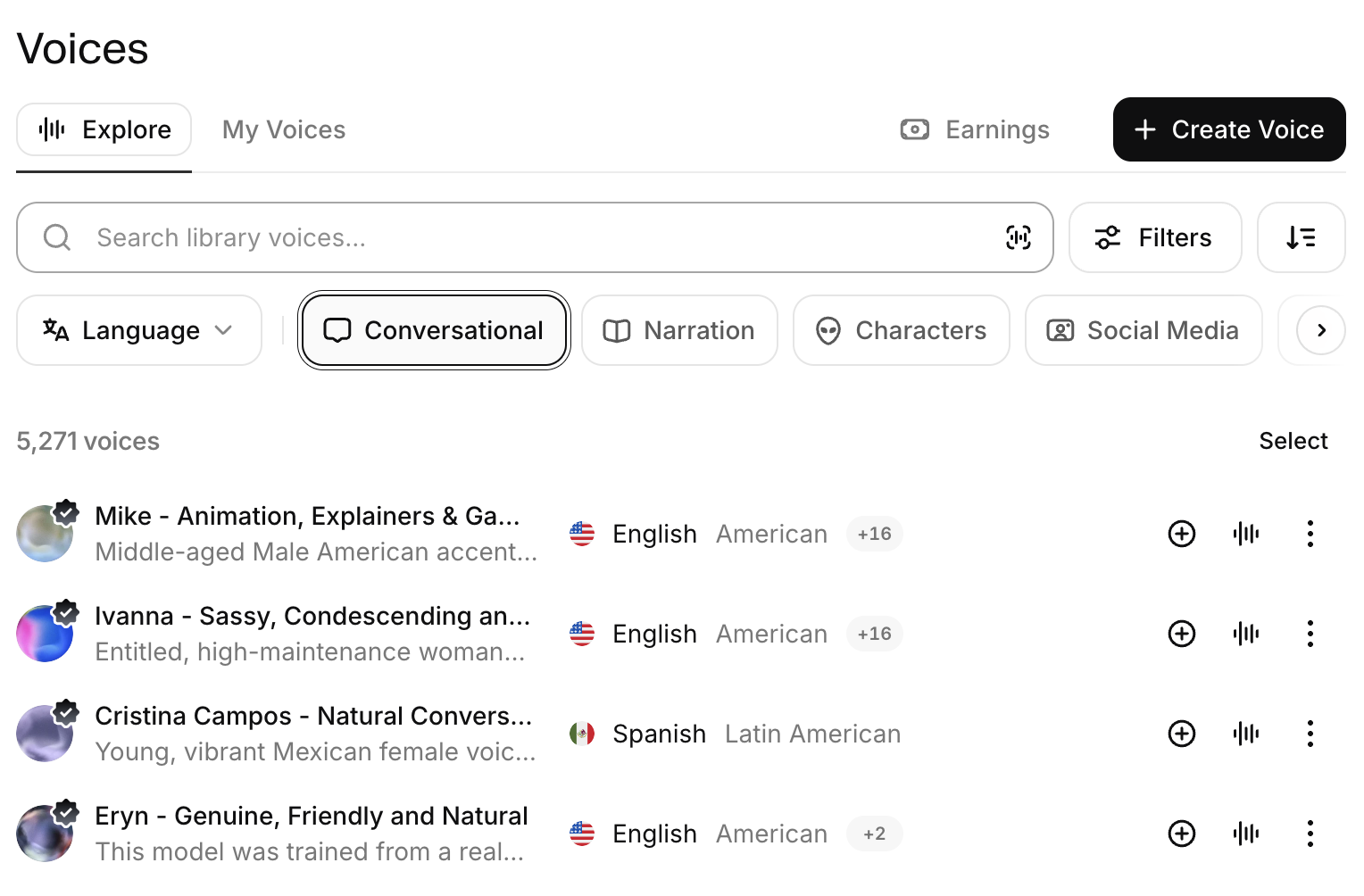
ElevenLabs is a voice-model company with an agent platform, and its site didn't give me an agent to talk to. The voice demos are prerecorded clips of people reading text, and to my ear the recorded voices sounded synthetic.
After I entered my email, I was offered a voice agent test and asked for my use case, so I chose customer support. The experience that followed wasn't interactive and didn't change based on my answer. The site was also slow and required an account to see the full voice library.
Here's how ElevenLabs looks on strengths, watch-outs, pricing, and proof:
- Its strengths are a large voice library and a free plan to start building.
- G2 reviewers most often flag cost and usage credits that run out quickly, and its scores for call routing and escalation trail its voice-quality scores.
- Plans run from free to $990 a month, with AI model and phone carrier charges billed on top at the providers' own rates, according to ElevenLabs' pricing page.
- ElevenLabs reports that Klarna runs an ElevenLabs voice agent for its 35 million US customers.
- ElevenLabs is rated 4.5/5 on G2 from 1,276 reviews, which cover all of its products.
ElevenLabs fits individuals and creators more than enterprise CX teams, like someone who needs a voiceover for TikTok or YouTube videos. For live customer conversations, the experience I saw didn't show an agent ready to book a job.
How much do AI voice agents cost?
AI voice agents cost $0.05 to $0.31 per minute in published rates. But the advertised rate is usually just the platform fee, so the number worth comparing is cost per resolved call. Four charges widen the gap between the two:
- Model and voice charges from the LLM and text-to-speech provider are often added to your bill at the provider's own rate, on top of the platform fee.
- Phone carrier minutes are often billed separately, including minutes spent on transferred calls.
- Concurrency limits on some plans cap simultaneous calls and charge for each extra line.
- Compliance add-ons can make HIPAA coverage a separate monthly fee.
One public price sheet shows how wide that gap can get. Retell's base rate is $0.07 per minute, and the calculator on Retell's pricing page shows a typical setup at $0.11 and a top rate of $0.31. At 10,000 minutes a month, that's $700, $1,100, or $3,100.
Resolution changes the math again. If a 3-minute call costs $0.33 and only half of those calls solve the problem, each resolved call costs $0.66 before any human follow-up. Per-resolution and outcome-based pricing shift that risk to the vendor.
How do you choose the right AI voice agent platform?
Choosing the right AI voice agent platform starts with two questions. The first being who will run the agent day to day, and the second being what has to happen after the call ends. Those answers rule out more platforms than any feature checklist.
Which platforms suit a team where engineers own the agent?
Developer platforms like Vapi and Retell suit teams where engineers own the agent, because they offer the most control over models, voices, and phone carriers. That control comes with the job of designing intake, memory, and handoff yourself. My Vapi call showed what happens when that design is thin.
What should teams with an existing contact center platform check first?
Teams with an existing contact center platform should check native integrations with Genesys, Five9, NICE, or Amazon Connect first. A voice agent that can't pass a call and its context into your existing queues creates more work for your team than it removes.
What should you look for if every call has to end in a booking or sale?
If every call has to end in a booking or sale, the most useful test is watching the agent handle an unscripted call from start to finish. A good agent asks enough to get the job right, books it, sends a confirmation, and updates the customer record. Delight.ai was the only agent in my tests that worked out the job before booking. Its shared memory also means the same customer doesn't start over when they call or text again.
Whichever platform you shortlist, three questions are worth asking every vendor, including us:
- Can I test the agent on an unscripted call before talking to sales?
- What's my estimated cost per resolved call at my volume?
- What does the handoff to a person include, and where does it land?
Most AI voice agents can carry a conversation now, so what separates them is whether the caller hangs up with the right job booked. On my calls, only Delight.ai worked out what was wrong and what the visit would cost before getting to the booking. That's why it's my top pick for CX teams that can't afford a wasted visit or a customer who has to repeat themselves.
If your team needs every call to end in a booked visit, a sale, or a follow-up on any channel, see how Delight.ai's AI voice agent handles the whole call.


