Artificial intelligence (AI) in healthcare is no longer a futuristic idea—it’s already reshaping how care is delivered, managed, and experienced. From mapping the genome to automating administrative tasks, AI enables software to perform tasks traditionally handled by humans—only faster, with greater precision, and at a fraction of the cost.
With its ability to analyze complex datasets, understand natural language, and even act autonomously, AI is unlocking more than just a new standard in healthcare operations. It's paving the way to smarter diagnostics, more personalized care, and better outcomes for patients and providers.
In this article, we dive into 13 real-world examples of how AI is making an impact in healthcare today. Along the way, we’ll look at the benefits these technologies bring—as well as the challenges organizations face when adopting them.
Artificial intelligence (AI) in healthcare is no longer a futuristic idea—it’s already reshaping how care is delivered, managed, and experienced. From mapping the genome to automating administrative tasks, AI enables software to perform tasks traditionally handled by humans—only faster, with greater precision, and at a fraction of the cost.
With its ability to analyze complex datasets, understand natural language, and even act autonomously, AI is unlocking more than just a new standard in healthcare operations. It's paving the way to smarter diagnostics, more personalized care, and better outcomes for patients and providers.
In this article, we dive into 13 real-world examples of how AI is making an impact in healthcare today. Along the way, we’ll look at the benefits these technologies bring—as well as the challenges organizations face when adopting them.
- 13 AI in healthcare examples
- Pros and cons of AI in healthcare
- What types of AI are used in healthcare?
What is AI in healthcare?
AI in healthcare refers to the use of machine learning, natural language processing, computer vision, and other AI technologies to enhance healthcare operations, outcomes, and experiences for both patients and caregivers.
AI’s capabilities for data processing, prediction, and autonomous action make it effective in using data intelligently across systems. This enables healthcare professionals to better manage resources, make more accurate decisions, and deliver more timely, personalized care that results in better outcomes.
Rather than replacing healthcare workers, AI is being used to augment these roles, assisting with a growing range of tasks to ensure more precise, efficient, and effective care—often at a fraction of the cost.
13 AI in healthcare examples
To give you a clear sense of this rapidly evolving field, we rounded up the following real-world AI in healthcare examples:
AI in medical diagnosis
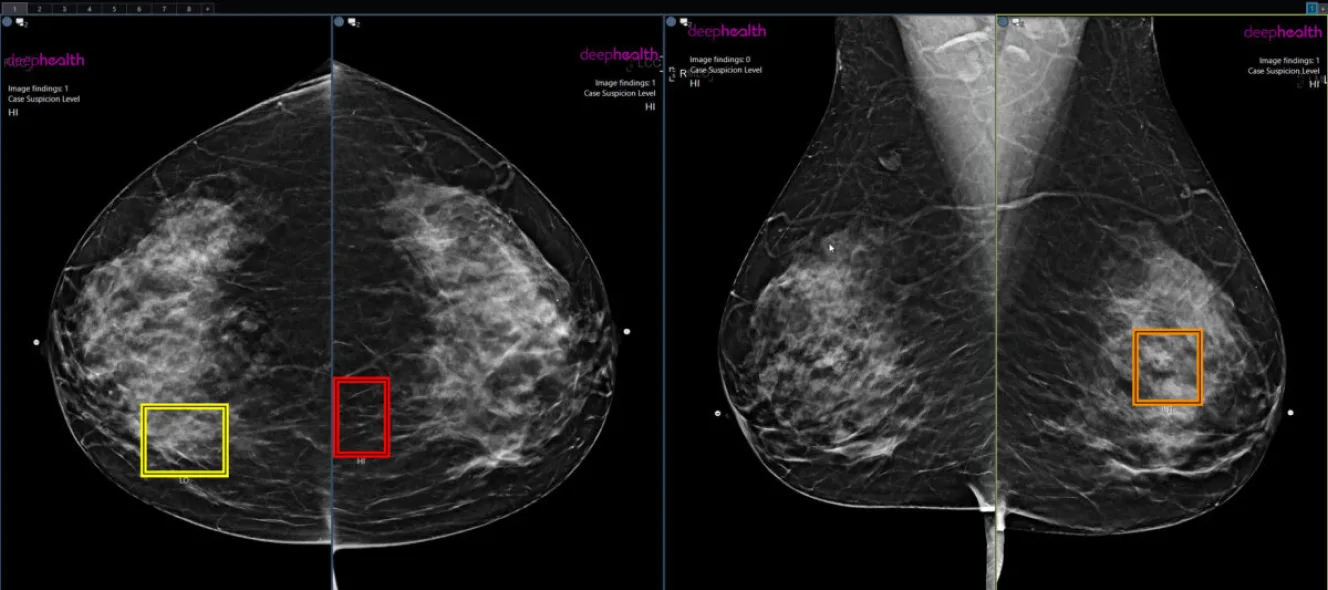
Every year, inaccurate medical diagnoses result in around 400,000 patient hospitalizations and 100,000 deaths. Largely to blame are clinician error, large caseloads, and incomplete medical histories. AI is not only immune to these human variables, it’s been shown to identify and diagnose disease with greater accuracy and efficiency than humans in many cases.
For example, UK researchers used an AI tool to successfully detect 64% of epilepsy brain lesions previously missed by radiologists. Trained on the MRI scans of over 1,100 adults and children, the AI tool was able to spot lesions more quickly than a doctor, and also discover tiny or obscured lesions that evaded human sight. AI has also been used to analyze medical images such as X-rays and MRI scans, diagnosing conditions like cancer, pneumonia, cardiovascular diseases, and more.
AI in preventative medicine
AI models can process large and complex datasets to identify signs of disease before symptoms appear. For example, using machine learning, one model is capable of predicting Alzheimer's disease up to seven years before symptoms manifest. The model’s leading predictive factors of Alzheimer’s were high cholesterol in men and osteoporosis in women.
By detecting the subtle biological markers correlated with diseases, AI can help clinicians to identify and treat maladies that often go overlooked until it's too late. This approach enables a shift from reactive to proactive healthcare, allowing providers to intervene earlier, optimize screening plans, and improve health outcomes—all while reducing the costs associated with long term care.
AI in drug discovery
Drug discovery is time and resource-intensive process that takes thousands of human hours, costs an average of $1.3 billion, and achieves just at 10% success rate. AI accelerates the process of developing new drugs, helping to generate new drug molecules, optimize lead compounds, and predict side effects to bring novel treatments to market in less time.
For example, the first AI-designed drug candidate recently progressed to clinical trials in just 18 months, showing AI’s ability to streamline target drug discovery. Researchers at the MIT employed deep learning to identify a novel antibiotic known as abaucin, which is effective in treating a WHO-designated critical priority pathogen.
AI in patient care and engagement
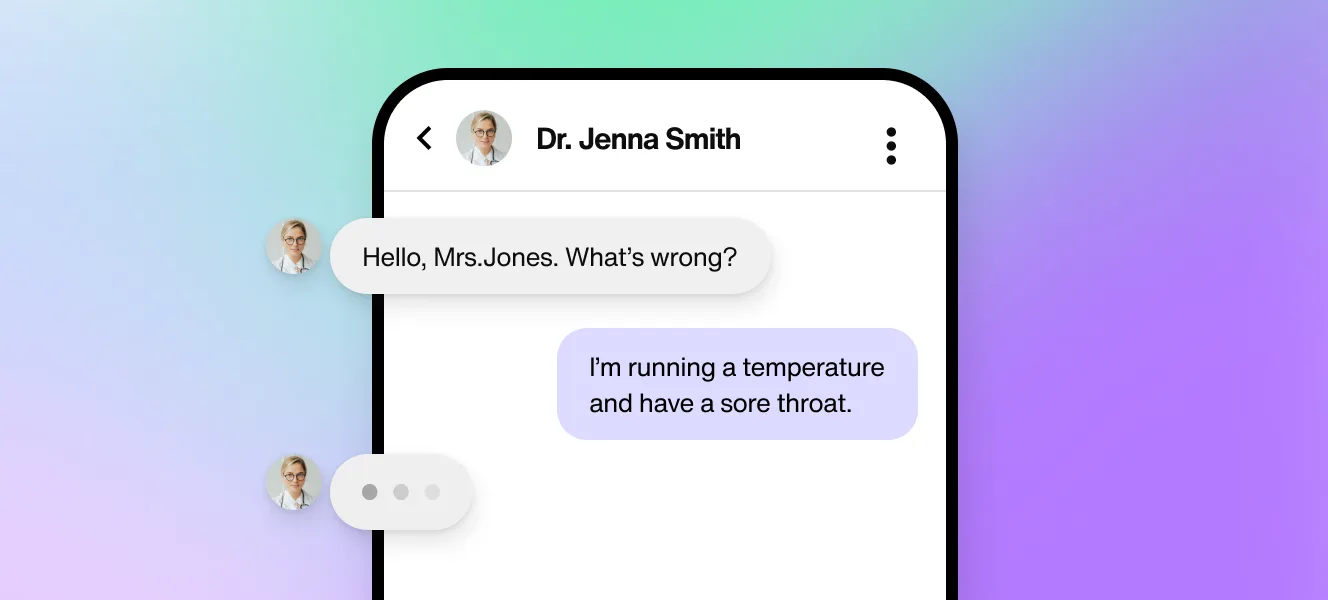
With patient loads and administrative burdens increasing, it's a challenge for healthcare providers to deliver high-quality care. One of the most widely adopted AI in healthcare examples is chatbots, which use natural language processing to provide health guidance and support to patients 24/7. These digital assistants help organizations to scale patient engagement and make digital care more accessible, personalized, and effective.
AI can also monitor patients remotely through wearables and apps, providing real-time feedback, treatment reminders, and detecting issues in advance to enable proactive care. By offering omnipresent, tailored communication and support across digital channels, AI can enhance patient satisfaction and adherence to treatment plans by encouraging patients to take a more active role in managing their health.
AI in personalized medicine
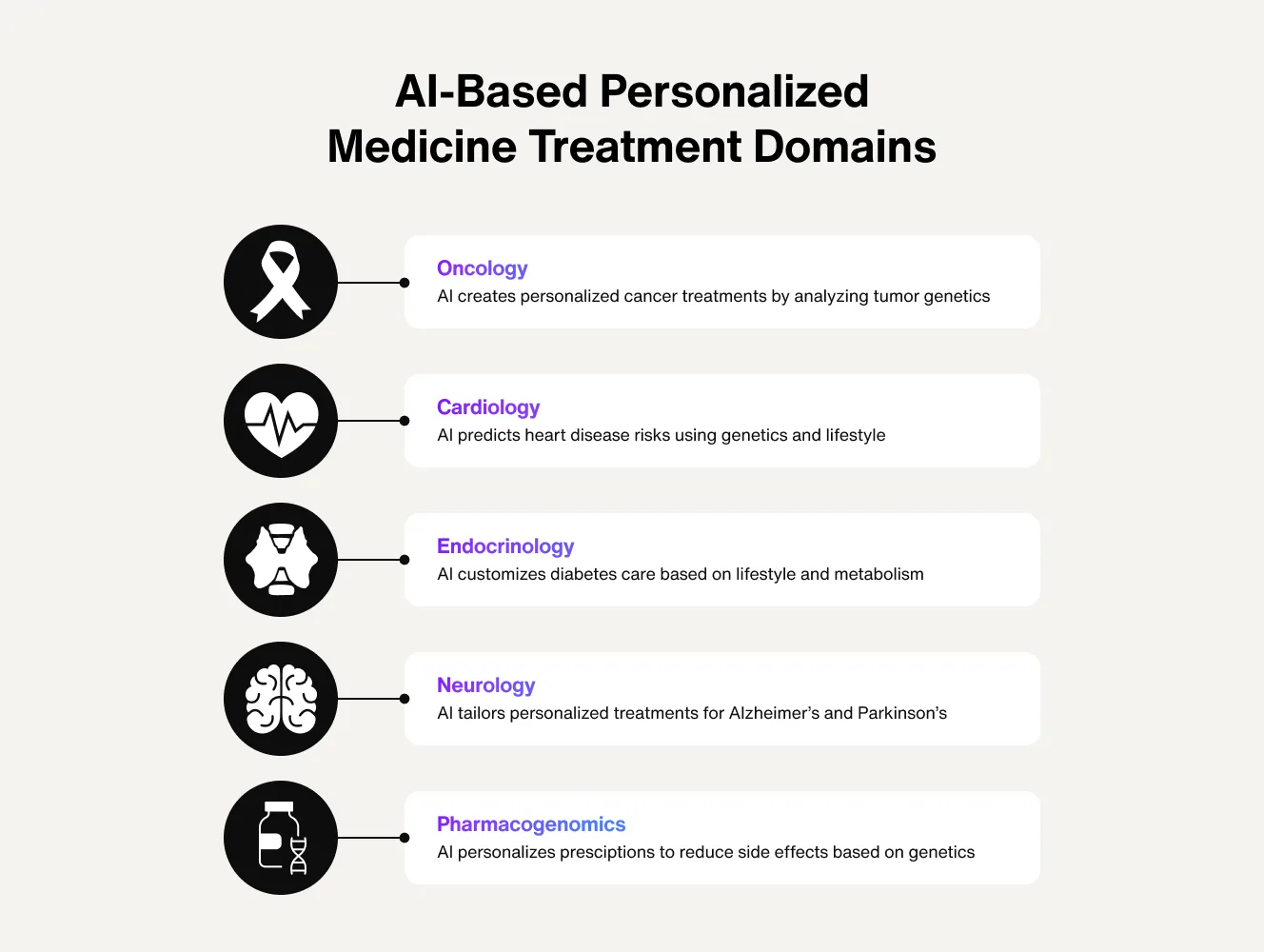
Traditional medicine often relies on standardized treatments, but what works for one patient may not work for another. In fact, over 50% of patients with chronic conditions like depression or hypertension don’t respond to first-line therapies.
AI can analyze genetic, clinical, and lifestyle data to create personalized treatment plans for patients. This revolutionary approach, also known as precision medicine, can also guide treatment, minimize adverse reactions, and optimize drug doses in clinical settings. By helping physicians to customize treatment to an individual's unique medical profile, AI-powered personalized medicine can lead to earlier diagnosis, prevention, and better outcomes overall—potentially even for common conditions such as heart disease or cancer.
AI in patient experience
AI is increasingly being used to automate the delivery of personalized healthcare communications, improving the efficiency, accessibility, and cost-effectiveness of the patient experience. This comes at a critical time when around 60% of patients report that poor communication is a top frustration and a contributor to negative health outcomes. AI is helping bridge this gap through applications like virtual assistants and tailored messaging that ensure timely, convenient communications that lead to better experiences and outcomes for patients.
These technologies use generative AI, specifically natural language processing (NLP), to provide accurate, timely responses to patient inquiries, automate appointment scheduling, and offer individualized care guidance around the clock. By interpreting patient data and intent in real time to provide relevant responses, AI enhances the speed and precision of routine interactions. This is one of the most widespread applications of AI in healthcare, as it helps patients while also freeing up clinicians to focus on complex care and also streamlines operations for healthcare providers.
AI in smart hospital rooms
Smart hospital rooms, which integrate IoT (internet of things) technology and AI to boost patient experience and clinical outcomes, are increasingly popular. For instance, AI-driven voice-assisted devices like Amazon’s Alexa offer a convenient way for bedridden patients to connect with staff, engage with educational material, and manage other smart devices in their hospital room such as the TV or window blinds.
AI tools can also track patient vitals and movement in clinical settings, using computer vision to enable continuous real-time monitoring through intelligent video analysis. AI can then alert healthcare teams in real time to prevent adverse events such as medication errors or falls, which impact an estimated over 700,000 patients every year. These AI in healthcare examples show how AI can help to minimize risk, ensure safety, and promote treatment adherence.
AI in healthcare administration
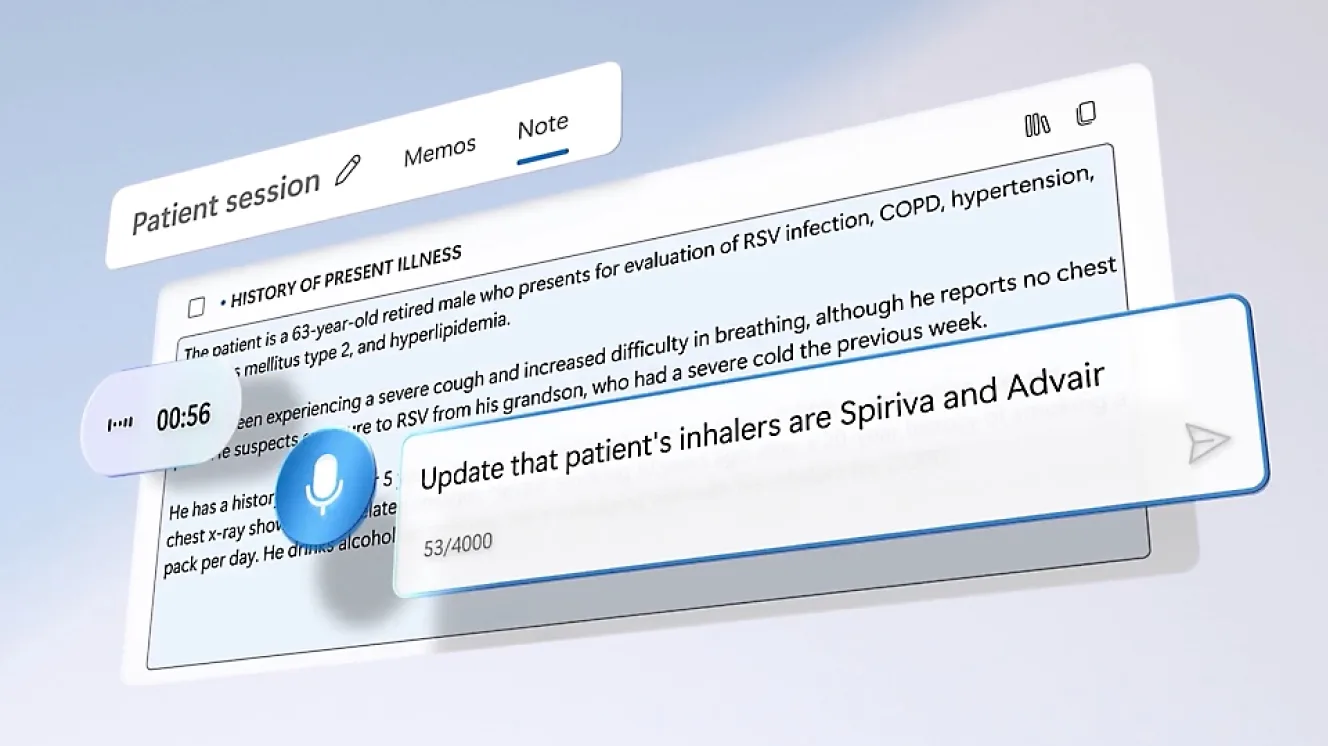
Administrative tasks are increasingly time-consuming in healthcare, sapping valuable time that could be used to provide better care. Amidst the ongoing shortage of physicians, AI-powered tools are increasingly used to automate repetitive tasks like scheduling, billing, and patient record management. These range from AI-driven admin systems to patient portals to virtual assistants embedded in AI-driven workflows.
For example, Microsoft’s Dragon Copilot is a virtual assistant that listens to and create notes on clinical consultations automatically using generative AI. By automating various back office operations, AI helps to free up staff to focus on meaningful work, cuts down on human error, and reduces costs for providers.
AI in genomics
AI is revolutionizing genomics with its ability to analyze, interpret, and apply biological data in ways that exceed human capabilities. AI algorithms can identify patterns, mutations, and insights in DNA sequences that humans can’t detect, helping to sequence genomes faster and more accurately. This helps clinicians to understand genetic diseases at a fundamental level, while also helping to accelerate and reduce the cost of drug research and genome projects.
Machine learning algorithms can also predict disease based on the individual’s genetic makeup, and even predict how the person might respond to particular drugs or treatments. Being able to tailor treatment plans to a patient's genetic profile, also known as precision medicine, is a giant leap forward for the field of genomics.
AI in healthcare data management
AI is transforming data management with its ability to analyze, extract, and leverage insights from structured and unstructured data across healthcare operations—effectively acting as a bridge between siloed systems. Using NLP, AI-driven systems can convert clinical notes, medical imaging, patient records, wearable device signals, and more into usable data. This data can then be applied intelligently across operations by AI agents or autonomous software that uses data in real time across systems.
By facilitating the integration of diverse data sources, AI enables the automation of various back-office tasks like billing and coding, while also supporting faster, more accurate diagnoses and better care coordination based on a single centralized patient profile. For example, AI from Invidia is being used to standardize and integrate healthcare data from multiple sources, especially helpful during complex clinical trials or population health studies.
AI in robotic surgery
Robotics has revolutionized surgery, improving outcomes by cutting down on human factors such as error and fatigue—and AI significantly advances these capabilities. For instance, AI can interpret medical imaging to map out surgical plans, guide robotic arms to minimize soft tissue damage, as well as continuously monitor and adjust tool movement for optimal accuracy and patient outcomes. Robot-assisted surgeries have shown fewer surgery-related complications, less pain and a quicker recovery time. AI is expected to make operations less invasive, more consistent, and with fewer complications.
AI in medical education and training
AI models are trained on vast volumes of human knowledge, making them effective aids in medical education and training. For example, AI is being used in medical education on four levels:
- Learner-focused AI supports students by helping them absorb and engage with new information in personalized ways.
- Instructor-focused AI assists faculty by easing their workload, offering insight into student performance, and enabling the use of new teaching strategies.
- Institution-focused AI aids administrators in making more informed decisions about program planning and school management.
- Curriculum-focused AI helps to keep curricula current and effective, analyzing the latest educational research to highlight and suggest curriculum changes.
In the classroom, this might look like AI-powered learning platforms that adjust to each student’s learning pace and style. It also includes the use of AI-driven simulations and virtual reality experiences, which give students a safe environment to practice procedures, make clinical decisions, and learn through realistic scenarios.
AI in mental health
AI chatbots and mental health platforms offer 24/7 support to individuals dealing with mental health challenges, effectively acting as digital therapists that operate through text, video, and audio. Equipped with NLP, these AI tools can analyze patient speech patterns in conversations to assess their mood and emotional wellbeing, sometimes with access to health records. They can then proactively offer resources, conversational support, or personalized treatment plans that can reduce anxiety, identify early signs of mental conditions.
For example, an AI tool like Woebot might detect changes in language or tone during a virtual visit that are commonly associated with mood disorders, prompting a deeper evaluation at the next clinical visit, and making a note in patient records. This helps improve access to care, aids in early detection, and opens the door to personalized treatment. Similarly, AI agents for healthcare can also be custom-trained to provide individualized care to patients and embedded across the digital health journey.
The pros and cons of AI in healthcare
For all its wide-ranging applications, AI in healthcare isn’t without its risks and considerations.
Ultimately, AI’s overall impact depends on whether it’s implemented and used responsibly. Healthcare leaders must balance these newfound capabilities with human oversight and governance based on evolving frameworks around AI transparency, AI security, and ethics.
Here are some of the advantages and challenges of using AI in healthcare in 2025:
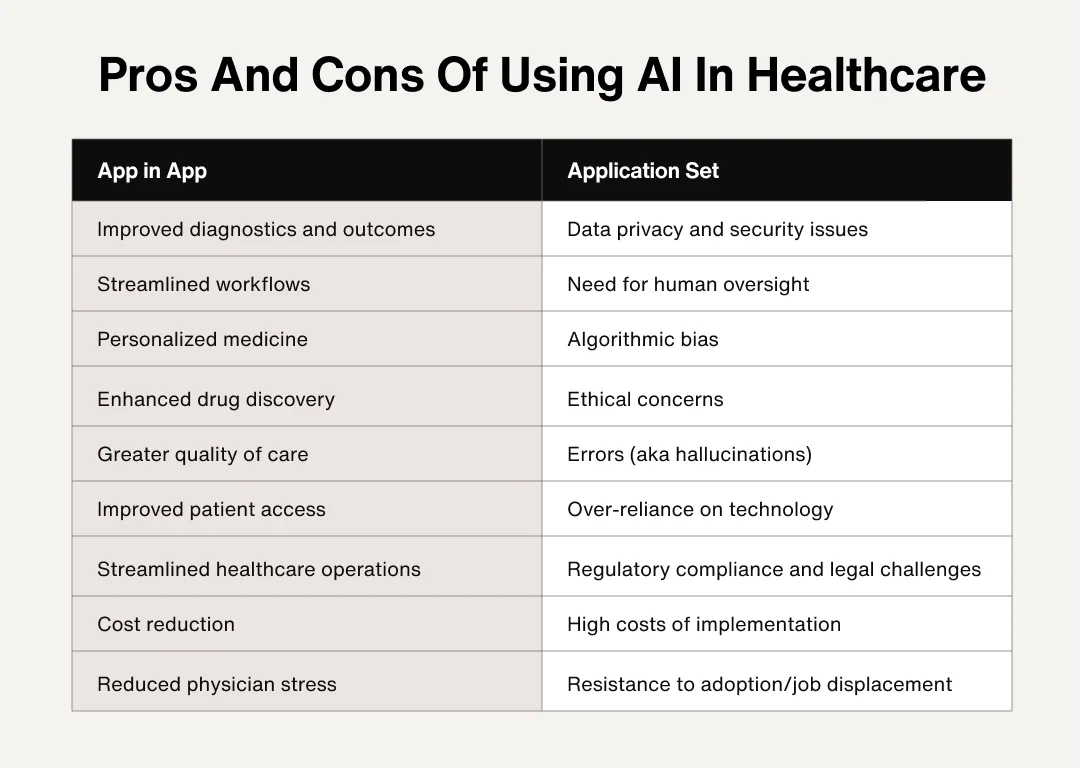
Pros of AI in healthcare
- Improved diagnostics: AI can analyze vast amounts of medical data to identify patterns and anomalies for faster, more accurate diagnoses.
- Streamlined workflows: AI can automate tasks like documentation and scheduling, freeing clinicians to spend more time with patients.
- Personalized treatment plans: AI helps tailor treatments based on individual genetics, lifestyle, and history.
- Enhanced drug discovery: Accelerates identification of viable drug candidates using modeling and simulations.
- Greater quality of care: AI improves the accuracy, accessibility, and overall quality of healthcare, leading to more individualized treatment and better outcomes.
- Cost reduction: AI increases operational efficiency by automating and streamlining routine tasks, reducing healthcare expenses by a projected $150 billion annually by 2026.
- Improved patient access: Chatbots, remote monitoring, and wearables extend care to underserved populations and provide 24/7 digital care.
- Reduced physician stress: AI systems minimize burnout by handling repetitive administrative tasks, helping to reduce churn among healthcare staff.
Cons of AI in healthcare
- Data privacy and security: AI requires access to sensitive health data, raising concerns around misuse, consent, and regulatory AI compliance.
- Bias: AI systems can replicate biases in their training data, potentially resulting in unequal treatment and outcomes.
- Errors (Hallucinations): AI systems can confidently assert false information, which can lead to incorrect diagnosis, treatment, and negative patient outcomes.
- Over-reliance on technology: Many physicians worry that excessive dependence on AI may erode clinical intuition and care delivery.
- Ethical concerns: Using AI in healthcare raises concerns about consent, fairness, and the responsibility of healthcare organizations to ensure patient safety.
- High implementation costs: AI adoption can be very resource-intensive, making it prohibitive to smaller practices.
- Human error: Users may misinterpret or misuse AI systems, especially in early stages of adoption, which could lead to bad outcomes and risks of AI for healthcare providers.
- Human resistance and job displacement: AI adoption can lag due to employee hesitancy around lack of training or fears that automation may take over human roles.
- Need for human expertise: AI requires human oversight to use, deploy, and maintain effectively, making it a complement to human skills instead of a replacement.
What types of AI are being used in healthcare?
Several types of artificial intelligence (AI) are currently being used in healthcare, each with distinct roles in improving clinical care, operations, and research.
Here’s an overview of the main types of AI and their corresponding top AI use cases in healthcare:
Machine learning (ML)
Use case: Predictive analytics, medical diagnostics, medical image analysis.
How it works: ML algorithms learn from historical data to make predictions or detect patterns. For example, they can help detect early signs of disease from radiology scans or forecast patient outcomes.
Natural language processing (NLP)
Use case: Clinical documentation, decision support, and EHR data analysis.
How it works: NLP enables computers to understand and respond to users in natural human language. It extracts insights from unstructured text like physician notes or patient feedback to support decision making, documentation, and enables customer engagement via AI agents (chatbots).
Expert systems
Use case: Clinical decision support, symptom checkers.
How it works: These systems rely on predefined rules and logic to mimic decision-making processes of healthcare professionals, offering recommendations based on input data.
Robotic process automation (RPA)
Use case: Administrative automation such as billing, scheduling, and claims processing.
How it works: RPA uses software "robots" to automate repetitive, rule-based tasks, freeing up staff for more patient-focused work.
Computer vision
Use case: Medical imaging interpretation (X-rays, MRIs, pathology slides).
How it works: AI models analyze visual data to identify abnormalities such as tumors, fractures, or lesions with high accuracy.
Generative AI (Gen AI)
Use case: Content creation, summarizing clinical notes, generating patient education materials.
How it works: Tools like large language models (LLMs) can generate human-like text or images, helping clinicians with documentation and patients with understandable health information.
Agentic AI (AI agents)
Use case: Proactive and autonomous care management, clinical decision-making, real-time operational optimization and automation.
How it works: Agentic AI systems (AI agents) act autonomously to achieve specific goals in a larger healthcare system. They can monitor patient data continuously, make decisions, initiate actions (like sending alerts or scheduling follow-ups), and adapt based on new information—all with minimal human input. These agents combine perception, reasoning, and action capabilities, as well as NLP and generative AI, allowing them to operate across complex environments such as hospitals or remote patient monitoring systems.
If you’re looking to build AI agents tailored to your healthcare organization’s unique needs, workflows, and patient care requirements, delight.ai can help.
Our advanced AI agent platform enables healthcare providers to build, customize, and optimize AI agents on secure, enterprise-grade infrastructure that ensures scalability, compliance, and efficiency.