71% of U.S. consumers used AI-powered customer service in the past year. Retail ranked second across all five industries in the Delight AI Index, scoring 59 out of 100 and clearing the national average of 51 by eight points. Shoppers are already engaging with AI in retail at scale, and many describe those interactions as helpful and time-saving.
That's the tipping point. Retail is not at the beginning of the AI adoption curve. It's past it. The question now isn't whether shoppers will use AI. It's which brands will build the trust that turns first interactions into lasting loyalty.
The data points directly at the opportunity. Shoppers have already told us where they want AI, what would make them trust it more, and exactly what it would take to delight them. The playbook is written. The brands that execute it first will own the next decade of retail CX.
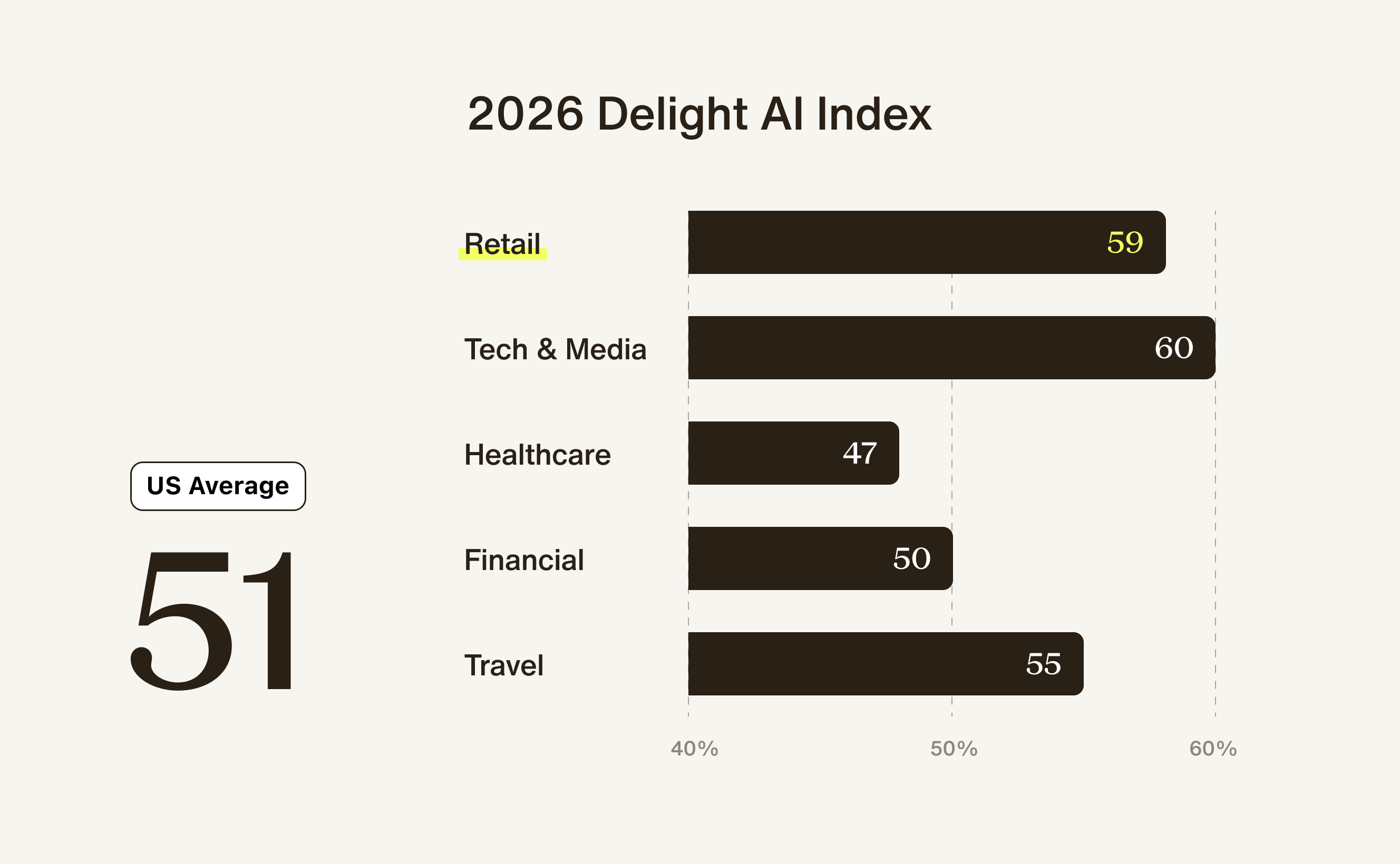
Retail leads every industry except Tech & Media. A score of 59 also makes clear where the ceiling is and how much room there is to reach it. The gap between 59 and "Confident" on the Index scale is 16 points. Those points are earned on trust, not efficiency. The brands building for trust now will be the ones shoppers choose when the market consolidates around AI-native experiences.
The playbook is already written
One of the clearest findings in the retail data is that shoppers have already sorted their service interactions into two buckets. Fast, routine, informational tasks belong to AI. Anything that touches their money belongs to a human, or at minimum an AI with a clear approval checkpoint.
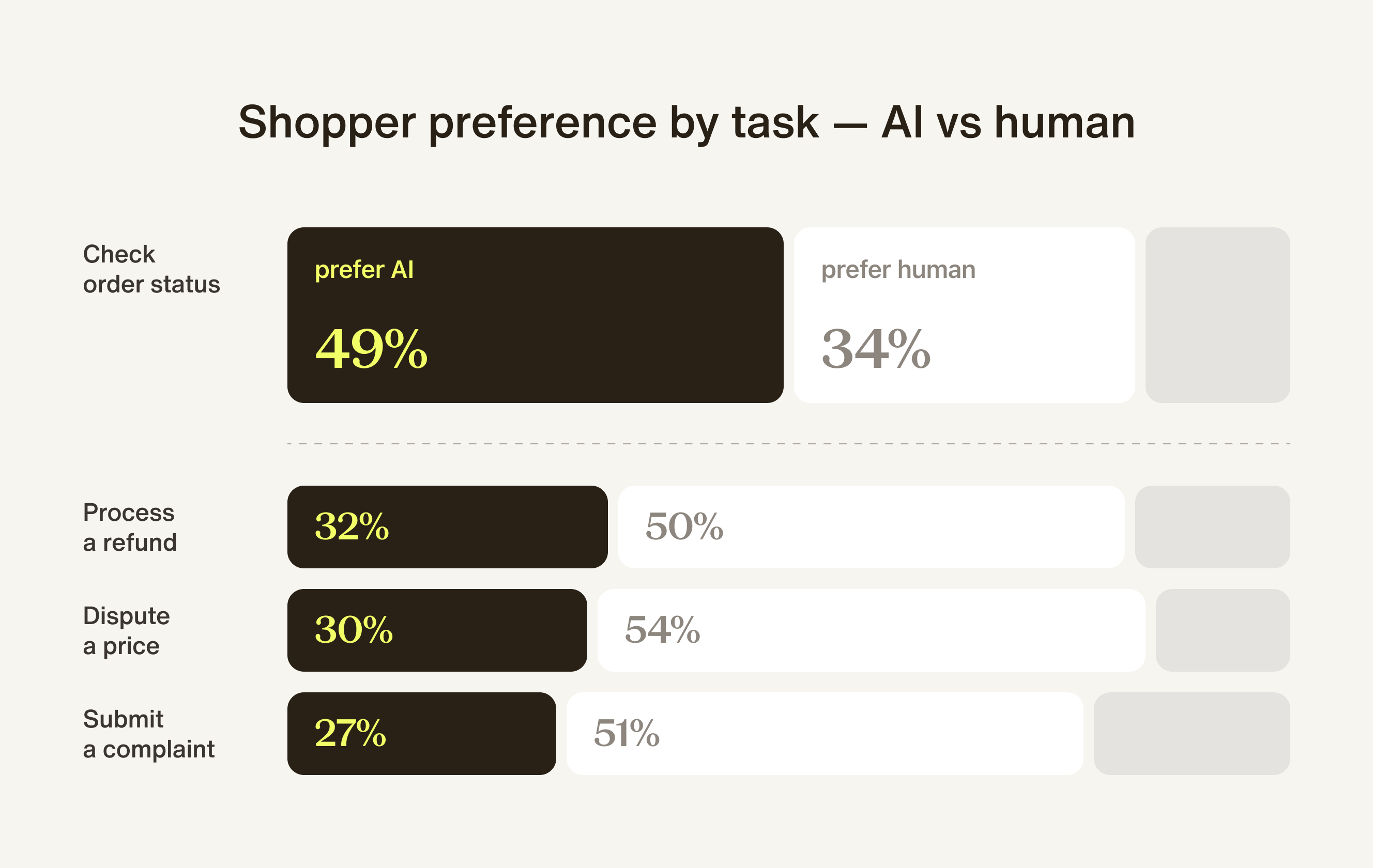
Shoppers are being specific, not resistant. Nearly half already prefer AI for order tracking. At 49%, that's mainstream behavior. On refunds, 32% are already willing to try AI, with more expected to follow as AI proves itself reliable and correctable.
The complaint row deserves its own attention. When something has already gone wrong and a shopper wants to register a complaint, 51% want a human. That moment, after the failure and before the resolution, is where brand equity is either rebuilt or lost for good. The handoff design there is as important as the AI deployment that preceded it.
The brands that win won't be the ones that force AI into every interaction. They'll be the ones that deploy it where shoppers already want it and build handoffs that earn trust at the moments that matter most.
AI is now a brand signal
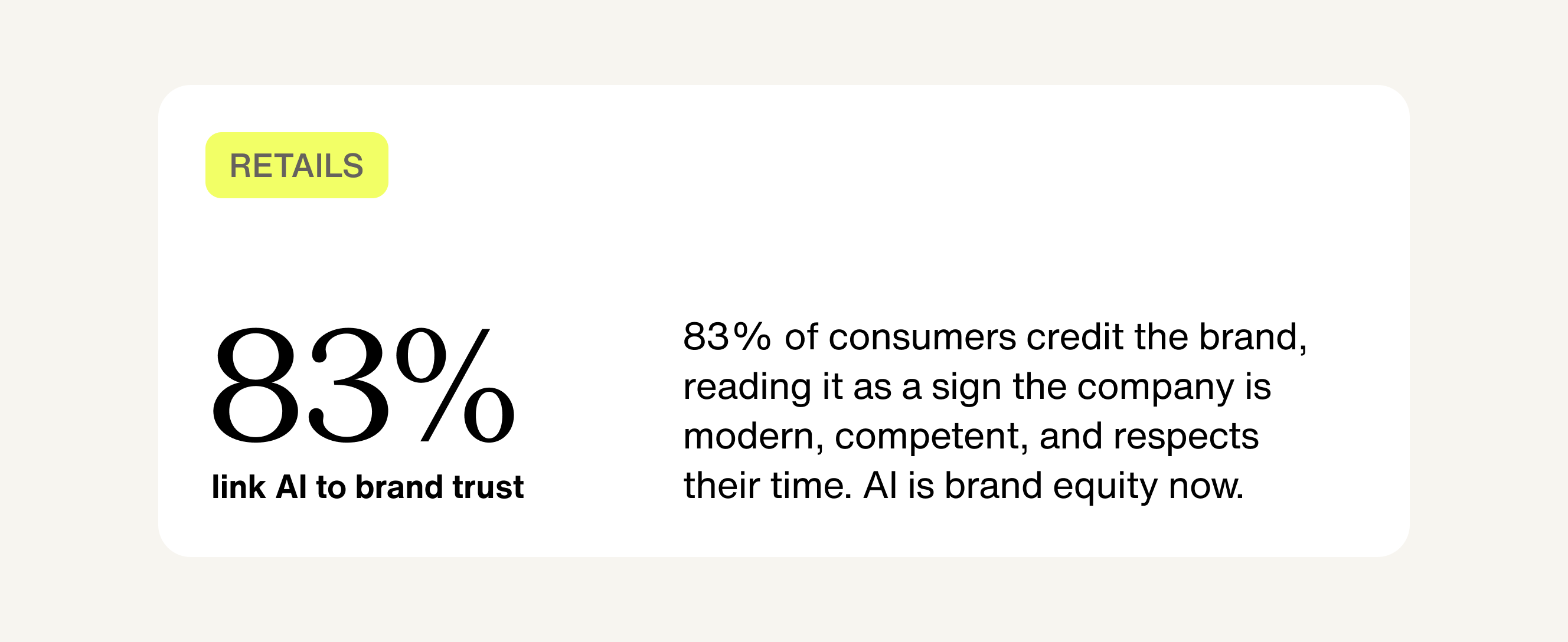
The Index found that shoppers don't separate AI from the brand deploying it. A great AI interaction is a great brand interaction. 64% of consumers expect AI to outperform a human rep, and when it does, the brand gets the credit. That's a significant shift from even two years ago, when AI in CX was still seen as a cost-cutting measure rather than a quality signal.
The Emotional Resonance pillar, which measures whether AI interactions feel meaningful rather than just functional, scores 46 nationally, trailing Brand Alignment at 57. That 11-point gap is the largest in the Index and the biggest opportunity in retail right now. Shoppers are already aligning AI with your brand. Retailers who invest in making those interactions feel personal and considered will close that gap and pull ahead of competitors still treating AI as back-office automation.
The bar is lower than you think
When we asked shoppers what would genuinely delight them in an AI-powered service interaction, the answer wasn't a more sophisticated AI. It was a more attentive one.
70% say they'd feel more delighted if AI simply remembered their prior interactions so they didn't have to repeat themselves. Memory beats empathy. This is achievable today.
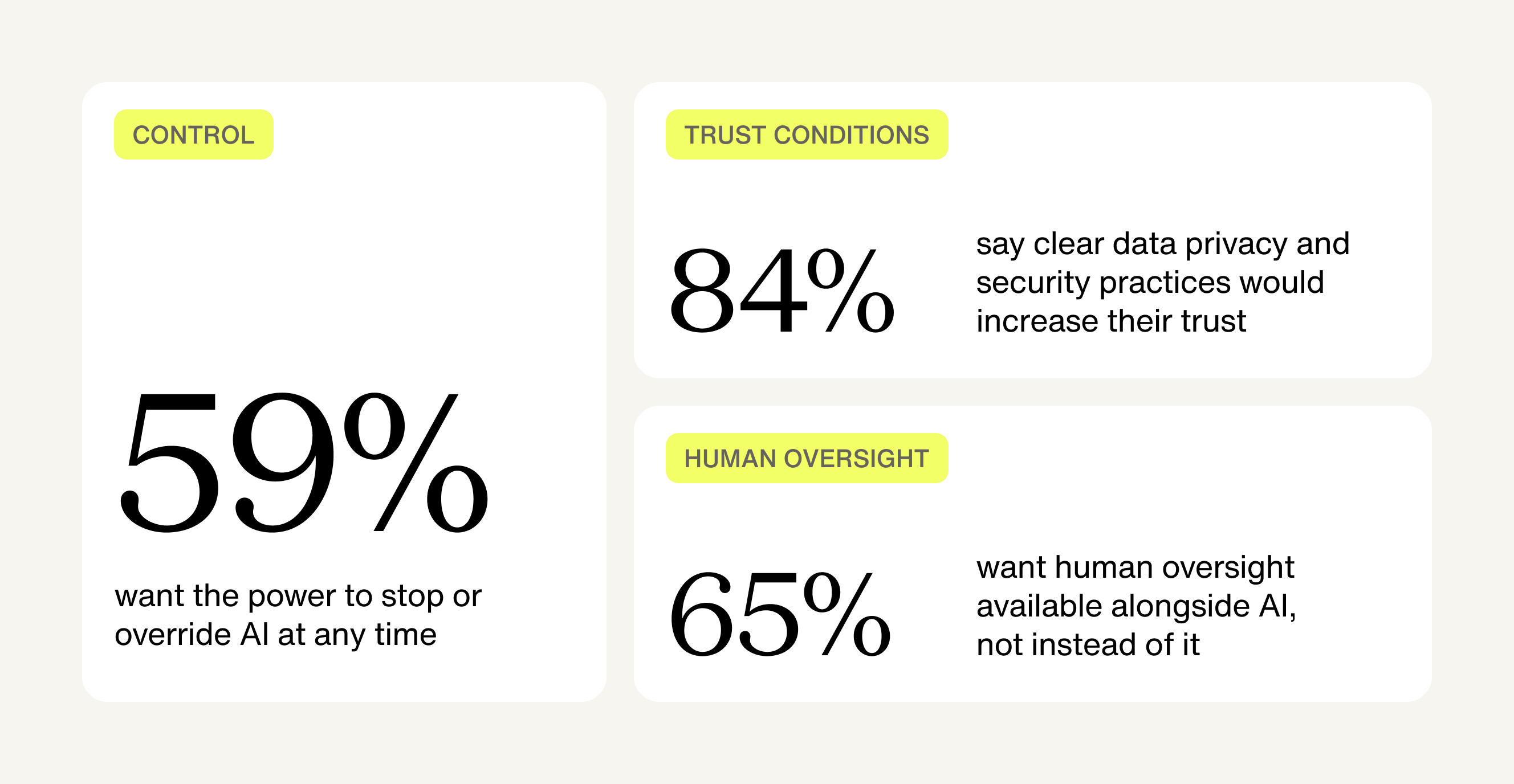
These are solvable problems. Long-term conversational memory. Transparent data practices. Visible human backup for high-stakes moments. None of this requires a fundamental rethink of AI capability. It requires intentional product decisions. The retailers who make those decisions now will delight shoppers who are ready to be won over and build the kind of trust that compounds over time.
54% of all consumers expect to feel comfortable with fully autonomous AI within the next year. The window to earn that trust before it becomes the default expectation is open right now. It's narrowing.
Your highest-value shoppers are ready
The generational data in the Index challenges a common assumption in retail. AI-forward service doesn't primarily appeal to younger, more tech-native shoppers. The reality is more nuanced and more actionable than that.
Millennials are the highest-value shoppers in retail right now, both in spending power and in AI readiness. 63% are comfortable with AI handling routine retail CX tasks independently, a full 28 points ahead of Boomers, where that number drops to 35%. The generational ceiling for AI adoption in retail is high. At the floor, the gap is real and requires a different design approach.
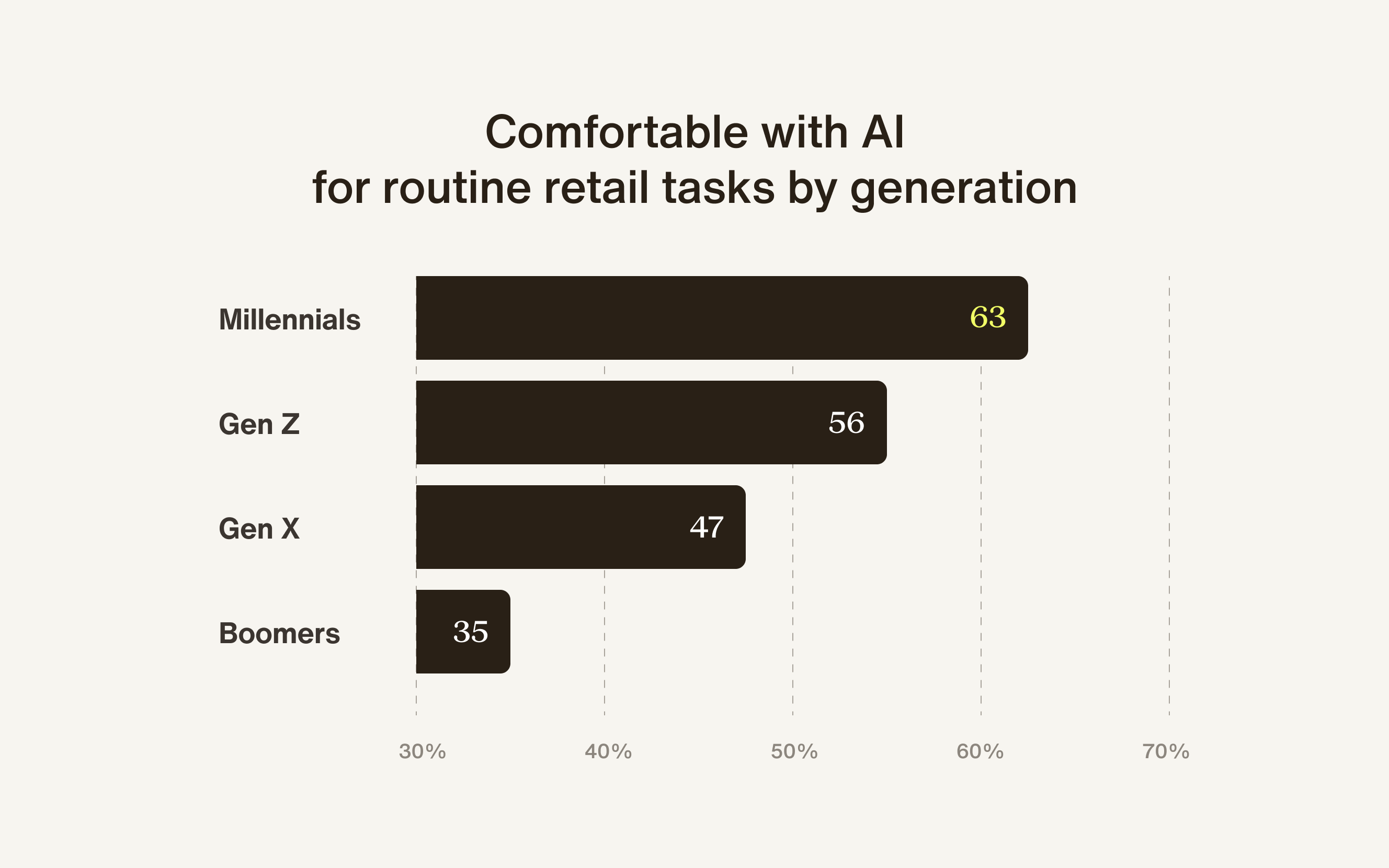
The implication is straightforward. Design AI-powered service with guardrails that the most skeptical frequent shopper would find reassuring: clear data policies, visible human backup, the ability to reverse a decision. Build for that shopper and you'll have built something that delights everyone else in the process.
Three moves that put you ahead
1. Start with memory.
70% of shoppers would be delighted by AI that simply remembers their prior interactions. No repeated order numbers. No re-explaining the context. Long-term conversational memory is the single highest-impact, lowest-barrier improvement in retail AI right now. It compounds. Every interaction that builds on the last one is an interaction that builds loyalty.
2. Follow the playbook shoppers already wrote.
Deploy AI where shoppers already want it: order status, product questions, tracking updates. For refunds, returns, and price disputes, pair AI with explicit approval checkpoints. The most effective brands aren't switching from AI to human at that point. They're running both in parallel, with AI surfacing the order history and options while a human confirms the outcome. Shoppers reward brands that make the process feel supervised, not automated.
3. Make trust visible.
84% of shoppers say clear data privacy and security practices would increase their trust in AI. 65% want human oversight available alongside autonomous agents. The brands that communicate their AI safeguards, not just implement them, will close the Emotional Resonance gap faster than those treating trust as a back-end concern. Show shoppers what AI will do before it does it. Tell them how to reverse it if needed.
Retail is at the tipping point. 59 out of 100 means the market has tried AI, found it useful, and is ready to go further with the brands that earn the next level of trust. The brands building for that now, with memory, safeguards, and a clear model for where AI leads and where humans do, will set the standard for the rest of the decade.