Tech & Media scored 60 out of 100 in the 2026 Delight AI Index, the highest of all five industries measured and nine points above the national average of 51. The lead is real. Tech & Media users are the most AI-fluent consumers in the dataset. They use AI tools more frequently, report more positive experiences with AI-powered customer service, and are more comfortable with autonomous AI handling routine service interactions than any other industry segment.
That lead has implications beyond the industry. Consumer comfort with AI doesn't stay siloed by vertical. A user who learned to trust AI for subscription management or technical troubleshooting carries that comfort into their next AI interaction, whether it's with their bank, their healthcare provider, or their airline. Tech & Media is where consumers are building the baseline expectations that will define AI trust across every industry. What this industry does with that position shapes the entire market.
The same audience that scores Tech & Media highest also has the highest expectations for what AI should deliver. They know the difference between AI that's well-deployed and AI that's adequate. They've used enough of both to have opinions. The data shows where that advantage holds and where even the most AI-positive audience in the Index draws a clear line.
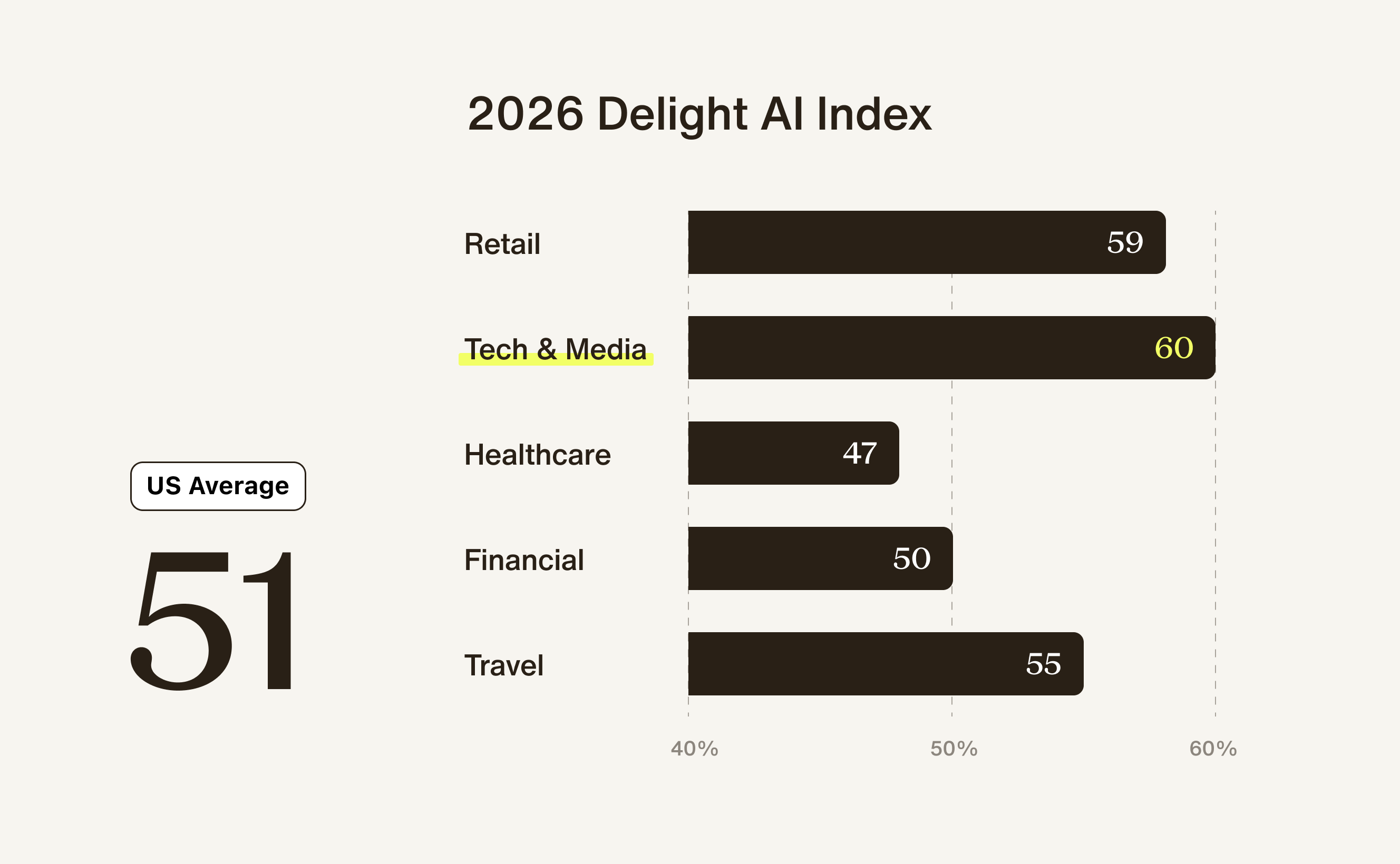
The one-point margin between Tech & Media and Retail matters less than what the position itself represents. The users who become comfortable with AI in streaming, gaming, and software support are the same users who will be less hesitant when AI appears in their financial services app or healthcare portal. Tech & Media's lead is a head start on a much larger market dynamic. The brands that use it well will be the ones that shape what consumers expect from AI everywhere.
Where AI wins and where it doesn't
Tech & Media users have sorted their service interactions clearly. Product questions and subscription management are AI territory. Billing disputes are not. The pattern is consistent with every other industry in the Index. The moment money is actively at stake, human preference spikes regardless of how AI-positive the overall audience is.
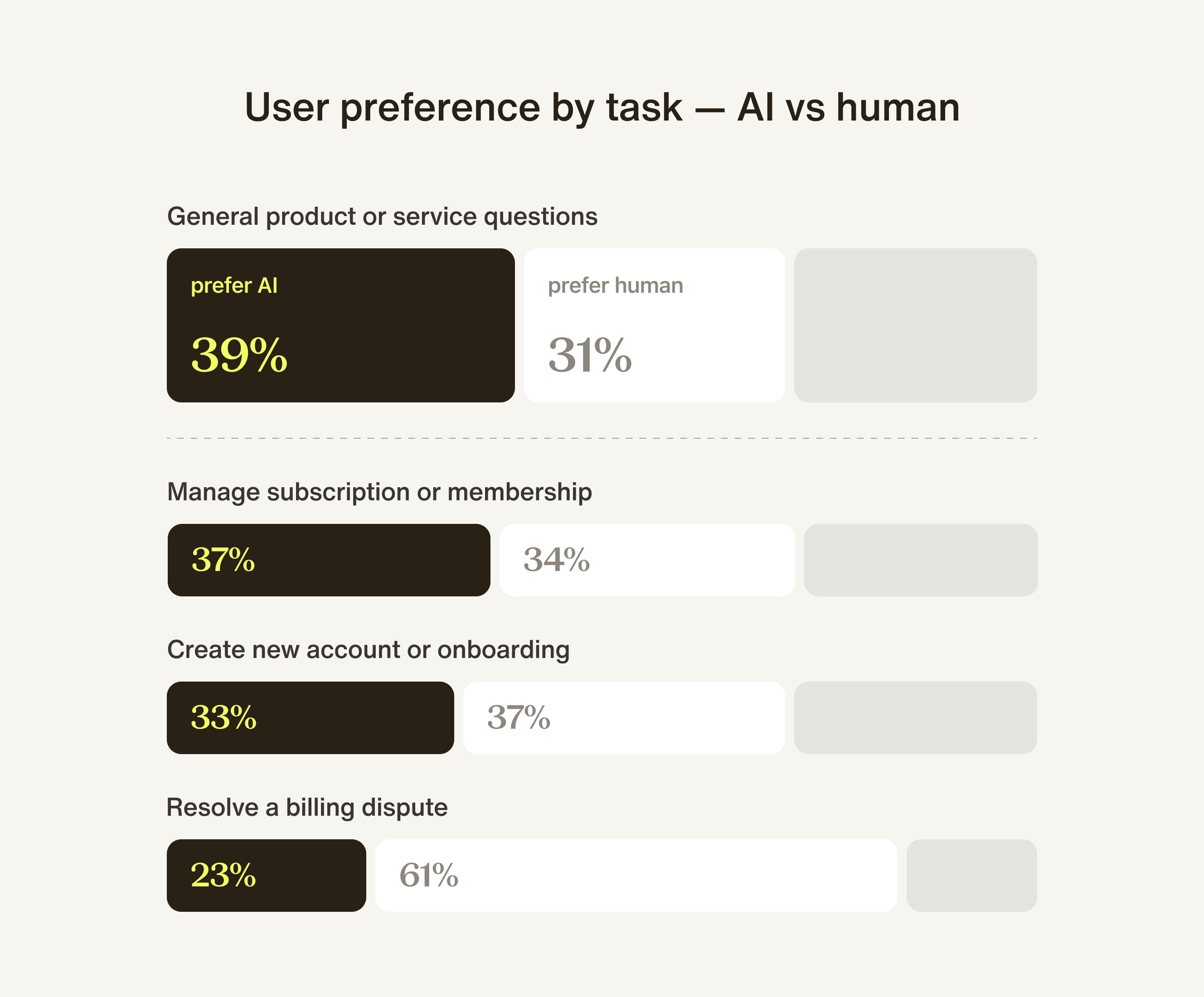
Product questions (39% AI) and subscription management (37% AI) are the strongest AI preferences of any tasks in the Tech & Media dataset, and both are squarely in AI-preferred territory. These routine, informational, low-stakes touchpoints are where Tech & Media companies have built real AI credibility with their users.
Billing disputes hold at 61% human preference. Even in an industry where users are more comfortable with AI than anywhere else in the Index, the moment an error has financial consequences, the preference shifts decisively. That line is consistent across every industry in the dataset. AI fluency doesn't move it.
The highest expectations in the dataset
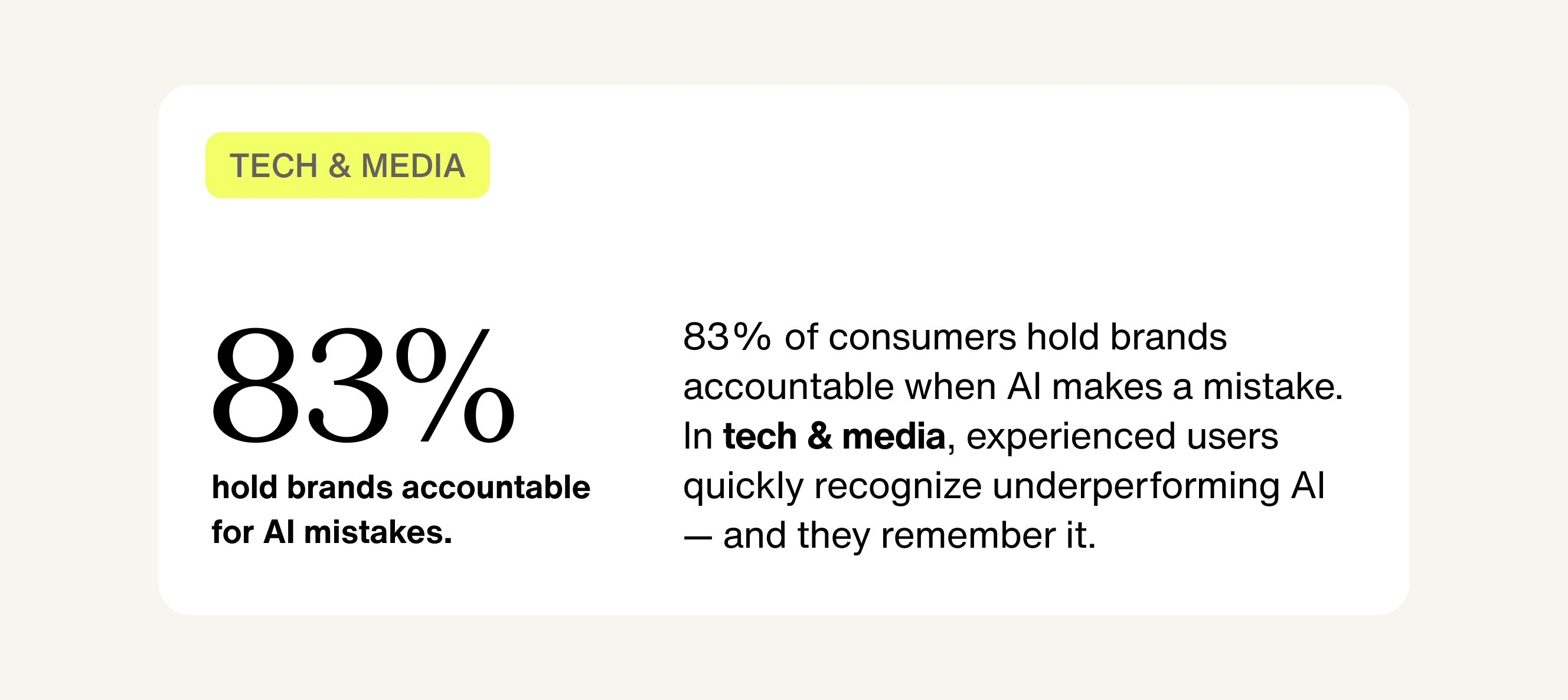
64% of consumers expect AI to outperform a human representative. In Tech & Media, where users interact with AI tools more frequently than any other industry segment, that expectation is calibrated against actual experience. A user who runs AI-powered search, uses AI writing tools daily, and subscribes to AI features on their streaming platform knows what good AI looks like. The bar for AI-powered customer service is set by the AI these users already use, not by the industry average.
In Tech & Media, Trust & Confidence lands at 56%, Comfort with Autonomy at 56%, Resolution Effectiveness at 52%, and Brand Alignment at 51%. All above the national average. Emotional Resonance is the one pillar where every industry, including this one, still has work to do. It scores lowest across the Index. In a vertical where users interact with AI constantly and already know what great looks like, the gap between an interaction that resolves an issue and one that leaves a user feeling genuinely recognized is where the next competitive advantage gets built.
Familiarity raises the bar, not the tolerance
The most AI-familiar audience in the dataset is also the clearest about what's missing from current AI experiences. When users who use AI every day tell you what would delight them in a customer service context, the answer reveals a gap between what AI currently delivers and what they already know is possible.
70% of consumers say they'd feel more delighted if AI simply remembered their prior interactions so they didn't have to repeat themselves. For users who already rely on AI tools that build on context, this is a baseline expectation. Current customer service AI largely fails to meet it.
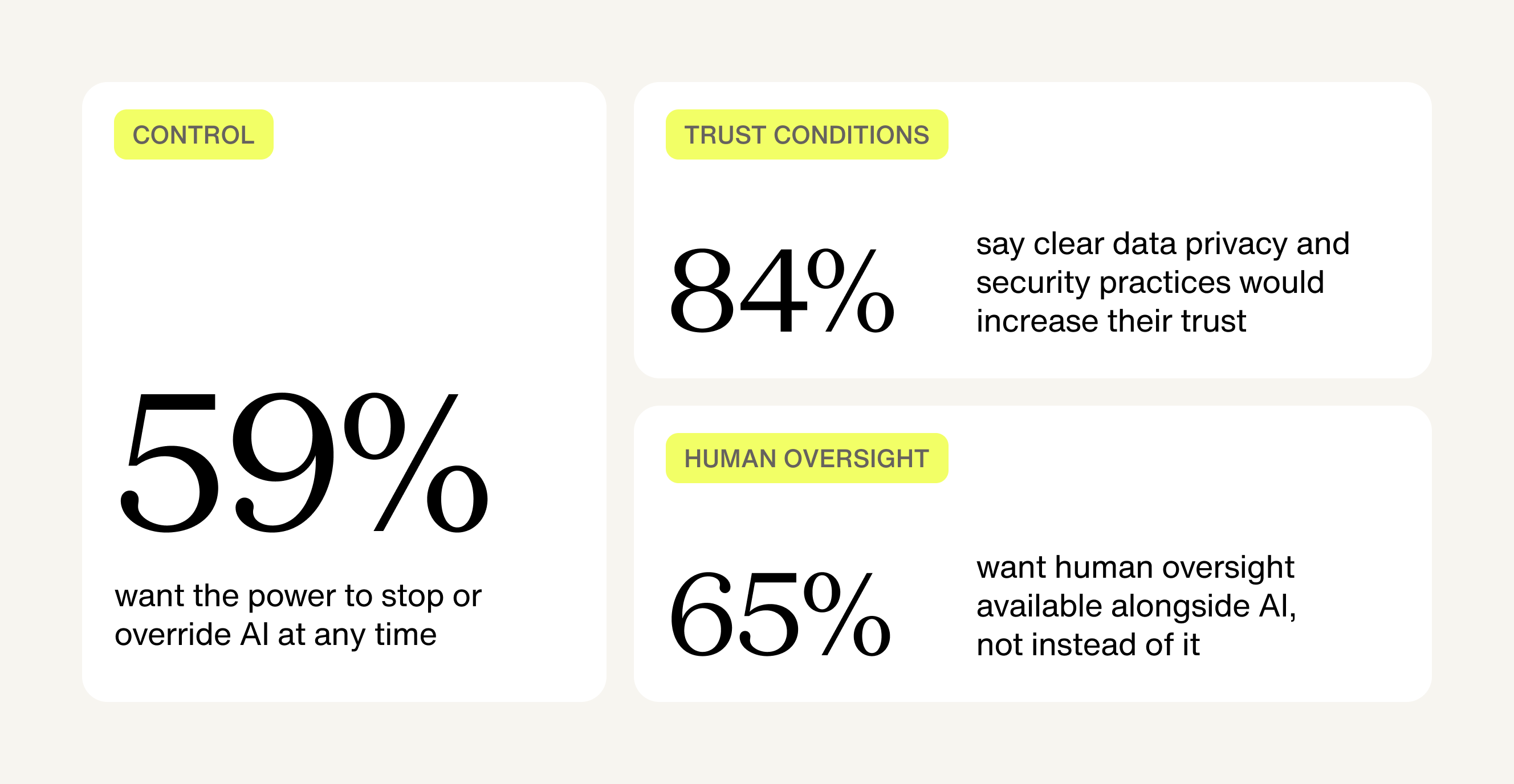
Users in Tech & Media want more than accuracy. They want AI that knows their history, can be corrected when it's wrong, and has a visible human backstop for the interactions that require it. These are features that AI-fluent users notice when present and notice even more sharply when absent. The brands that build them will hold their lead. The ones that don't will lose it to whoever does.
Millennials are your most AI-ready segment. That's not who you'd expect.
The common assumption about AI adoption in Tech & Media is that Gen Z leads. The 2026 Delight AI Index data shows the opposite. Millennials are the most comfortable with AI handling routine Tech & Media interactions independently. Not Gen Z. By six percentage points.
Millennials at 66% represent the highest AI comfort level of any generation in any industry in the entire dataset. They're also in peak subscription spend, the demographic driving digital platform revenue. The brands that design AI experiences for the Millennial AI comfort level will build the engagement and retention that matters most to the business.
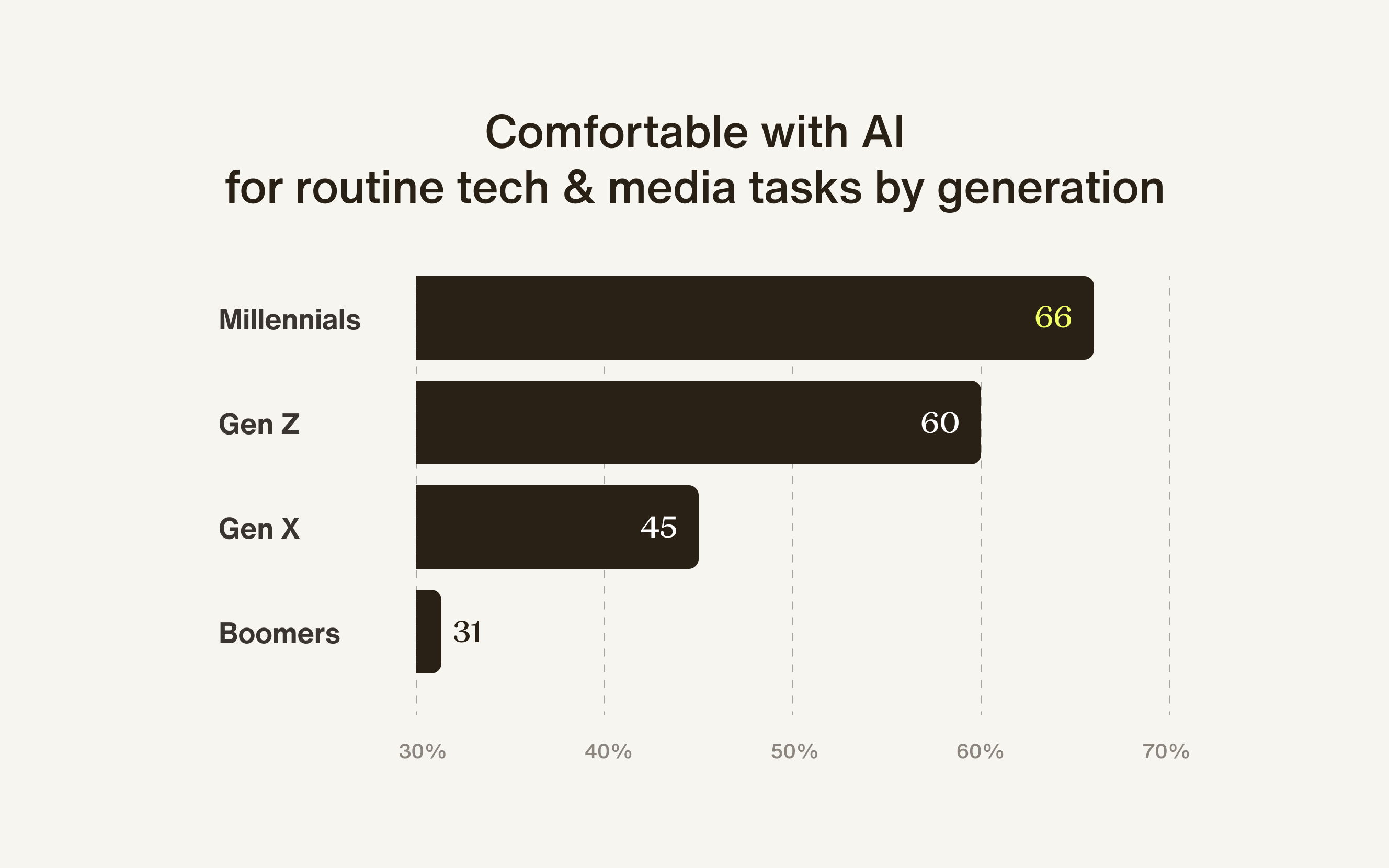
Boomers in Tech & Media sit at 31% comfort. That's lower than Millennials and Gen Z by a significant margin, but notably higher than Boomers in financial services (15%) or healthcare (19%). That relative openness is an opportunity. Boomers in this vertical are reachable in a way they aren't in higher-stakes industries. Designs that explain what AI is doing and provide clear control mechanisms can move that number.
Three moves that hold the lead
1. Close the Emotional Resonance gap before a competitor does.
Tech & Media leads on Brand Alignment and Resolution Effectiveness. Emotional Resonance is where the opportunity sits. It scores 46 nationally, the lowest of the five pillars, and the 11-point gap between it and Brand Alignment is the largest spread in the Index. AI that resolves a subscription issue in 30 seconds but leaves the user feeling like a ticket number is leaving the highest-value part of the interaction untouched. Build for acknowledgment and context, not just speed.
2. Use memory as the differentiation layer.
70% of users would be more delighted by AI that simply remembers their prior interactions. In Tech & Media, where users already expect this from other AI tools they use daily, the gap between what customer service AI delivers and what they know is possible is acutely felt. Long-term conversational memory is the single highest-impact improvement available right now. No re-entering account info. No re-explaining the history. Every interaction that builds on context is an interaction that builds loyalty.
3. Build the path from billing frustration to billing trust.
61% of Tech & Media users prefer a human for billing disputes. That's the line today. Moving it requires AI that is visibly accurate, correctable on the spot, and paired with a clear audit trail that users can review after the fact. Millennials, already at 66% comfort for routine tasks, are the users most likely to extend that comfort to billing if the trust architecture is right. The platforms closing that gap fastest aren't switching from AI to human for disputes. They're running both in parallel, with AI surfacing the transaction history and account context while a human confirms the resolution and owns the outcome.
Tech & Media leads with a 60. The opportunity in that position is larger than the score suggests. Every AI interaction that earns genuine trust in this vertical raises the baseline for what consumers expect everywhere else. The brands that build AI experiences worth exporting, the kind that feel personal, correctable, and human-aware, won't just hold the lead. They'll set the standard the rest of the market will spend years trying to meet.