For many businesses, the hardest part of adopting voice AI is the phone system around the conversation. Most don't run one clean setup: a cloud contact center might handle one region and desk phones another, while a third still runs on an on-premise PBX (private branch exchange), the in-house system that routes an office's calls.
Before anyone tests how an agent sounds, two questions come first: can it reach the phone system, and where does a resolved call's record go? Treating those as one question is how voice projects stall partway through, with calls connected and case history left with nowhere to land.
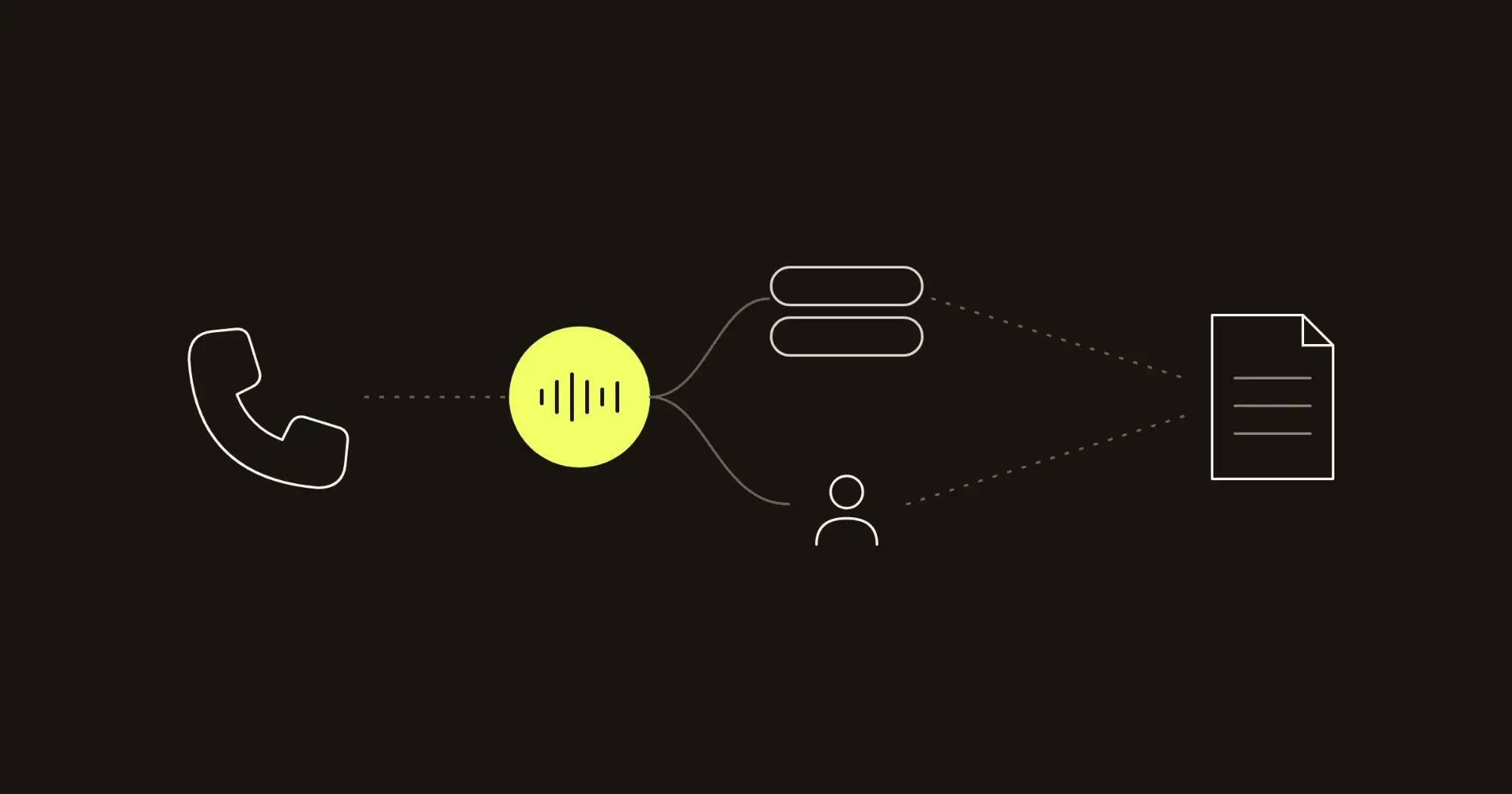
That's why we're introducing Universal Telephony for Delight voice agents. Every call a Delight agent handles travels as a standard phone call, from the first ring to the handoff, and the agent can:
- Answer and place calls on your own numbers, through Twilio, Telnyx, and local carrier partnerships.
- Hand calls to your queues and agents by phone number, with a ticket attached where a helpdesk or contact center integration exists.
- Send each resolved case to connected systems such as Salesforce, Zendesk, and ServiceNow.
Answer on your numbers, hand off by phone number
Delight voice agents answer and place calls through Twilio, Telnyx, and regional carrier partnerships. Each phone number pairs with its own dedicated connection, so a business can route its existing numbers directly through the agent.
When a call needs a person, the handoff is a standard phone transfer rather than a vendor-specific connection, so the agent hands callers into queues and agents by phone number. That includes Genesys Cloud and Amazon Connect contact centers, Zendesk Talk and RingCentral lines, and Zoom Phone desk devices, where calls are routed by department.
Send the case where the team already works
Call records are only valuable when directed to the places your team monitors. Delight connects with platforms such as Salesforce, ServiceNow, Zendesk, Intercom, and NICE CXone, placing call outcomes alongside existing customer cases rather than locking them away in isolated silos.
Think of it as a postal delivery process. The phone connection acts as the courier bringing the parcel to the building, while the integrations function as the mailroom dispatching it directly to the intended desk.
Start voice from the agent you already have
For a business already running Delight as a text AI agent, adding voice is an extension of work that's already done, not a new project. Much of the setup behind the text agent carries over, so the voice agent builds on that foundation instead of starting from zero.
Where Universal Telephony helps
The contact center that routes by queue
For a team running Genesys Cloud or Amazon Connect, the agent answers on the team's numbers and hands calls into its queues by phone number. Where the contact center integration is connected, the agent's summary arrives as a ticket alongside the call.
The helpdesk that holds every case
A team that sets up its phone line but never connects its helpdesk can end up with calls that transfer and records that go nowhere. Connecting the helpdesk alongside the phone setup means every resolved call lands next to the customer's other cases.
From the first ring to the case record
Universal Telephony gives a Delight voice agent a complete path through a business's calls. It answers on the business's own numbers, hands callers to the right queue or person as a standard phone transfer, and puts each resolved case in the connected helpdesk or CRM. The call and its record arrive together, so the team can act the moment the call ends.
See how Universal Telephony works with your phone and contact center setup on the Delight.ai Voice page.