Omnichannel retail should be seamless, but the shopper’s experience tells a different story. Imagine a customer browsing jackets on their phone during their lunch break, then adding one to their cart, but doesn't buy.
That evening, they open their laptop and the cart is gone. They find the jacket again, but now they have a sizing question, so they open the chat widget. The agent asks for their email, but has no idea about the cart, the jacket, or anything else. Frustrated, the shopper calls the store the next morning; the associate can't see any of it either.
The customer buys the jacket from a competitor instead.
Every retailer has a version of that story, and most have spent real money trying to fix it with more channels and integrations, plus chat and SMS and app notifications. But the experience still falls apart. The channels are all there, but they simply don’t share any memory.
That’s the real omnichannel retail problem. In this guide, we’ll explore what it actually means, how it differs from multichannel retail, what great execution looks like from brands that get it right, how to build a strategy that works, and why so many initiatives lose momentum before they ever come together.
What is omnichannel retail?
Omnichannel retail is a customer experience strategy that connects every channel (e.g., physical stores, ecommerce, mobile app, social, phone, email, etc.) into a single, continuous shopper experience.
The channels don't merely coexist; they share the same customer data, purchase history, and context. A shopper can start a return on your website, ask a question in your app's chat, and walk into a store to finish the process—without ever having to explain who they are or what they're doing.
The key word is continuous. Omnichannel retailing doesn't mean being everywhere at once. It’s about making sure wherever a shopper engages, the experience picks up where it left off.
This is increasingly what retailers themselves say they're working toward. More than 80% of retail and ecommerce marketers plan to increase their investment in marketing technology within the next year, with seamless omnichannel execution ranking as their single biggest challenge.
In short, traditional omnichannel focuses on connecting systems. Modern omnichannel extends that connection into every customer interaction through memory-aware AI and agents.
Omnichannel vs. multichannel: What's the real difference?
The confusion between multichannel and omnichannel is understandable, because on paper they look similar. Both involve selling and engaging across more than one channel. The difference is if those channels share information with each other, and it's a bigger gap than most retailers initially think.
Multichannel retail means you have a website, a physical store, an app, an email program, and maybe an SMS channel. Each one works. But they work independently. A return started online creates a record in your ecommerce system. The in-store associate has no idea it exists, and the support agent in chat sees a different system.
So the shopper who calls on Friday about a return she started online on Tuesday gets: "I'm sorry, I don't see anything in your account. Do you have the order number?"
That's multichannel. The channels are present. The experience isn't connected.
Omnichannel retail means those systems talk to each other. The in-store associate can pull up Tuesday's return request, and the chat agent sees that the shopper called yesterday. As a result, the AI handling WISMO queries knows the order is already in dispute. The shopper never has to start over.

The gap between these two states is where most retailers live right now. Despite years of omnichannel investment and infrastructure consolidation, only 5% of retailers have achieved what researchers categorize as true omnipresent mastery. That's a data and context gap, and it shows up in every survey about customer frustration.
What are real-world omnichannel retail examples?
Abstract definitions are useful; concrete examples are indispensable. Take a look at four brands that have designed noteworthy omnichannel retail experiences and what specifically makes them work.
Sephora turns loyalty data into a sales tool
Sephora wired its Beauty Insider program across app, web, and physical stores so that in-store associates can see a shopper's online purchase history and past product preferences during a visit. That's a sales capability, and the numbers bear it out.
More than 80% of Sephora’s revenue comes from its 46 million loyalty members. In addition, Sephora's revenue has grown more than tenfold since LVMH acquired the company in 1998. This is a trajectory LVMH CEO Bernard Arnault directly attributed to Sephora's retail model on the company's 2024 earnings call.
Bottom line: The loyalty program isn't the product; the data it generates is. Sephora turned purchase history into a sales tool that travels with the shopper into every channel, including the store floor.
The Home Depot is a model for store‑led supply chains
The Home Depot has turned its physical store network into the backbone of its digital experience. In Q1 of fiscal year 2025, stores—not distribution centers—directly fulfilled more than 45% of online orders. This means a customer who orders online and picks up in an hour is being served by the same inventory the in-store associate can see in real time.
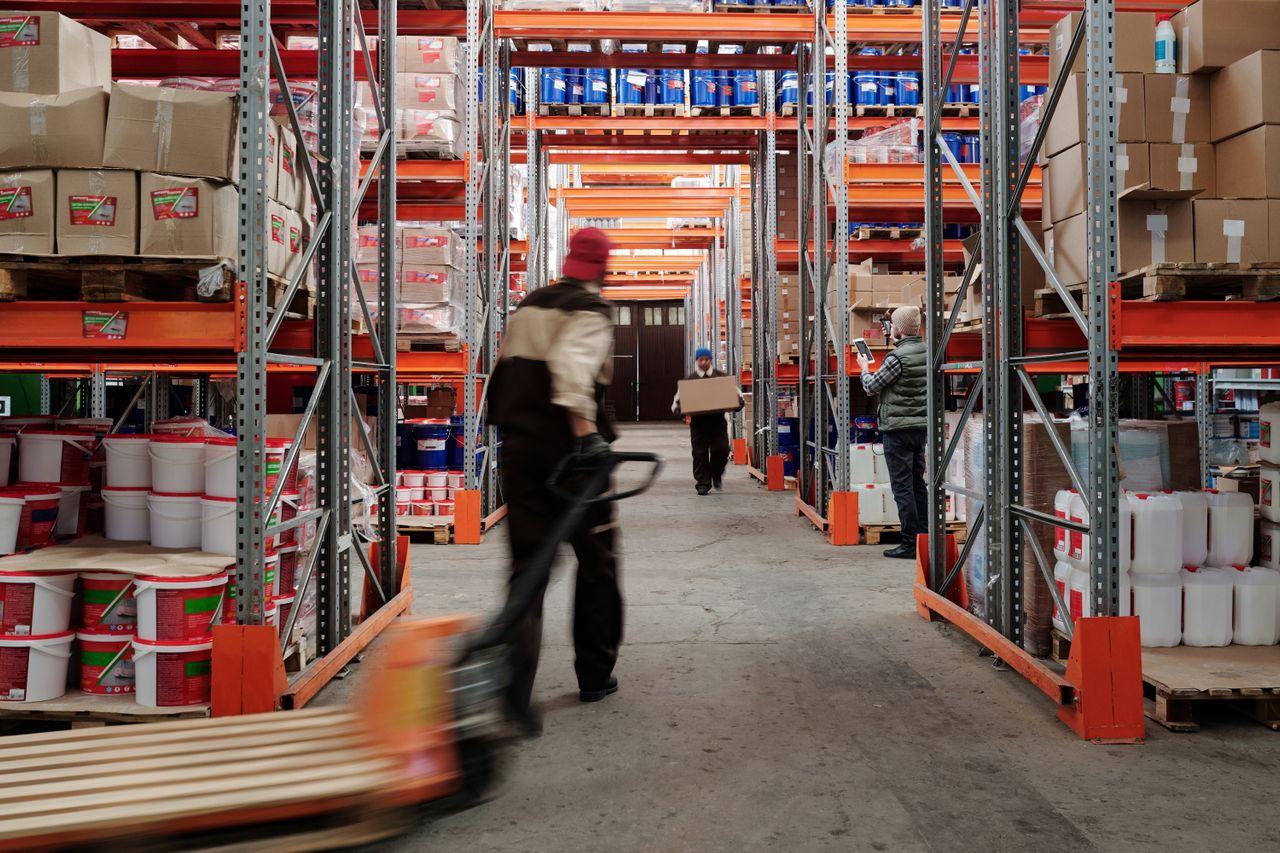
That integration has made digital a growth engine without cannibalizing stores. Online sales grew 9% year-over-year in Q4 fiscal year 2024, with physical locations serving as the fulfillment layer behind most of it.
Bottom line: Physical stores aren't a liability to route around; they're a fulfillment asset. The Home Depot made digital faster and cheaper by running it through its stores, not parallel to them.
Target uses BOPIS as a unified commerce proof point
Target made BOPIS (buy online, pick up in store) into a competitive advantage, but the deeper capability is what supports it. A unified account and purchase history that makes in-app store maps, curbside pickup, and in-store returns for online orders feel like one system, not four.
For shoppers, it's frictionless; for Target, it drives incremental in-store spend. Since 2019, Target's investment in BOPIS has turned fulfillment into a major growth engine, with curbside and pickup revenue growing 400%.
Bottom line: BOPIS only works as a competitive advantage if the underlying systems are unified. Target's edge isn't the pickup option; it's that one account, one cart, and one purchase history powers every channel behind it.
Starbucks keeps customers engaged with omnichannel marketing
Starbucks remains one of the clearest examples of loyalty and channel unification done right. Load your card on your phone, earn a reward in-store, get a personalized offer in the app based on what you've ordered at three different locations.
The system knows you, not just your account number. That continuity is reflected in how members engage. Rewards members loaded $3.5 billion onto Starbucks gift cards in a single quarter. This is money committed to the brand before the customers have even ordered.
Bottom line: Starbucks has customers funding their next visit before they've finished their current one. That's what happens when customers trust the system enough to pay in advance, and that trust is built by a loyalty experience that's genuinely the same everywhere they engage.
How to build an omnichannel retail strategy
There's a version of omnichannel strategy that's fundamentally a channel expansion plan. This involves adding SMS, in-app chat, social commerce, then calling it omnichannel. That version doesn't work. A successful retail omnichannel strategy starts with data and ends with continuity.
Unify your customer data
Every channel should pull from the same source of truth: purchase history, support history, preferences, channel behavior. Without this, you don't have an omnichannel strategy. Instead, you have a multichannel stack with a shared brand logo. This is harder than it sounds, especially for retailers with legacy OMS platforms and separate support tooling, but it's the prerequisite for everything else.
Map the actual shopper journey, not your org chart
Shoppers don't think in channels; they think in tasks. "I need to return this." "Will this fit?" "Where's my order?" Somewhere in your operation, there's a handoff point where context breaks. That's always where the experience falls apart. Map the full journey from browse through post-purchase and find every one of those handoffs. They're the places to invest.
Build cross-channel continuity, not just cross-channel presence
Being on SMS and live chat is not omnichannel. That's multichannel. The upgrade is when channels share context, allowing shoppers to seamlessly continue conversations across touchpoints—whether they start in your app and resume via SMS days later or vice versa. That's the capability to aim toward.
Make it proactive, not just reactive
Waiting for shoppers to contact you is the minimum. Real omnichannel includes knowing when to reach out before the shopper has to: a shipping delay they don't know about yet, a low-stock alert on an item they've viewed four times, a reminder about a cart they left on a different device. These signals already exist in your data. The question is whether you're acting on them.
Retailers that design these capabilities consistently outperform on retention. The real-world omnichannel retail examples above aren't anomalies; they're the predictable result of giving every channel access to the same underlying context.
These case studies all rely on a common foundation: shared context. Inventory context in The Home Depot's case, customer context for Sephora, purchase and fulfillment context for Target, and loyalty context for Starbucks. The gap shows up in lifetime value, repeat purchase rate, and support cost. The experience is the explanation.
Why most omnichannel strategies stall: The memory problem
In many organizations, the infrastructure is no longer the primary bottleneck. The channels are connected, the data is flowing, the platform vendor gave you a unified dashboard. And the experience remains broken.
Shoppers still get asked for their order number right after logging in. They call back about the same return three times because nobody recorded what happened last time. The chatbot says, "I see you have a recent order," then asks what it is. These aren't system failures; they're memory failures.
The data that would make the experience feel continuous exists somewhere in your stack. The AI or agent on the other end of the channel just doesn't have it at the moment it matters, which is why the interaction still starts over.
This is the part of omnichannel that most strategy guides skip, and the part shoppers notice most. According to the 2026 Delight AI Index, roughly 70% of retail shoppers say they would be genuinely delighted if an AI agent remembered their prior interactions. Not impressed. Not satisfied. Delighted—a word retailers work hard for in any context.
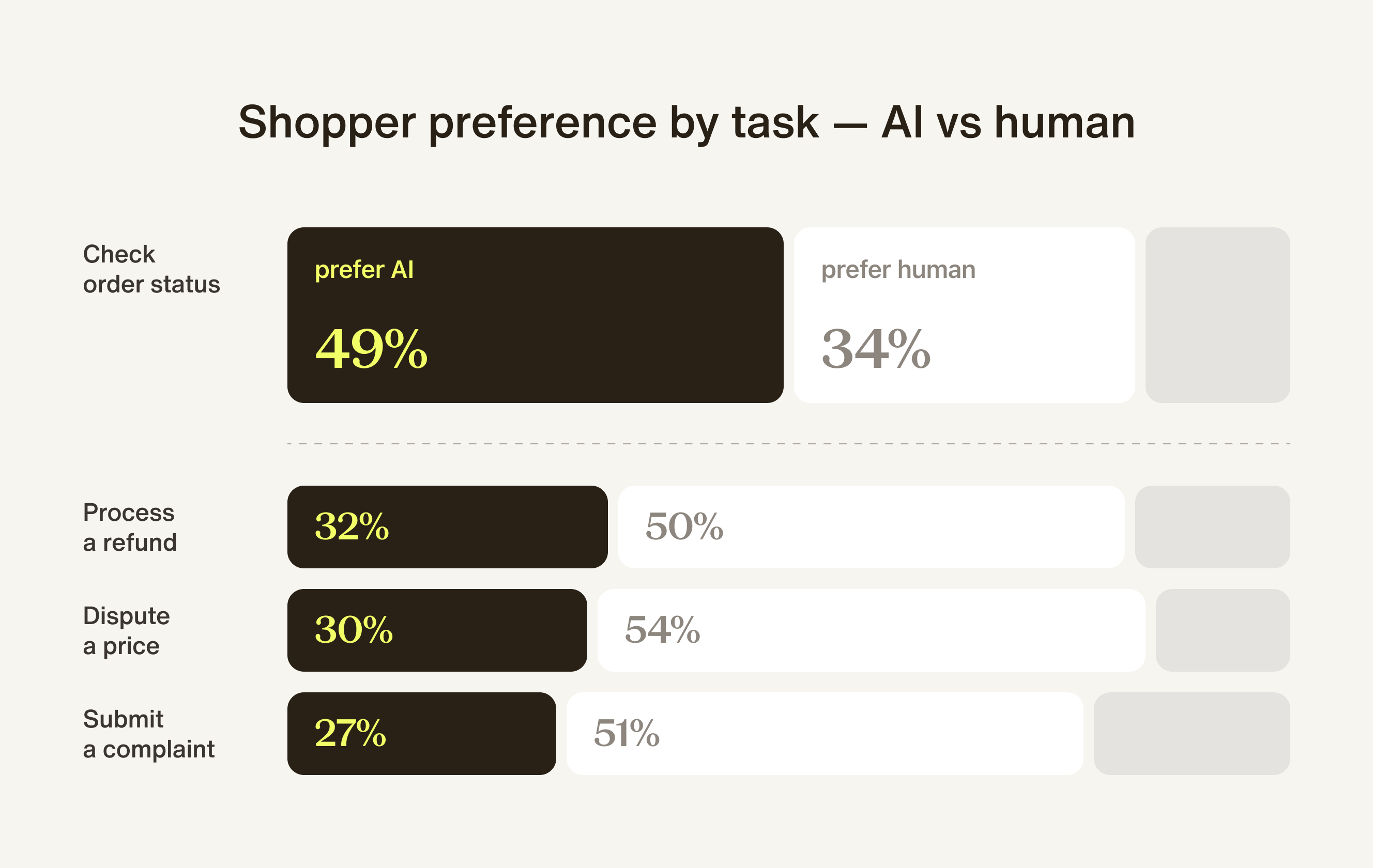
The downstream effect is measurable. Only 49% of retail shoppers currently prefer AI for checking on order status, meaning the majority of WISMO queries, the single highest-volume request category in retail support, still route to humans. Not because shoppers don't want AI help. Because they don't trust it to remember who they are.
Retailers that solve for this by giving their AI a persistent memory of each shopper's history, preferences, and past interactions occupy a genuinely different tier of omnichannel experience. It's the backbone of delight.ai's AI agent platform: cross-channel memory that makes each interaction feel like a continuation, not a restart.
The platform's retail score in the AI Index was 59 out of 100—second highest across all industries—which reflects how close retail shoppers already are to expecting this from the brands they buy from.
Omnichannel strategy has a Phase 1 and a Phase 2. The former is connecting channels, and the latter involves giving the intelligence layer a memory. Most retailers are stuck at the end of Phase 1 wondering why it doesn't feel right.
How to evaluate omnichannel retail solutions
When reviewing omnichannel retail platform options—whether you're consolidating, upgrading, or adding an AI layer—the checklist that matters isn't "which channels does it support." It's whether or not the platform can answer yes to these five questions:
- Does it maintain shopper context across channels, or does each session start fresh? This is the memory question. If a shopper who chatted yesterday calls today, does the platform know? If not, you're buying more multichannel infrastructure, not an omnichannel capability.
- Can it initiate conversations proactively, not just respond to them? Reactive AI handles inbound. Proactive AI prevents the inbound from happening by flagging a delay before the shopper asks, recovering an abandoned cart before it's gone cold, or surfacing a relevant offer at the right moment.
- Does it integrate with your existing stack without requiring a rip-and-replace? Most retailers have years of investment in their OMS, CRM, and support platforms. The right omnichannel layer works with that infrastructure, not against it. Salesforce, Zendesk, your existing data warehouse—the platform should plug in, not displace.
- Can it handle peak season volume? Black Friday is not the time to discover your platform's throughput limits. The scale question is genuinely important for retail and often underweighted in evaluations that happen in Q1.
- Does it give you analytics at the channel and use case level, not just aggregate CSAT? You can't improve what you can't see. Knowing that chat CSAT is 4.1 doesn't tell you that WISMO in SMS is degrading at scale. Channel-level and use-case-level analytics are how you find the next problem before shoppers find it for you.
Research suggests AI in retail can drive meaningful efficiency gains, with some companies reporting up to 45% productivity improvement and roughly 10% revenue or bottom-line uplift, depending on the use case.
Delight.ai's AI agent for retail offers persistent cross-channel memory, proactive engagement, and an architecture that integrates with existing retail tech stacks rather than replacing them. Retail use cases, such as delight.ai’s partnership with Lotte Homeshopping and Hanssem, span the full purchase cycle, from cart recovery through post-purchase support.
How delight.ai solves the omnichannel retail gap
Omnichannel retail is no longer a differentiator. It's the expectation. Shoppers assume that the brand knows who they are, regardless of which channel they're using.
The retailers that are winning aren't the ones with the most channels. They're the ones who've figured out the memory layer and given their AI and their agents the context they need to make every interaction feel like a continuation of the last one.
Channel connectivity is Phase 1. It's necessary, but it's not sufficient. Phase 2 is the intelligence layer that remembers.
If you're evaluating where your omnichannel strategy is actually breaking down—and what it would take to close the gap—see how delight.ai empowers retail brands to build AI that remembers.