Quick answer: For enterprise retailers, Delight.ai is the top AI chatbot for ecommerce in 2026, built on omnichannel memory (AMP) and built-in AI governance (Trust OS). This guide compares all 9 leading options side-by-side on price and core strength.
Key takeaways:
- Delight.ai tops this list for enterprise retailers that need omnichannel memory and built-in AI governance (Trust OS).
- AI chatbots for ecommerce handle personalized product recommendations, cart-abandonment recovery, order status, and 24/7 support, freeing teams to focus on cases that need a human.
- Pricing varies widely: budget tools start around $20 to $30 a month, mid-market platforms typically run $100 to $300 a month, and enterprise platforms are usually quote-based.
AI chatbots are an ecommerce staple in 2026, with an estimated 80% of online retailers using them or planning to deploy them. Whether you want to deliver 24/7 customer service, make personalized product recommendations, or gather customer insights, ecommerce chatbots help merchants to reduce response times, drive conversion, and lower service costs at scale.
The next generation of chatbots is AI agents. Unlike basic rule-based bots, these agentic AI systems can perceive, reason, and act autonomously on behalf of users and business systems in real time without human input.
As the latest advancement in conversational AI technology, agents further increase the already excellent ROI of AI chatbots. Retailers can expect to pay around $0.50 per AI interaction vs. $6 per human interaction—while setting a new standard for proactive, seamless, and tailored experiences (CX) that boost customer satisfaction.
What is an AI chatbot for ecommerce?
An AI chatbot for ecommerce is a software application that simulates conversations with online customers and automates retail workflows using artificial intelligence (AI) technologies such as machine learning (ML) and natural language processing (NLP).
Designed to assist shoppers across the buying journey, from product discovery to post-purchase support, they are typically embedded into websites, mobile apps, messaging apps like WhatsApp, even SMS or email.
Unlike rigid bots that follow scripts, modern AI chatbots are powered by large language models (LLMs). This enables them to interpret user intent, understand context, and engage customers in natural human-like conversation—regardless of any user typos or vague language. They also learn from past interactions to improve performance over time.
The 9 best AI chatbots for ecommerce in 2026
AI chatbots are increasingly embedded into modern ecommerce platforms, so it's surprisingly easy to launch one for your online store. However, chatbots are increasingly sophisticated, so it's important to choose the right one for your needs.
To help you evaluate, here’s a shortlist of the best AI chatbots for ecommerce in 2026:
1. Delight.ai
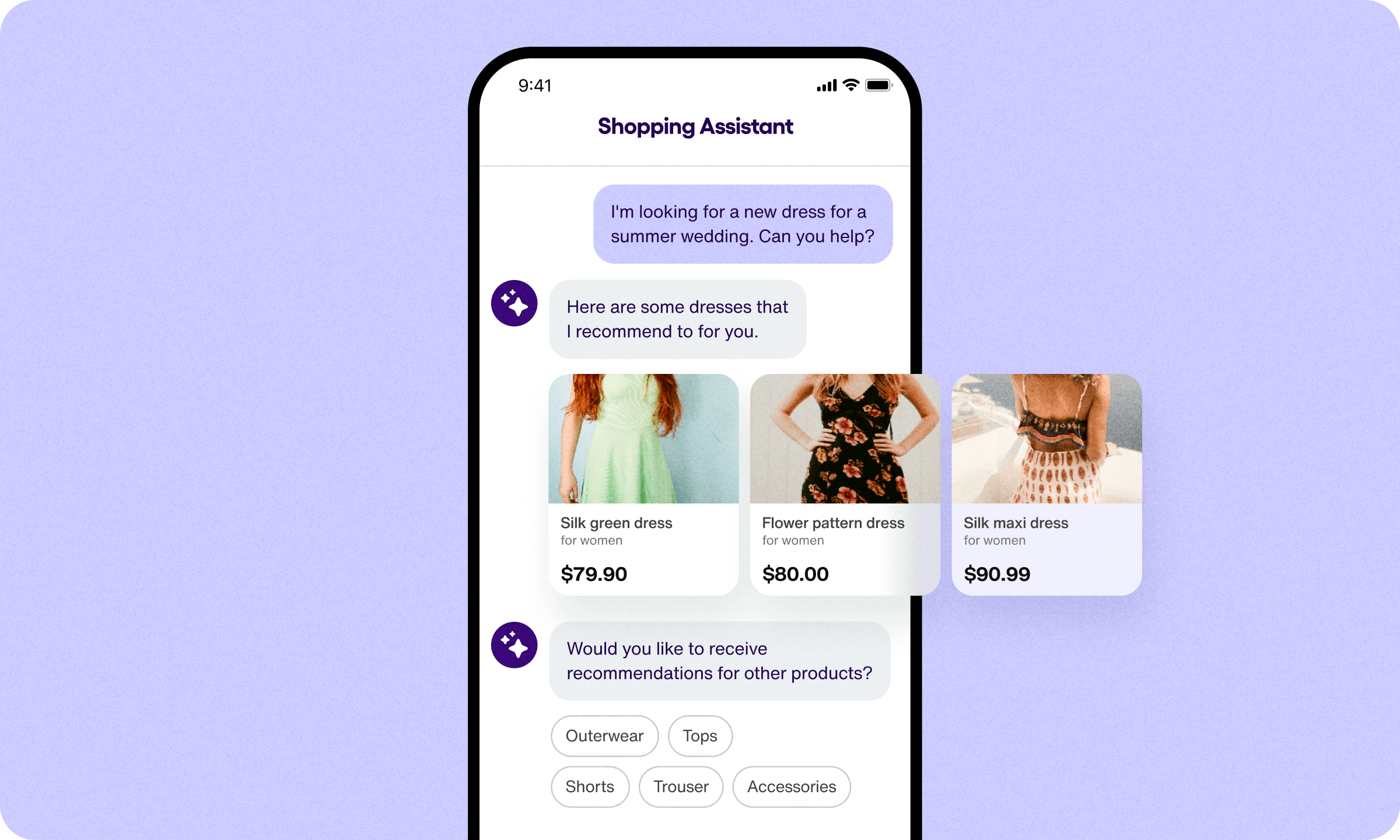
Delight.ai, formerly Sendbird, is an omnichannel AI chatbot and customer experience (CX) platform built for ecommerce brands that want to turn every customer interaction into a growth moment. From handling high-volume customer queries in peak season to proactively nudging shoppers to lift conversion rates—delight.ai delivers the proven blend of flexibility, performance, and scalability that modern ecommerce demands.
The no-code AI agent builder makes it easy for support teams to create and launch custom chatbots trained on your knowledge base, product catalog, and support policies in hours, not days. Using dynamic reasoning powered by LLMs, the AI chatbot can automate complex queries, such as return and refund requests, then update account details in one seamless interaction without human input.
What sets Delight.ai apart is its Agent Memory Platform (AMP): a unified intelligence layer that builds an evolving 360-degree profile of every customer across every channel. This means that if a shopper initiates a conversation on your website and later follows up on WhatsApp, the AI picks up exactly where the conversation left off. There's no repetition, no friction, no duplicate tickets—just one continuous, convenient customer journey that drives loyalty and efficiency.
Designed to scale, delight.ai seamlessly integrates with your existing ecommerce and support stack. The built-in AI governance layer provides teams with full visibility and control over AI behavior, ensuring interactions are accurate, compliant, and on-brand. And because it’s built on Sendbird's enterprise-grade communications infrastructure that powers 7+ billion conversations monthly, delight.ai’s ecommerce AI agent scales globally without sacrificing performance or safety.
Key features:
- Proactive omnichannel capabilities across web, live chat, in-app, WhatsApp, SMS, email, and voice
- For-You Conversations (FYC) turn real-time customer data into hyper-personalized service
- Desk AI copilot ensures seamless live chat handoffs with full context
- AI integrations with Shopify, Salesforce, Zendesk, CRMs, and more
- Robust features for sandbox testing and staged deployment
- Enterprise-grade AI governance, monitoring, and risk controls
- Real-time AI analytics for chatbot performance and customer satisfaction
- Enterprise-grade security and compliance (ISO 42001 certified)
- Multilingual support for 80+ languages
- Voice AI capabilities
Pricing: Consumption-based pricing with volume discounts as you scale. Contact sales for details or try the ROI calculator.
Best for: Enterprise retailers and ecommerce support teams looking to reduce ticket volume and scale AI-powered customer engagement with deeply personalized, consistent omnichannel service backed by high-level security.
G2 rating: 4.6/5 (124 reviews, via Sendbird's G2 listing)
2. Chatbot
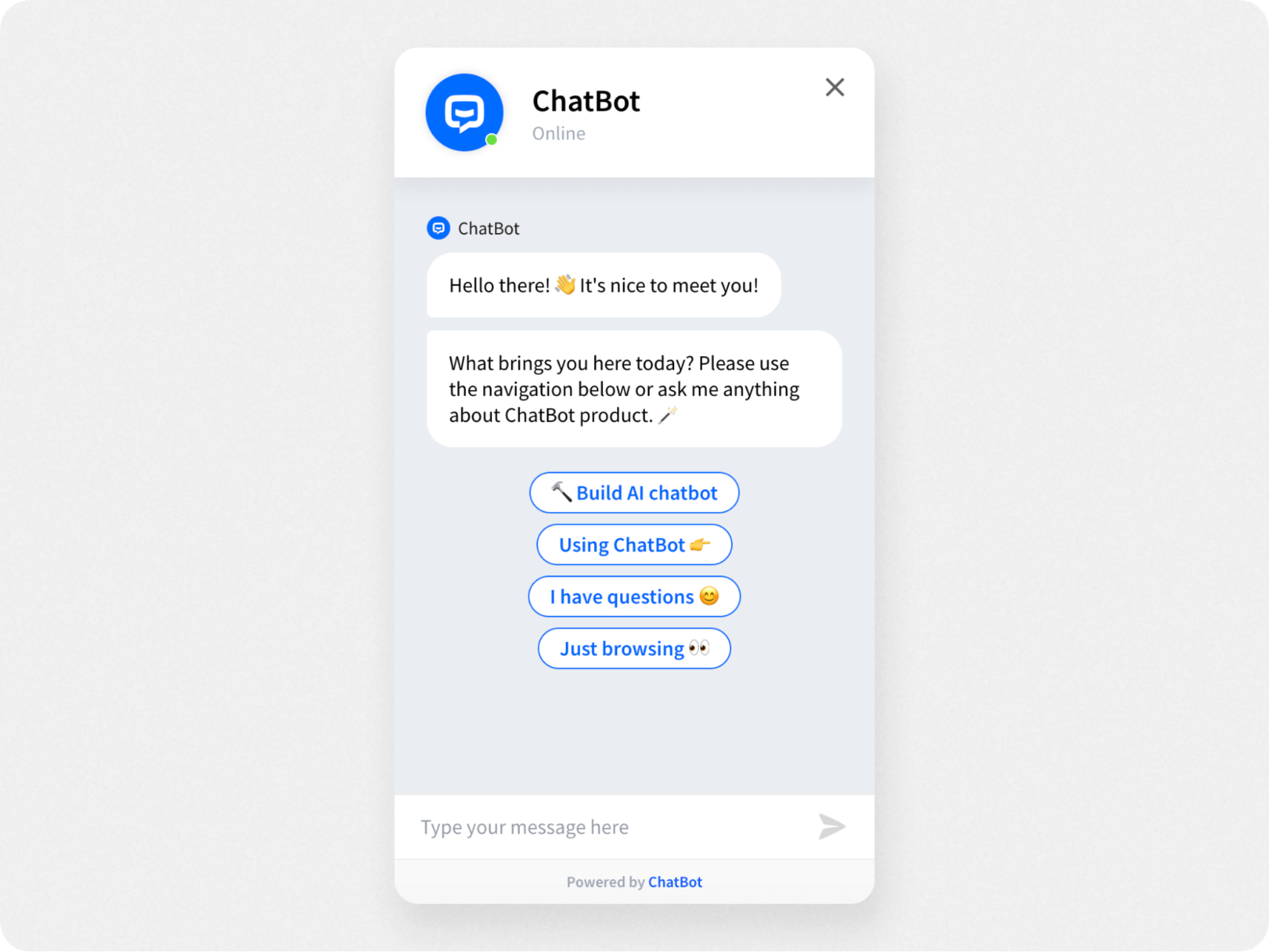
Chatbot (by Text) is a no-code AI chatbot platform designed to help ecommerce businesses automate customer interactions without technical complexity. Its drag-and-drop builder and pre-built templates make it easy for small to mid-sized online stores to launch a conversational AI chatbot quickly—handling customer queries, product recommendations, order questions, and more.
The platform's AI agent is trained directly on your product catalogs, help articles, and URLs so it provides accurate, real-time responses to routine questions like shipping status, returns, and product FAQs. It also spots buying signals mid-conversation, and it can proactively engage shoppers at key moments to boost conversion rates. If customer queries exceed the AI's scope, live chat handoffs to human agents are built in.
Chatbot seamlessly integrates with Shopify, Zendesk, Zapier, Slack, and WordPress, keeping it well-connected to the ecommerce and support tools most teams already use. That said, its AI capabilities are less advanced than enterprise-tier platforms, which may limit performance on more complex or nuanced customer interactions.
Key features:
- No-code drag-and-drop bot builder with pre-built ecommerce templates
- Real-time responses to customer inquiries about orders, shipping, and returns
- Buying signal detection to engage shoppers and support conversion rates
- Analytics and AI chat summaries for monitoring customer satisfaction and bot performance
- Integrations with Shopify, Zendesk, Zapier, Slack, WordPress, and more
- Multichannel deployment: website, messenger apps, and branded mobile
Pricing: Paid plans start at $19/user/month. Growth plan at $79/month adds advanced reporting and expanded AI resolutions. Enterprise pricing available.
Best for: Small to mid-sized ecommerce businesses looking for an accessible, affordable AI chatbot to automate routine customer service and drive engagement—without the need for coding or a dedicated team.
G2 rating: 4.5/5 (26 reviews, current listing under "Text")
3. Ada
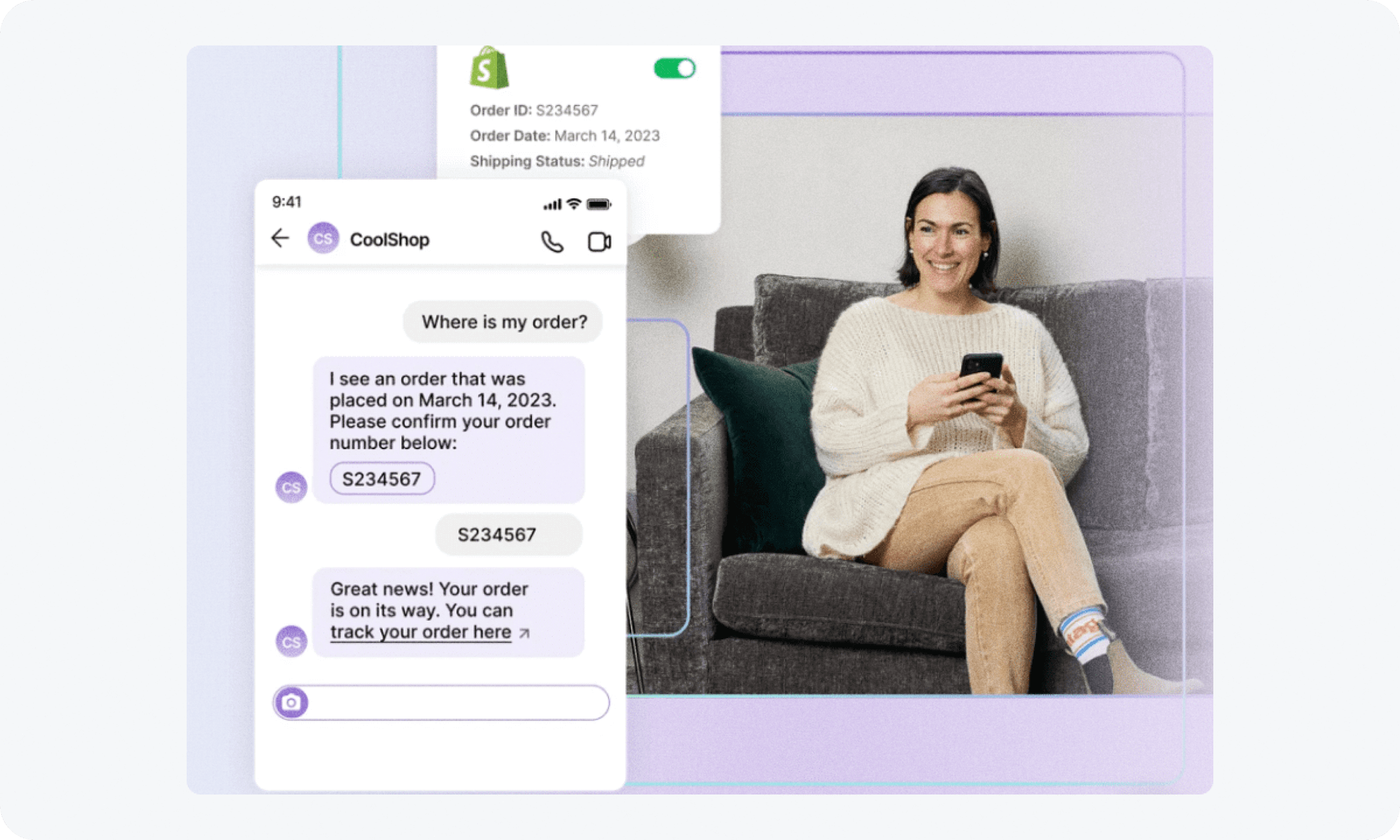
Ada is an enterprise AI chatbot platform built for high-volume customer service teams seeking to automate customer interactions without sacrificing accuracy or consistency. An AI-first platform, Ada's chatbots are designed to reason dynamically through customer queries rather than follow rigid, scripted flows.
The conversational AI uses various large language models (LLMs) to process customer inquiries in real time, retrieve information from connected knowledge sources, and act in business systems in a single interaction. The AI chatbot can handle customer queries around order status, returns, and product information while also executing tasks like updating account details or triggering refunds without escalating to a human agent. Ada supports omnichannel deployment across live chat, email, voice, and social messaging, and seamlessly integrates with Zendesk, Salesforce, and Shopify.
Ada's main trade-off is cost and complexity. Implementation is reportedly a lengthy undertaking, often taking weeks to months. This, combined with premium pricing, makes Ada less accessible for smaller ecommerce operations or teams that need to move fast.
Key features:
- LLM-powered conversational AI (OpenAI, Gemini) for dynamic, real-time customer interactions
- Automated resolution of customer queries across live chat, email, voice, and social channels
- Playbook feature encodes complex support SOPs into repeatable AI-driven workflows
- Seamless integration with Zendesk, Salesforce, and Shopify for unified customer data
- Omnichannel AI chatbot deployment from a single platform
- Real-time analytics dashboard for tracking automated resolution rates and customer satisfaction
- AI coaching tools for continuous optimization of chatbot performance
- Multilingual support for global ecommerce brands
- Enterprise-grade security: SOC 2, GDPR, and ISO 27001 compliant
Pricing: Custom, quote-based enterprise pricing. Annual contracts reported to start around $30,000, scaling to six figures for high-volume deployments. No public self-serve trial available. Contact sales for a quote.
Best for: Enterprise ecommerce brands facing high inquiry volumes that need a powerful, omnichannel AI chatbot capable of end-to-end resolution—and have the budget and resources for a full implementation.
G2 rating: 4.6/5 (173 reviews)
4. Chatfuel
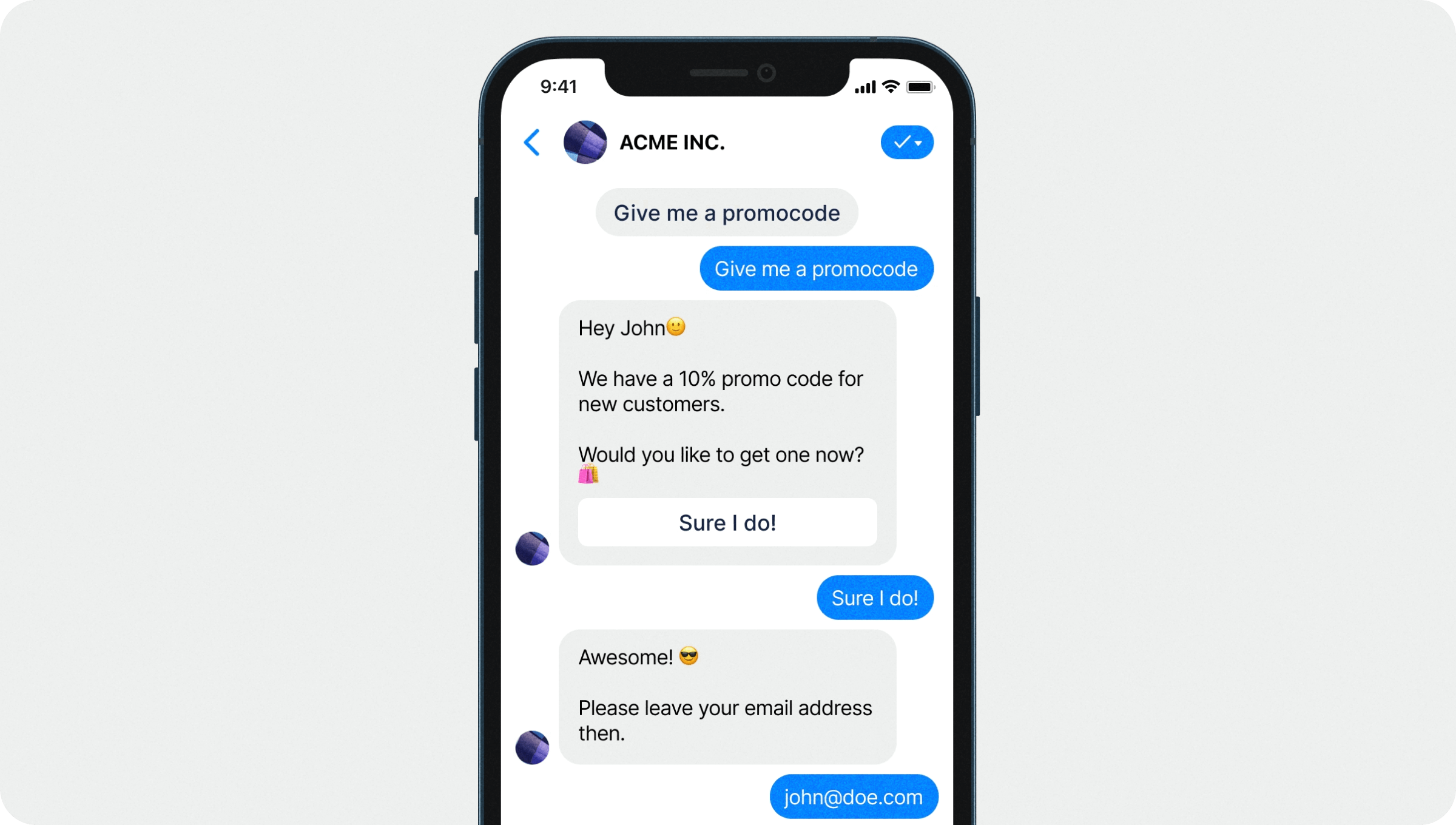
Chatfuel is a no-code AI chatbot platform built for digital retailers that want to drive sales and customer engagement across Meta's social channels—WhatsApp, Instagram, Facebook Messenger, and TikTok DMs. Not a traditional website live chat tool, Chatfuel is purpose-built for conversational commerce in social media inboxes.
Chatfuel's AI chatbots are meant for social selling and post-purchase. They can handle customer inquiries around orders, FAQs, and product questions in real time, offering built-in automation tools for cart recovery, post-purchase follow-ups, and targeted re-engagement campaigns. You can retarget users who engage with Facebook or Instagram ads in the chatbot, or use audience segmentation to run promotions to specific segments—useful for support and conversion optimization.
The drag-and-drop flow builder and pre-built templates make setup accessible for non-technical teams. Chatfuel also seamlessly integrates with Shopify, Stripe, Zapier, and Google Sheets, helping ecommerce teams connect chatbot conversations to the rest of their customer data and workflows.
The main limitation is channel scope. Chatfuel's AI chatbot is almost entirely focused on Meta and TikTok channels. Brands that need omnichannel customer support will need to pair it with another tool.
Key features:
- GPT-powered conversational AI for handling real-time customer interactions and inquiries
- Abandoned cart recovery and post-purchase automation
- Ad retargeting and audience segmentation within chatbot flows
- Drag-and-drop flow builder with pre-built ecommerce templates
- Live chat with shared inbox and multi-agent support for human agent handoff
- CRM-style contact management, segmentation, and broadcast messaging
- Integrations with Shopify, Stripe, Zapier, Calendly, and Google Sheets
- Real-time analytics for tracking customer engagement and chatbot performance
Pricing: Business plans for Facebook and Instagram start at $20/month (1,000 conversations). WhatsApp plans start at $49.49/month. Enterprise plans from $300/month. Pricing scales with conversation volume. Free trial available.
Best for: Ecommerce brands and DTC businesses focused on social commerce that want an AI chatbot to automate customer interactions, recover abandoned carts, and drive conversions across WhatsApp, Instagram, and Facebook Messenger.
G2 rating: 4.4/5 (45 reviews)
5. Tidio
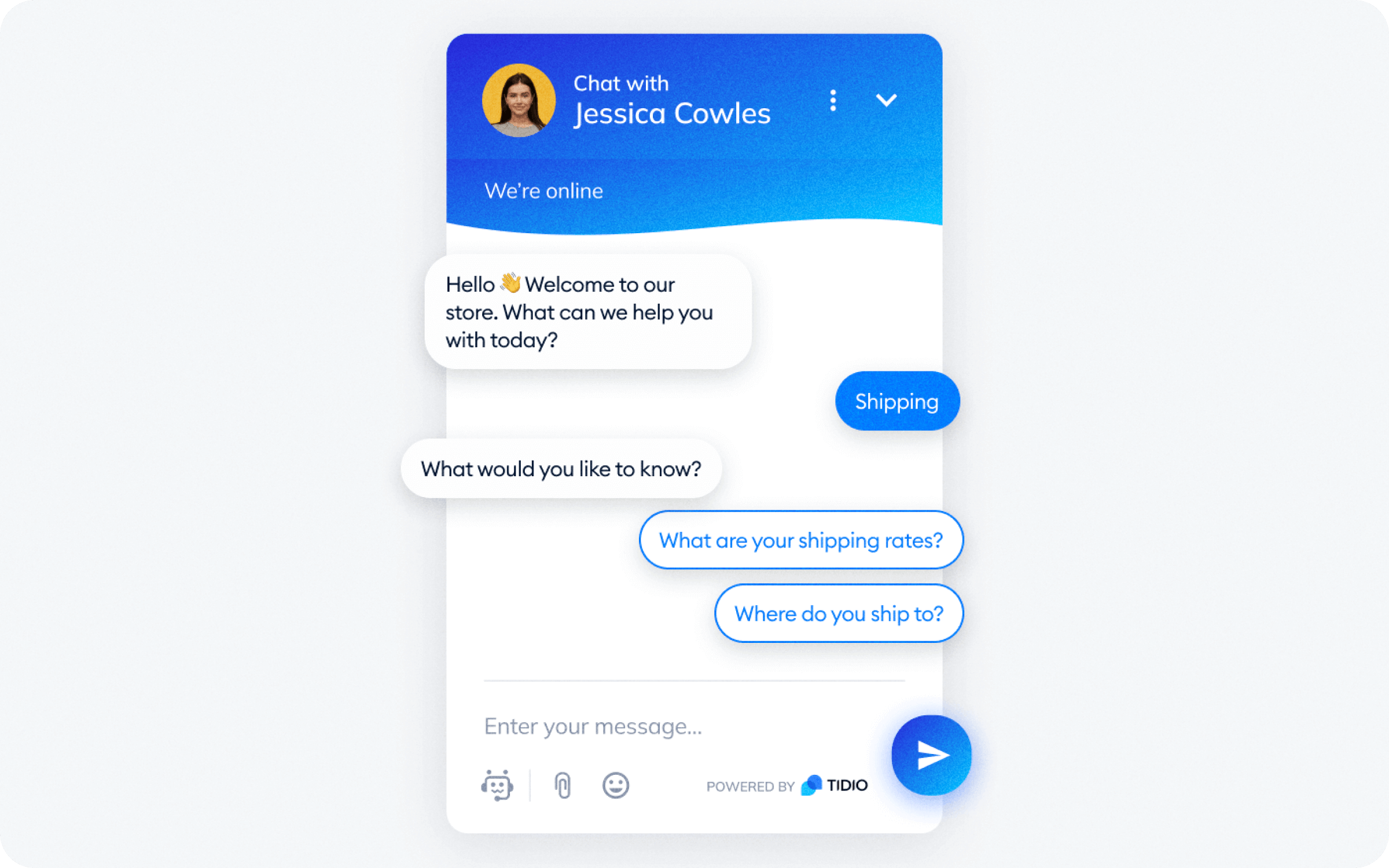
Tidio is a customer service platform that combines live chat, AI-powered chatbots, and automation into a single tool. Tidio's core AI offering is Lyro, its conversational AI agent built on Anthropic's Claude model. Trained on your support content, Lyro handles real-time customer inquiries automatically, without rigid scripts or predefined flows. It can resolve common ecommerce queries—order status, shipping policies, and product availability—and claims an average automated resolution rate of 67%. Lyro Actions allow the chatbot to act on behalf of customers, such as checking order status directly in Shopify, turning it from a Q&A bot into a more useful support tool.
The platform integrates seamlessly with Shopify, WooCommerce, Instagram, Facebook Messenger, WhatsApp, and email, giving ecommerce teams omnichannel coverage from one dashboard. It's a good option for growing ecommerce stores that want to handle customer interactions without juggling multiple platforms.
Key features:
- Lyro AI chatbot for automated resolution of customer inquiries in real time
- Lyro Actions: connects to Shopify and other tools to perform tasks within conversations
- Visual Flows builder for cart abandonment recovery, lead generation, and proactive engagement
- Omnichannel support: live chat, email, Instagram, Facebook Messenger, and WhatsApp
- Seamless human agent handoff with customizable escalation rules
- Real-time analytics and CSAT tracking for monitoring chatbot performance and customer satisfaction
- AI Copilot for context-aware reply suggestions for human agents
- Multilingual support across 45+ languages
Pricing: Free plan available (50 conversations lifetime). Paid plans start at $29/month. Add-on starts at $39/month for 50 conversations. Real-world cost for most ecommerce stores typically runs $100–$250/month when AI and automation are included.
Best for: Small to mid-sized ecommerce businesses that want an accessible, all-in-one AI chatbot and live chat platform to automate customer support, recover carts, and engage shoppers without high complexity or cost.
G2 rating: 4.6/5 (1,950 reviews)
6. Alhena AI
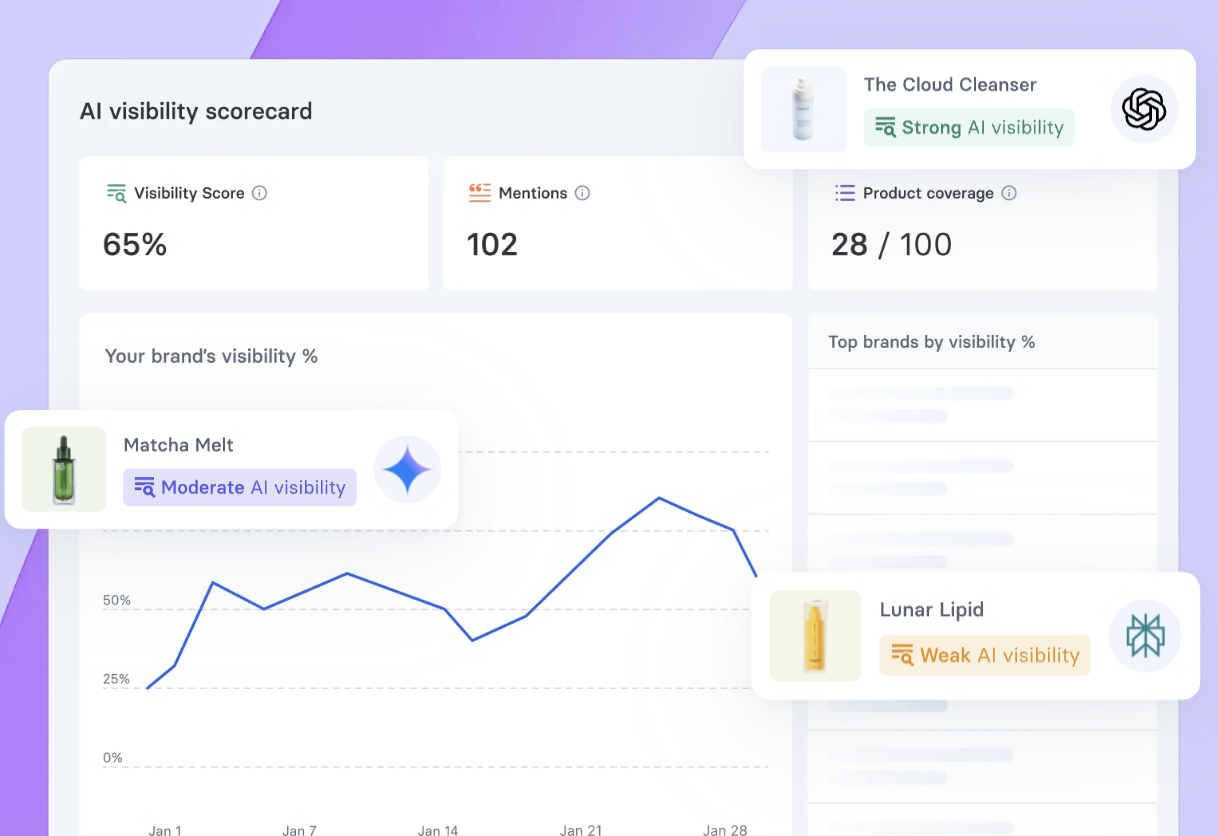
Alhena AI is a purpose-built AI shopping assistant designed to drive revenue. It auto-ingests a store's product catalog and connects to Shopify, WooCommerce, and custom tech stacks to power conversational product search.
The platform ties every conversation back to attributed revenue, showing which chats led to a purchase, so support and merchandising teams can see the direct commercial impact of the chatbot. It also includes vertical-specific tools like a skin analyzer, fit analyzer, and shade matcher for beauty and apparel brands, plus proactive upsell prompts triggered by browsing behavior.
Key features:
- Real-time integration with Shopify, WooCommerce, and custom ecommerce stacks
- Conversational product search and voice shopping
- Revenue attribution and average order value (AOV) tracking
- Vertical AI tools for beauty, fashion, and home categories
- Proactive upsell prompts to reduce cart abandonment
Pricing: Free for the first 25 conversations, then custom pricing based on volume.
Best for: DTC and enterprise ecommerce brands that want a chatbot to actively grow revenue.
G2 rating: 4.9/5 (39 reviews)
7. Tolstoy AI Shopper
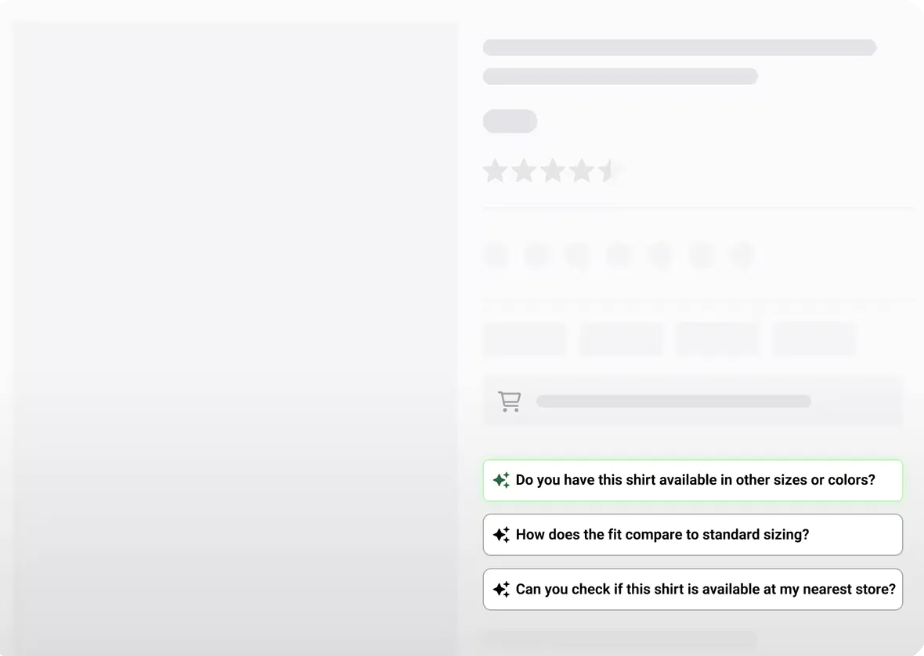
Tolstoy's AI Shopper is an AI sales agent built specifically for ecommerce and Shopify brands, designed to answer product questions, recommend items, and help close the sale in one continuous conversation instead of routing shoppers elsewhere.
For apparel and other fit-sensitive categories, its virtual try-on and measurement-based sizing recommendations address one of the biggest reasons online shoppers hesitate to buy. The assistant also surfaces automatically generated "top questions" directly on product pages, so common objections get answered before a shopper even opens the chat window.
Key features:
- AI-powered product search and recommendations
- Virtual try-on and measurement-based sizing guidance
- Automatically generated "top questions" on product pages
- In-chat add-to-cart, so shoppers never leave the conversation
- Native integrations with Shopify, Klaviyo, and Gorgias
Pricing: Contact sales for pricing.
Best for: Apparel and fit-sensitive ecommerce brands that want to reduce sizing-related hesitation and returns.
G2 rating: 4.7/5 (17 reviews)
8. Botpress
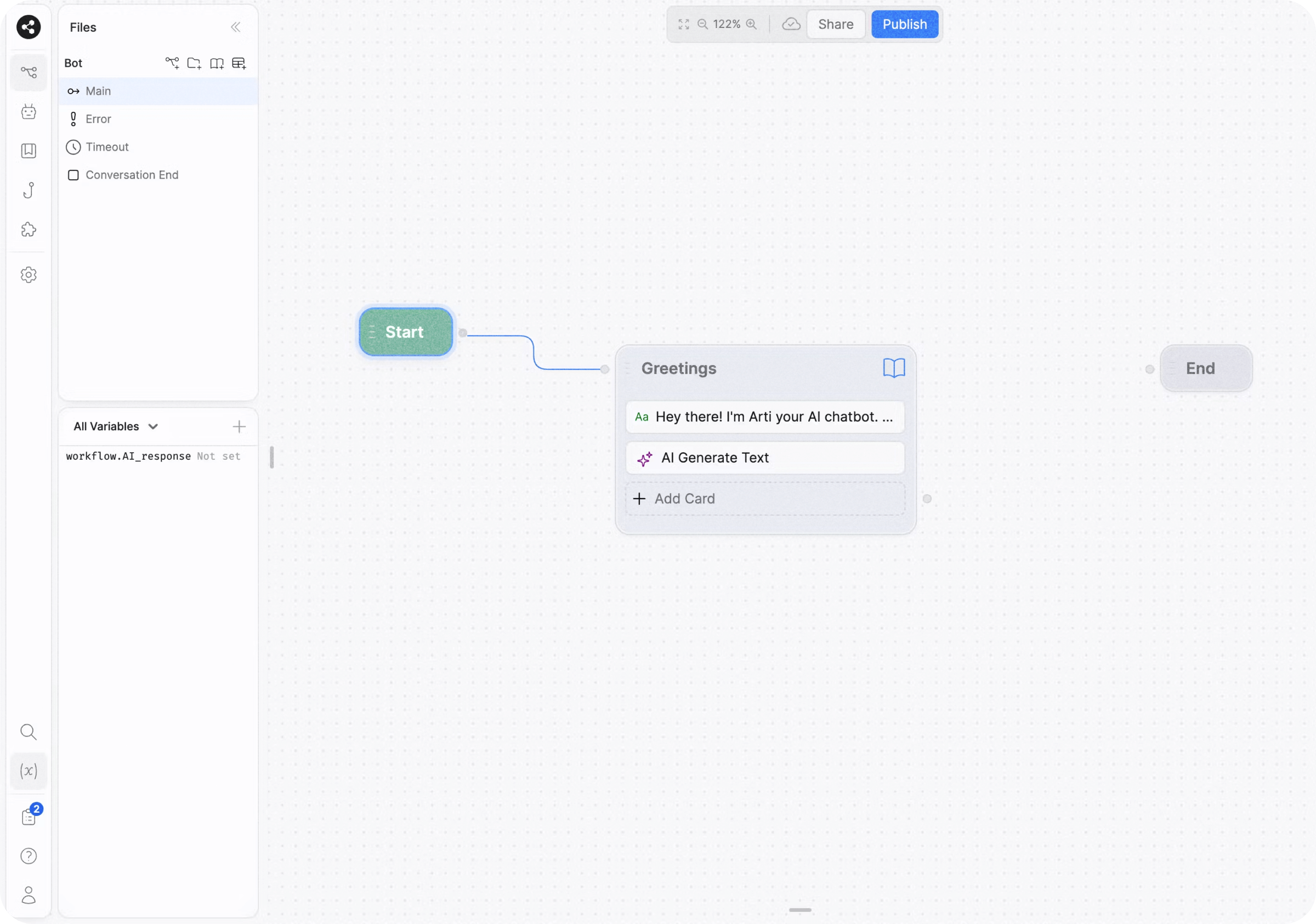
Botpress is an open-source AI chatbot platform that gives ecommerce businesses full control over their bot’s design and functionality. With scalable APIs, it’s ideal for developers or enterprises seeking maximum customization, multichannel capabilities, and great security in a flexible solution.
One of the best features of BotPress is its many integrations, enabling a business to connect seamlessly with all the popular ecommerce platforms, messaging apps, and email. This allows for multichannel engagement, helping you reach customers at any step in the journey to improve customer experience and conversions.
Key features:
- Multilingual support
- Drag-and-drop visual chatbot builder
- Maximum customization and extensibility
- Extensive educational resources and developer community
While Botpress is a powerful platform for creating a bespoke AI chatbot for ecommerce, it does require technical coding expertise to set up and maintain.
Pricing: Free plan available. Paid plans start at $499.
G2 rating: 4.5/5 (508 reviews)
9. ManyChat
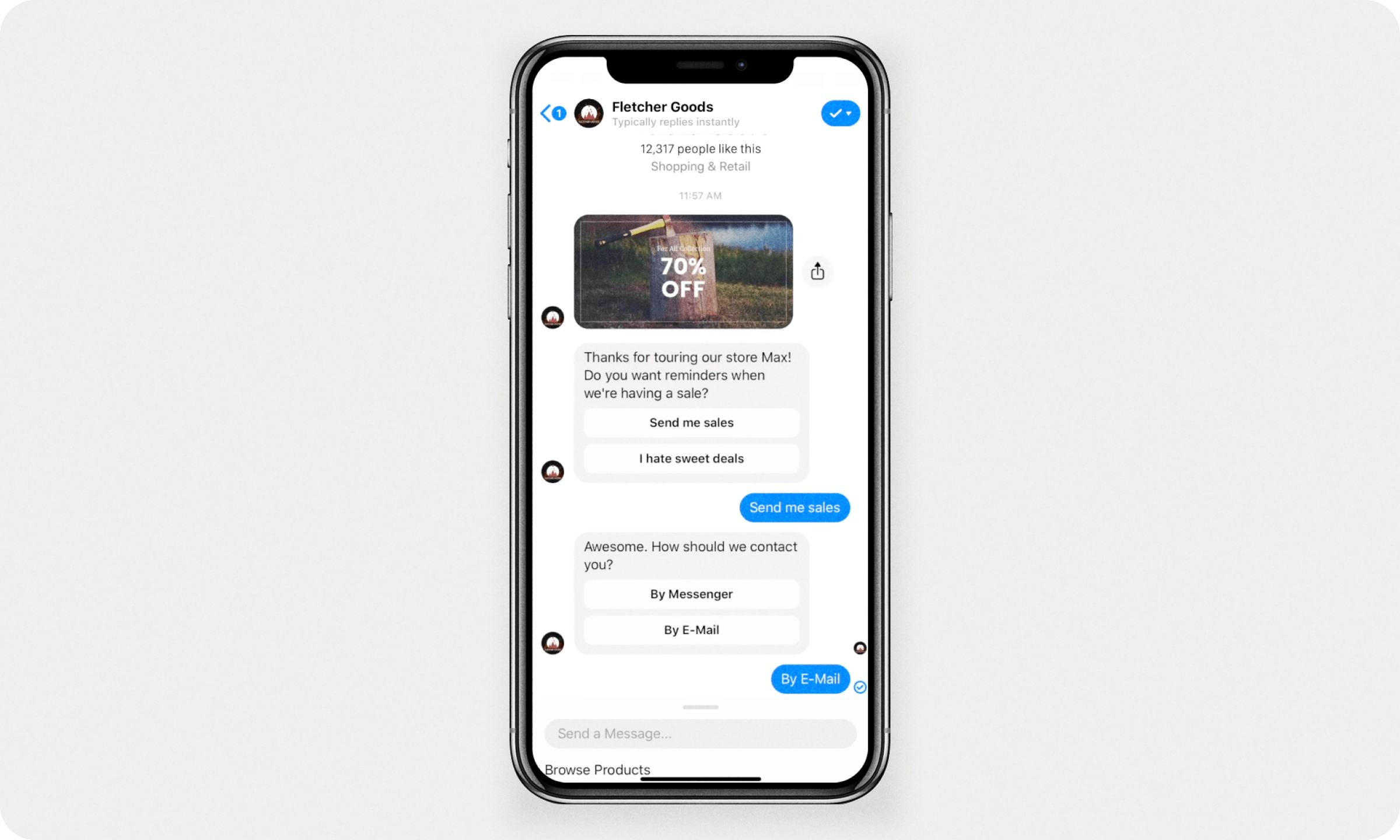
ManyChat is another no-code AI chatbot platform that specializes in helping businesses to engage customers on social media and messaging apps, particularly Facebook Messenger and Instagram.
With an easy-to-use visual chatbot builder, ManyChat is great for getting started quickly without any coding expertise. It allows a business to create in-app marketing campaigns, run promotions, manage orders, as well as qualify and generate leads.
Thanks to integrations with Shopify and other ecommerce platforms, the ecommerce AI chatbot enables a business to synchronize its product catalogs, customer data, and order information.
Key features:
- Automation for support and lead generation
- Easy-to-use chatbot builder
- Analytics and reporting
ManyChat is an excellent AI chatbot for social media ecommerce, but offers limited functionality for websites and mobile apps.
Pricing: Free plan available. Paid plans start at $15/month.
G2 rating: 4.5/5 (165 reviews)
Top use cases for AI chatbots for ecommerce
While traditional chatbots are limited to answering FAQs and sending emails, AI chatbots enable a business to automate and tailor customer engagement in new ways to drive growth.
Specifically, you can:
1. Make personalized recommendations
Acting as a personal shopping assistant, AI chatbots can suggest products based on user behavior and history to guide product discovery and purchasing.
For example, the chatbot could ask questions about sizing, product variants, or pricing to hone in on exactly what customers want before making tailored suggestions.
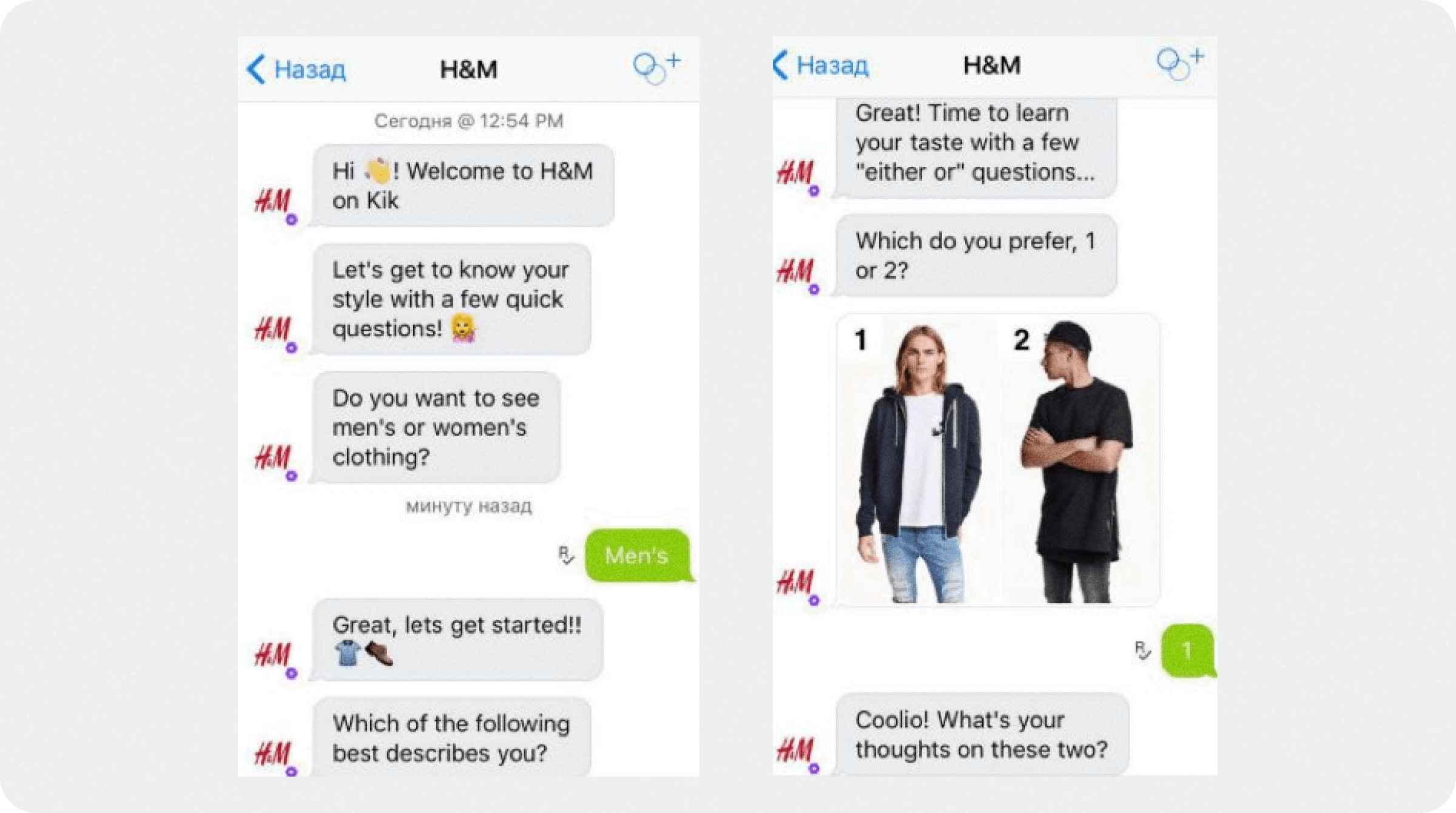
By helping shoppers find the perfect product, AI chatbots help to increase conversions, upsells and cross-sells, and even shorten the sales cycle. After all, 80% of shoppers say they’re more likely to purchase from brands that offer a personalized experience.
2. Generate leads
Once integrated with your CRM, AI chatbots are a lead generation engine. After the chatbot initiates a conversation with a website visitor, it can collect customer information such as name and email address. It can also prompt them to sign up for your mailing list, join your loyalty program, or promote a limited-time offer.
In fact, studies show that 55% of companies report an increase in high quality leads with AI chatbots.
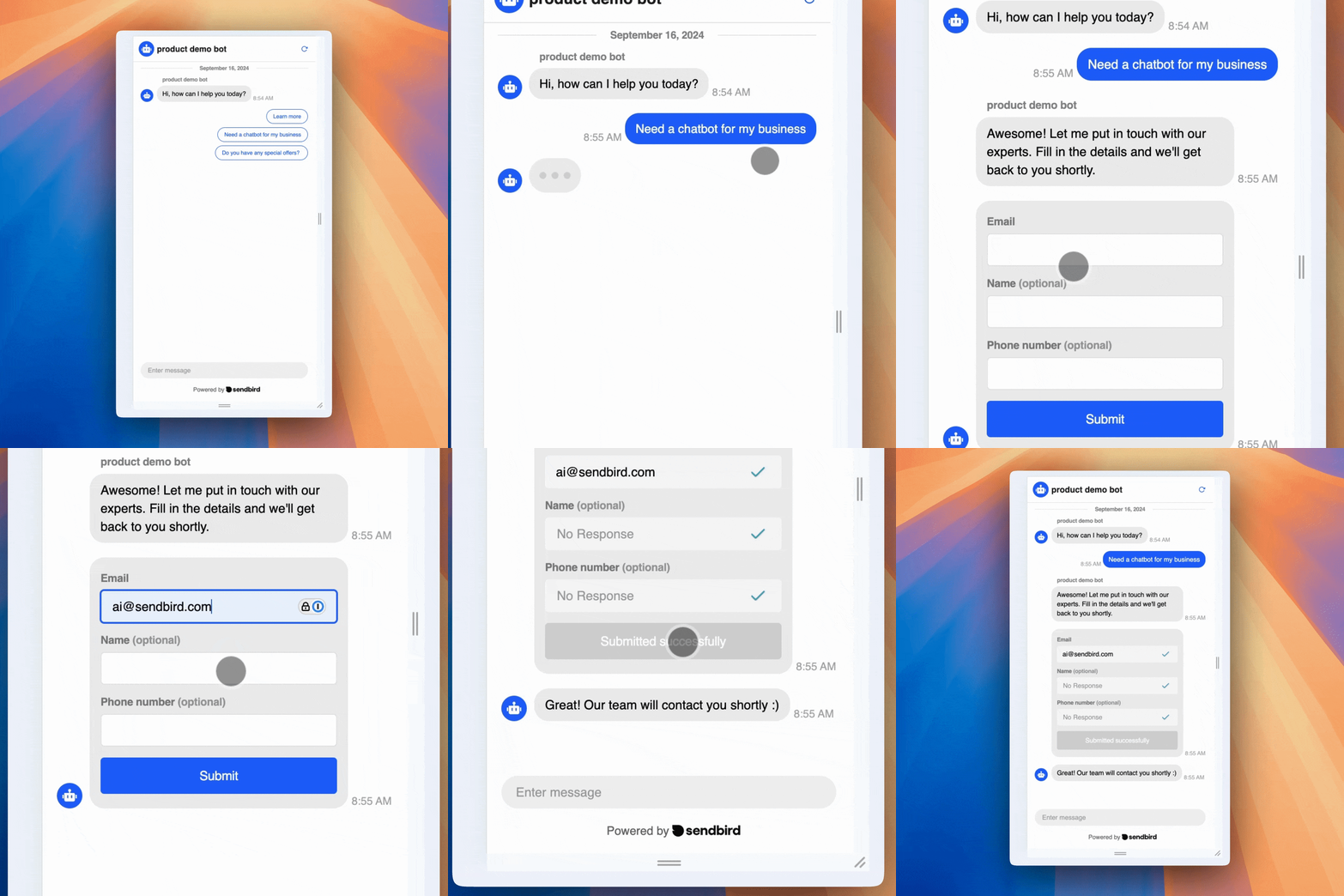
AI chatbots can also qualify leads as it engages them, syncing customer data with your CRM to enable a more personalized approach to sales and customer engagement.
3. Prevent cart abandonment
AI chatbots can proactively engage shoppers to stop them from leaving their cart behind, or bring them back once they have. In fact, Sephora saw an 11% increase in conversions with its ecommerce AI chatbot on Facebook Messenger.
Say a visitor is stalled on your checkout page, or is exiting the page. The chatbot can appear to nudge them to complete checkout, or present them with a special offer for a discount code, free shipping, or sharing exchange policies to ease their anxiety and close the sale.
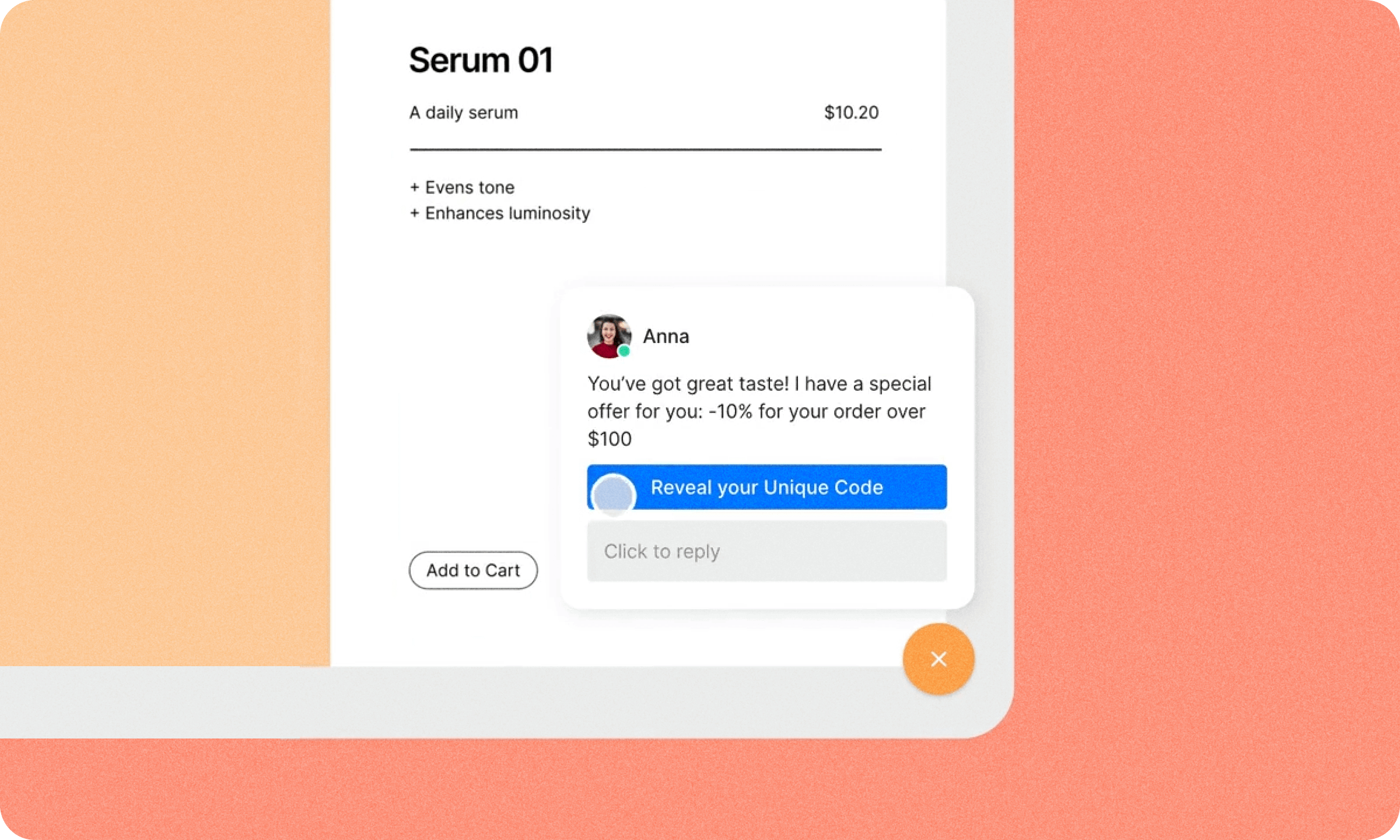
What if the user has already abandoned their cart? Chatbots integrated across your social accounts, website, or mobile app can trigger push notifications, in-app messages, or emails from marketing tools to entice users back.
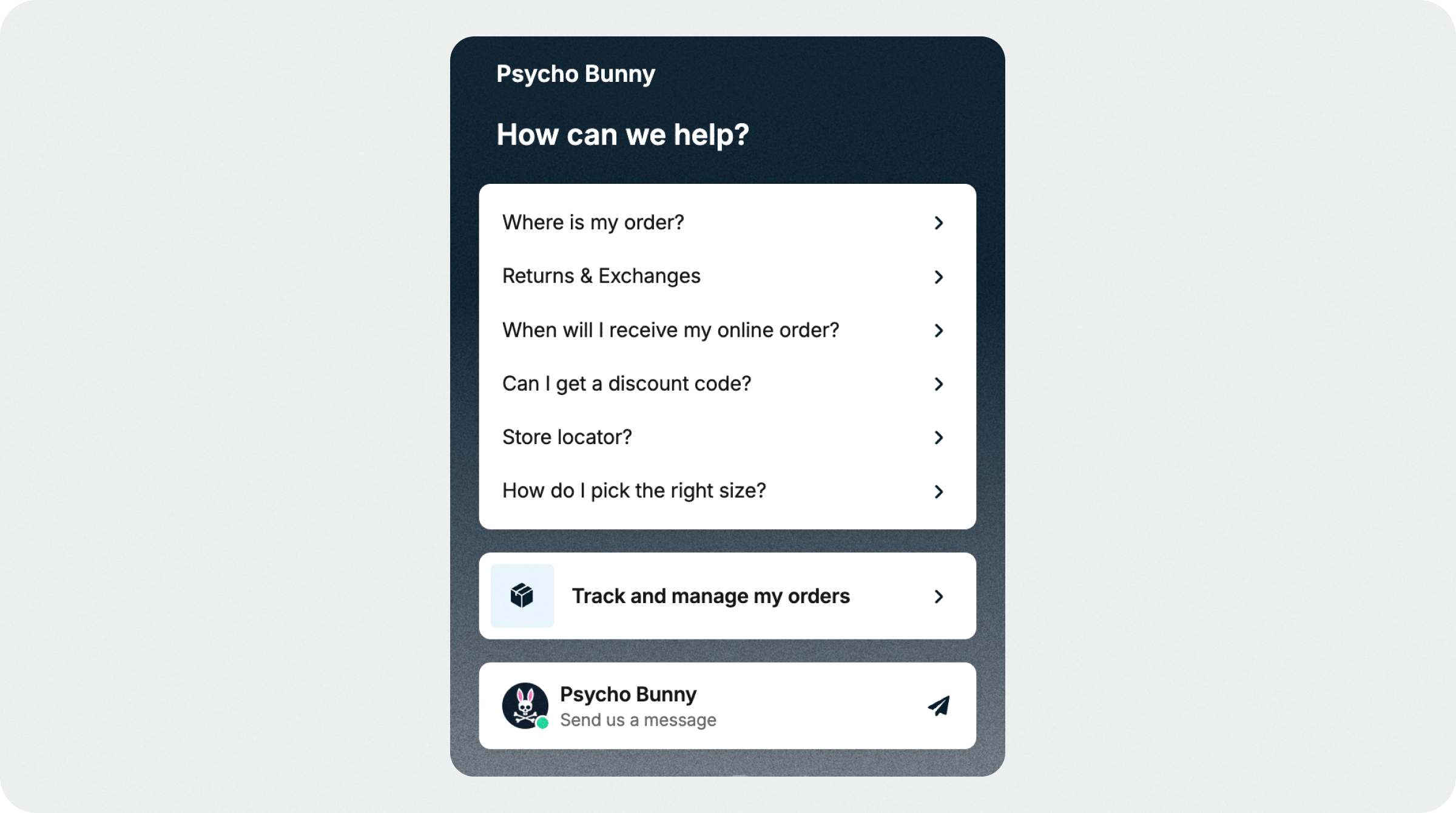
4. Provide instant customer support
AI is available 24/7 on your website, mobile app, or social channels, meaning they can provide immediate high-quality customer support. This includes managing orders, answering product questions, handling payments, and, if needed, making a seamless bot to agent handoff.
Since 76% of shoppers would rather use self-serve resources before contacting a support rep, this improves the overall speed and quality of customer support while freeing up human agents for more complex tasks.
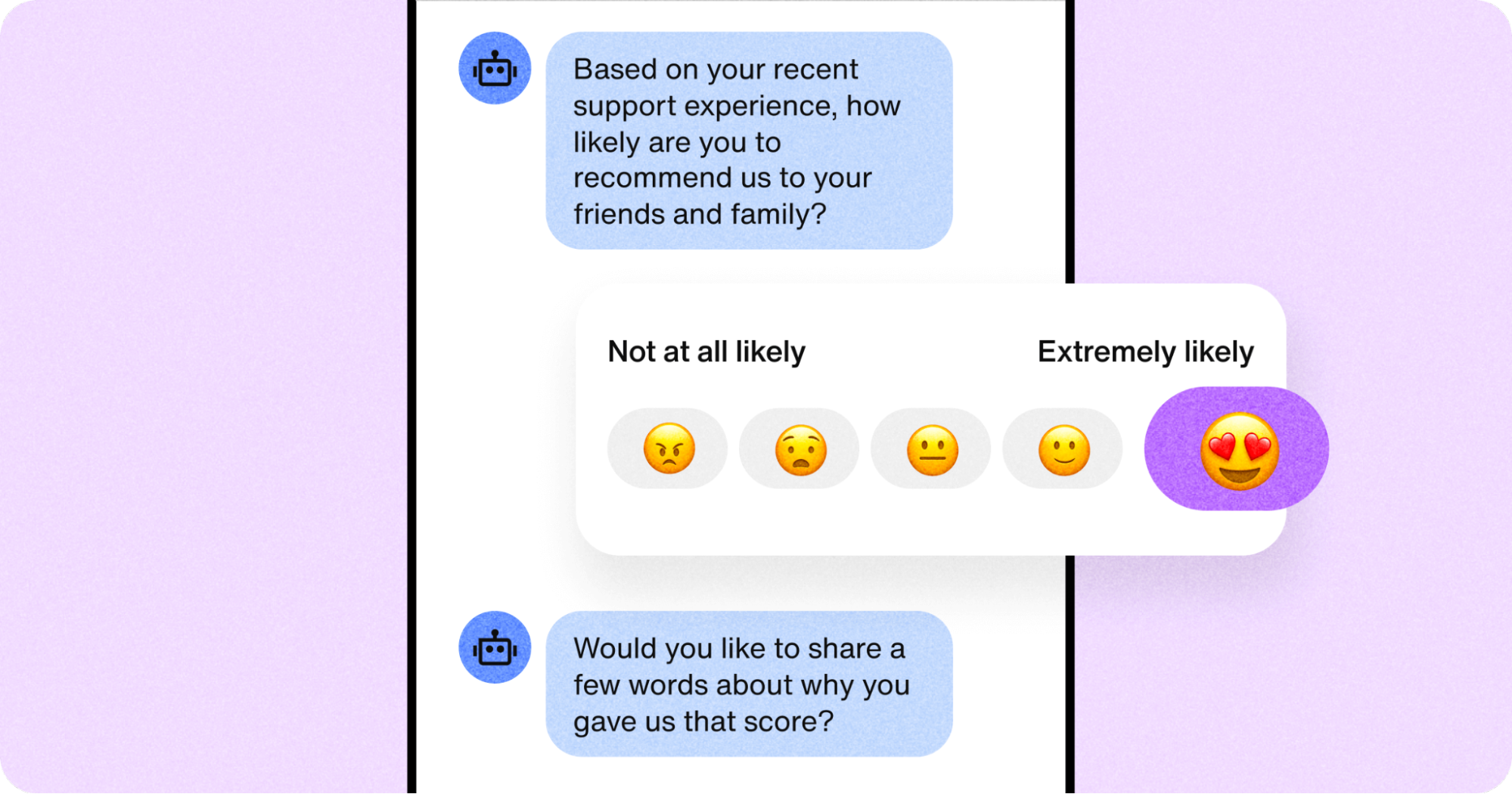
5. Collect customer feedback
AI chatbots are in a perfect position to gather data about customers and their shopping experience. They can do this through surveys, polls, live chats, or rating forms that collect customers’ opinions during the shopping journey or post-purchase.
Gathering this data enables a business to discover customer insights, identify areas of improvement, and create a more complete customer profile without manual effort.
6. Improve the customer experience
By automating and personalizing interactions, AI chatbots help shoppers reach their goals faster while making the buying journey feel more personal and effortless. Ready 24/7 with proactive support, they show customers your brand is reliable and attentive to their needs.
Beyond the added accessibility and convenience, AI chatbots help create a shopping experience that’s unique to each customer. This brings a friendly, conversational layer to your digital experience that helps you stand out from competitors while fostering loyalty and lasting relationships.
Now that you’re familiar with how to use AI chatbots for ecommerce, here are the key features to look for so you can ensure peak functionality and highest ROI.
Key features of AI chatbots for ecommerce
CRM integrations
The best AI chatbots for ecommerce will integrate seamlessly with your CRM, Shopify store, database, and third-party tools. This allows the bot to update customer profiles, trigger emails or in-app messages, and personalize interaction using first-party data—all while feeding insights back to your stack to monitor and improve performance.
Omnichannel support
These days, customers shop and seek support across many channels. To maximize your reach, the AI chatbot should be accessible on your website, mobile app, as well as social channels like Facebook Messenger, Instagram, WhatsApp, and other channels your customers frequent.
Omnichannel support also enables cross-channel follow-up, such as triggering an email after a lead inquiry about a product on WhatsApp, or a reminder message after the shopper abandons their cart.
The latest AI technology
Chatbot performance can vary widely depending on the quality of the AI. That’s why the best AI chatbots for ecommerce are powered by large language models like Open AI's ChatGPT, Google's Claude, or Llama by Meta.
AI governance and trust
A chatbot that answers quickly isn't useful if you can't tell when it's wrong. Before choosing a chatbot, ask how it handles the moments an AI shouldn't answer on its own. Does it flag low-confidence responses for review, keep a record of what it said and why, and hand off to a person when a request needs judgment instead of automation?
This is what an AI governance layer, sometimes called a "trust" or "observability" layer, is built for. Delight.ai's Trust OS, for example, automatically flags responses that may be inaccurate or off-brand, keeps a timestamped record of every AI decision for troubleshooting and compliance, and lets a support team pause the AI instantly without losing its configuration. Look for the same categories of control in any chatbot you evaluate, regardless of vendor.
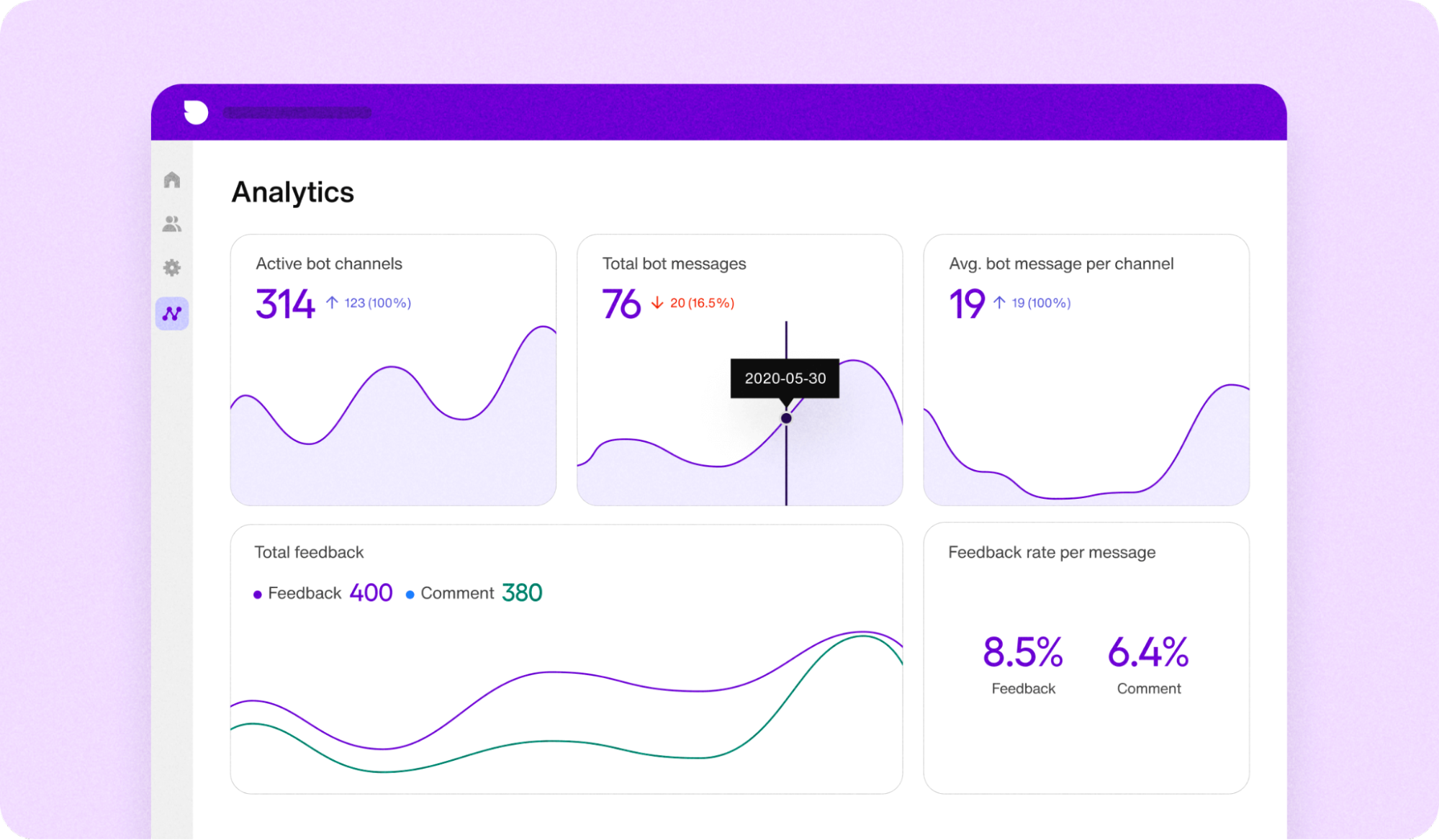
Advanced analytics
Advanced analytics allow you to monitor performance, track engagement, but also get deep insights into chatbot interactions to gather valuable insights. For example, a custom AI chatbot for ecommerce will allow you to see:
- How often your chatbot detects a particular customer sentiment, and escalates the customer to a live agent
- How often your chatbot fetches data from your CRM, or stores a certain type of customer data
- Which offers your chatbot provides to customers based on their behavior, such as a coupon after cart abandonment
When you can easily track the details of how customers interact with your ecommerce AI chatbot, you can make granular data-driven decisions to achieve the highest ROI.
Now let’s take a look at the best AI chatbots for ecommerce.
Best practices for ecommerce AI chatbots
Enable real-time data syncing
To be effective, AI chatbots must be synced with both your customer data as well as your internal information sources. For example, your chatbot needs to know about product availability in real-time, pricing changes, and marketing promotions to be most helpful.
Integrating your AI chatbot with your website, CRM, and third-party tools like Zapier or Salesforce is what allows it to automate processes and serve as a catch-all 24/7 resource for any customer request.
Train your chatbot
The best AI chatbots for ecommerce are custom-trained before launch. This equips the bot with your unique business information so it can provide the most accurate and helpful answers. For example, a no-code chatbot builder should make it easy to upload and train the bot on product and company information like spec sheets, pricing, shipping and exchange policies, and more.
Customize it
Since your AI chatbot is an extension of your business, you’ll want to customize its appearance and personality to match your brand. A quality custom AI chatbot builder will allow you to fully customize the look, feel, and tone of voice of your bot without coding.
Consider pre-set responses
A major benefit of AI chatbots is that they can engage customers in human-like conversation using their natural language processing capabilities. In fact, most AI chatbots run on large language models (LLMs) like ChatGPT.
However, even though LLMs can create their own conversation flows, you may want to pre-define answers to certain business-critical questions. By prescribing answers to key questions in advance, you ensure customers get the perfect answer while creating a truly unique brand experience.
Monitor performance and optimize
While it’s easy to build and launch an AI chatbot, it’s crucial to monitor and optimize your chatbot to achieve the best ROI.
This starts by checking the bot’s responses for accuracy and relevance to ensure it provides a satisfying interaction for key use cases like support, payment, or recommendations.
After launch, monitoring bot performance and engagement with key KPIs is key to ensuring a successful chatbot project and campaign.
It’s easy to launch an AI chatbot for ecommerce
Much like the rise to free shipping in years past, AI chatbots and agents are fast-becoming a must-have feature of ecommerce stores that want to stay competitive and keep up with customer expectations.
If you want to add AI agents to your ecommerce experience, delight.ai can help. Leverage AI agent software integrations, including Zendesk and Confluence, and build a custom AI agent to streamline business operations and deliver exceptional AI customer service.
Contact us today to get started!