The question most enterprise AI teams are asking is: "What can our AI do?" The question most haven't asked is: "Have our customers said yes?" The gap between those two questions is where deployments fail. Not because the technology misfired, but because the AI ran ahead of the permission that authorizes it to act.
We surveyed 1,001 U.S. consumers across five industries for the 2026 Delight AI Index, and the permission picture is concrete. 47% of consumers want to stay in control and approve AI actions before they execute. Only 16% are comfortable with AI acting without any approval step. Most enterprise AI is deployed well beyond what most consumers have explicitly said yes to — and the distance between those two positions is where deployments break down.
This is not a technology problem. It is a human-in-the-loop design problem, and it is solvable with the same precision that enterprise teams apply to any infrastructure challenge. The first step is understanding what "human in the loop" actually means in a production AI system, as opposed to its academic definition.
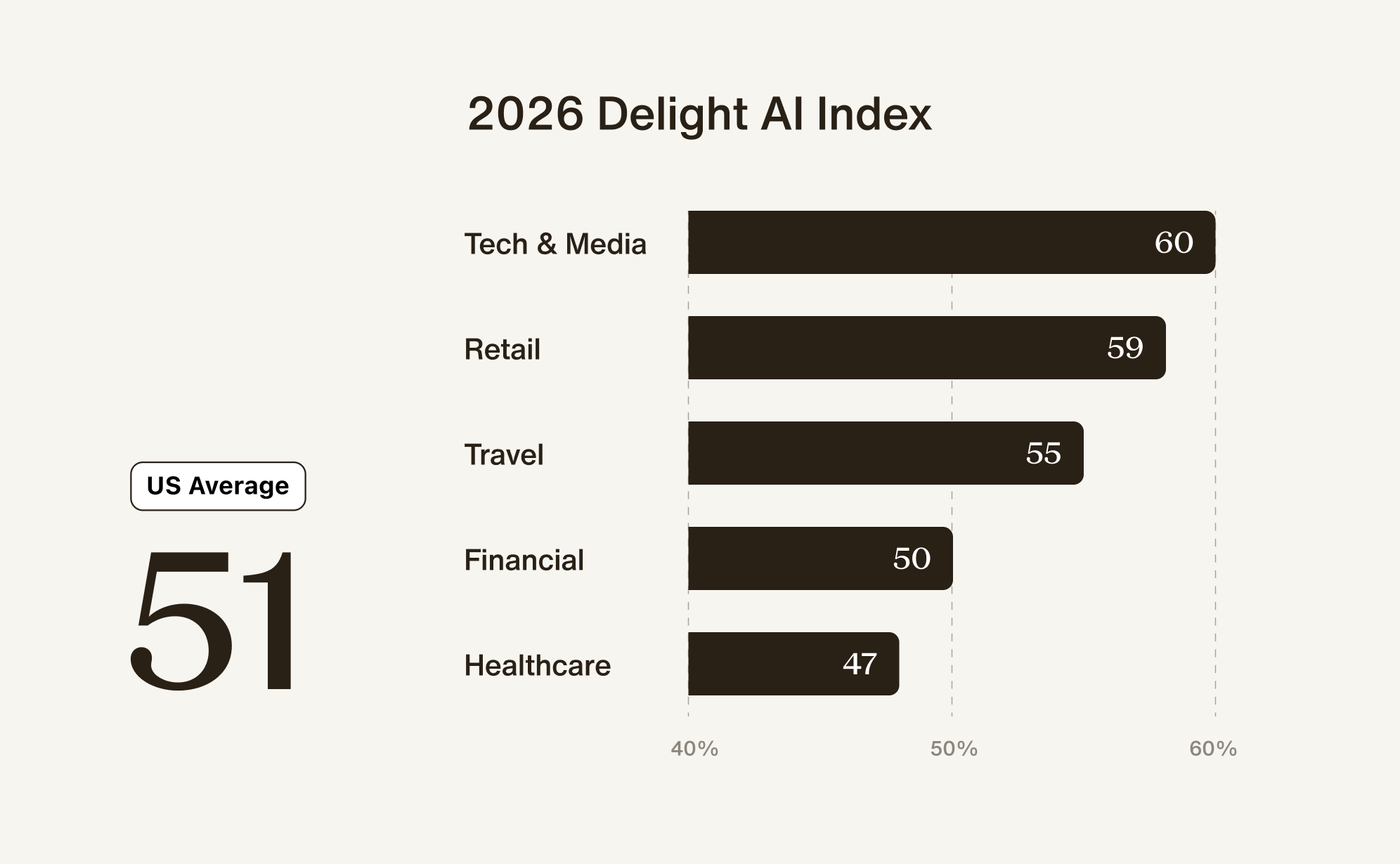
The U.S. AI Delight Score sits at 51: a tipping point. Functional expectations are being partially met, but emotional connection is lagging. The data makes it clear that consumers aren't rejecting AI. They are granting it permission in stages. Understanding where those stages sit, and where most enterprise AI assumes they are, is the starting point for closing the gap.
The AI permission curve
Consumer trust in AI is not a binary state. It follows a predictable curve, from answering questions to acting autonomously. Each stage carries different comfort levels, different design requirements, and different failure modes. Most enterprise AI is deployed at the top of the curve while most customers sit somewhere in the middle, waiting on infrastructure that was never built.
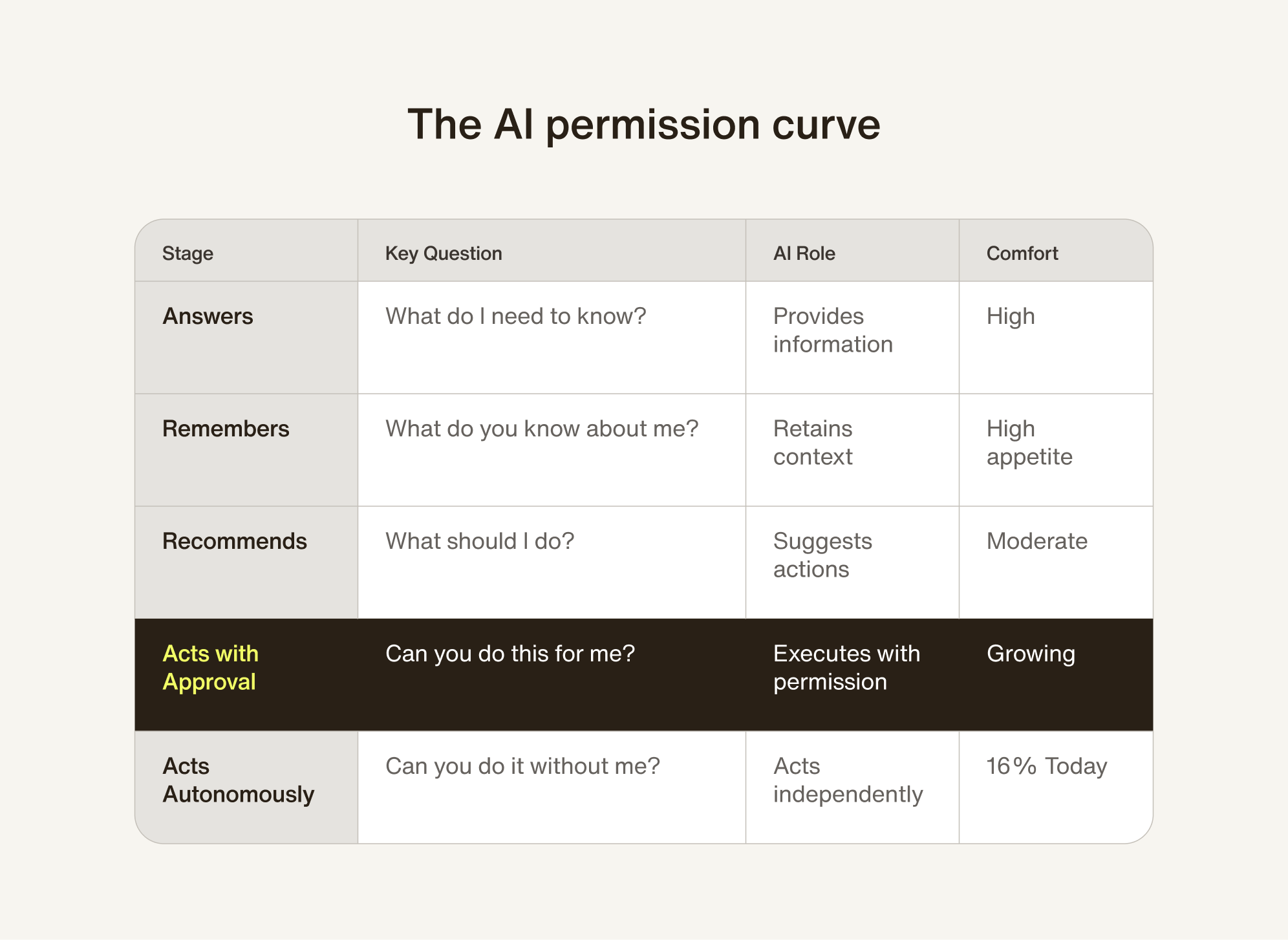
Acts with Approval is the most important deployment target for 2026. It is where the majority of consumer permission exists for consequential actions, and it is the stage most brands skip entirely, jumping from Recommends to Acts Autonomously without the confirmation infrastructure that earns the right to go further.
When it comes to refunds, billing disputes, health-related questions, and any interaction where money or safety is involved, consumers swing hard toward human involvement. The division of labor is clear: AI wins routine. Humans win risk, emotion, and high-stakes decisions. Getting that boundary wrong doesn't just lose a transaction: it loses the customer's willingness to engage with AI at all.
Ready to map where your AI sits on the Permission Curve? See the framework →
What human in the loop actually means in production
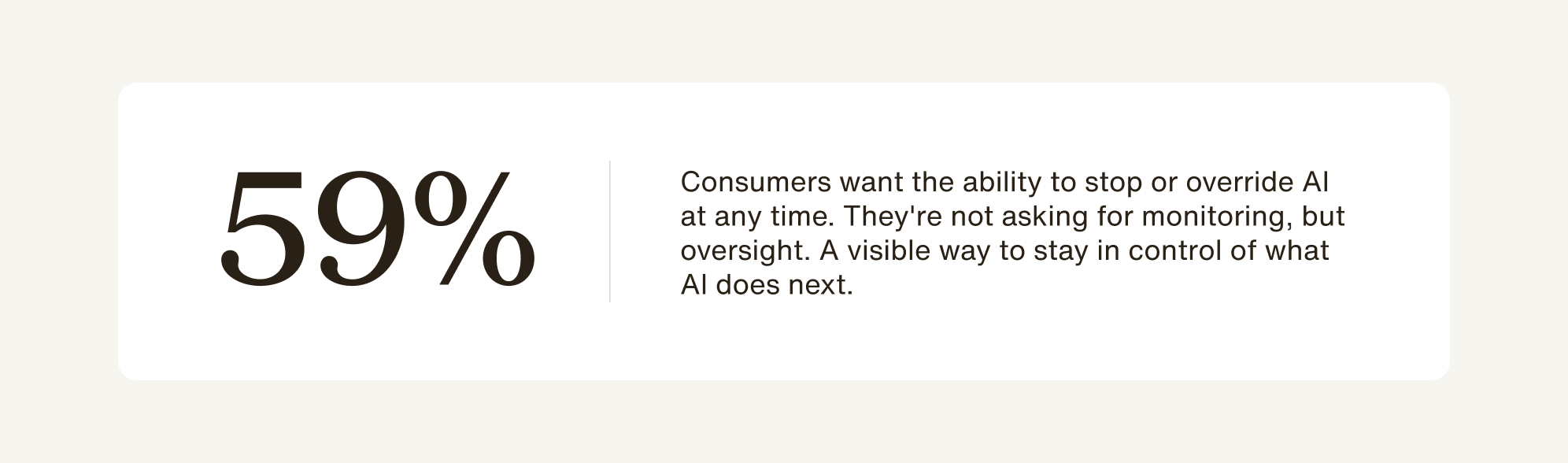
In academic and policy contexts, "human in the loop" typically refers to a human reviewing AI outputs before they are acted upon. In a production customer service system, that definition is too blunt to be useful. The relevant question is not whether a human reviews the output, but whether the consumer has visibility into what is about to happen and a genuine mechanism to stop or redirect it.
Human-in-the-loop AI in production requires three things that are distinct and all necessary.
- Visibility: the consumer can see what the AI intends to do before it happens.
- A real confirmation step: "act on my behalf" requires an actual signal from the consumer, not a passive opt-out or buried consent.
- A genuine undo mechanism: the ability to reverse the action is visible, accessible, and functional, not decorative.
Most enterprise AI deployments have none of these three things at the action layer. The AI executes, a log entry is written, and the consumer finds out afterward. That architecture produces exactly the trust numbers the Index found: 83% of consumers hold the brand accountable when AI makes a mistake, and 72% rank "wrong decisions" as their top concern about AI handling customer service autonomously.
The implication is operational, not philosophical. Build the rollback mechanism before you build the action. Wire the confirmation screen before you deploy the automation. The brands doing this consistently see higher consumer willingness to grant Stage 4 permission.
AI oversight is not the same as AI monitoring
These terms are often used interchangeably in product and engineering discussions. They address different problems, and conflating them is one of the most common reasons AI governance fails to move consumer trust.
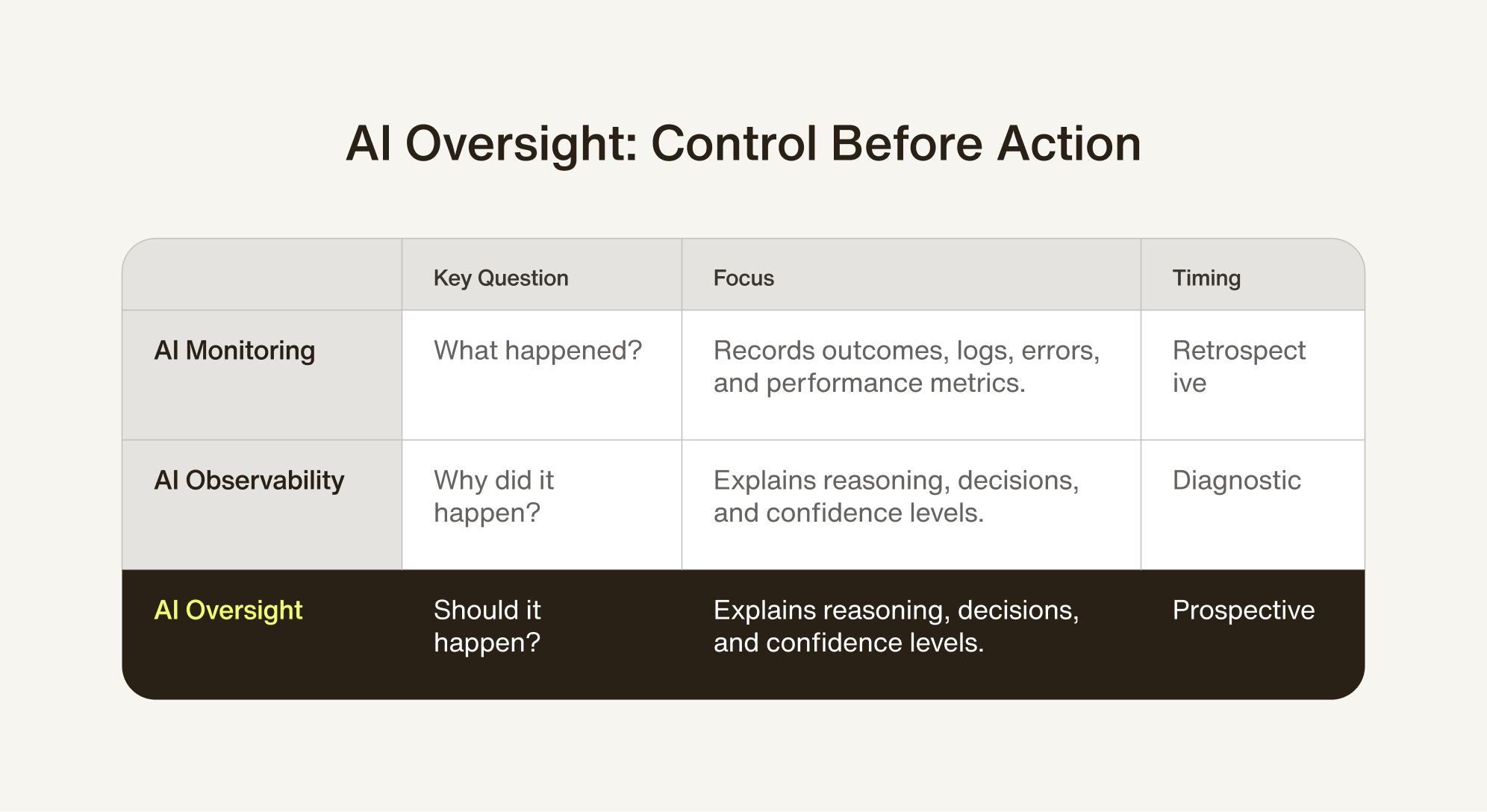
AI monitoring and observability tell you what went wrong and help you fix it, after the consumer has already had the experience. AI oversight operates before. It is the infrastructure that keeps AI inside the zone of consumer consent at the moment of action, not in the post-mortem. Trust OS is built around this distinction: permission gates, staged rollouts, and approval checkpoints that operate at the action layer, not the log layer.
Three design decisions that move consumers up the curve
The permission gap is not a data problem. Most brands know their AI is capable of operating at Acts with Approval or Acts Autonomously. What they are missing is the infrastructure that makes consumers willing to grant that permission. The AI Permission Curve worksheet maps exactly where your deployment sits today.
1. Build undo before you build action.
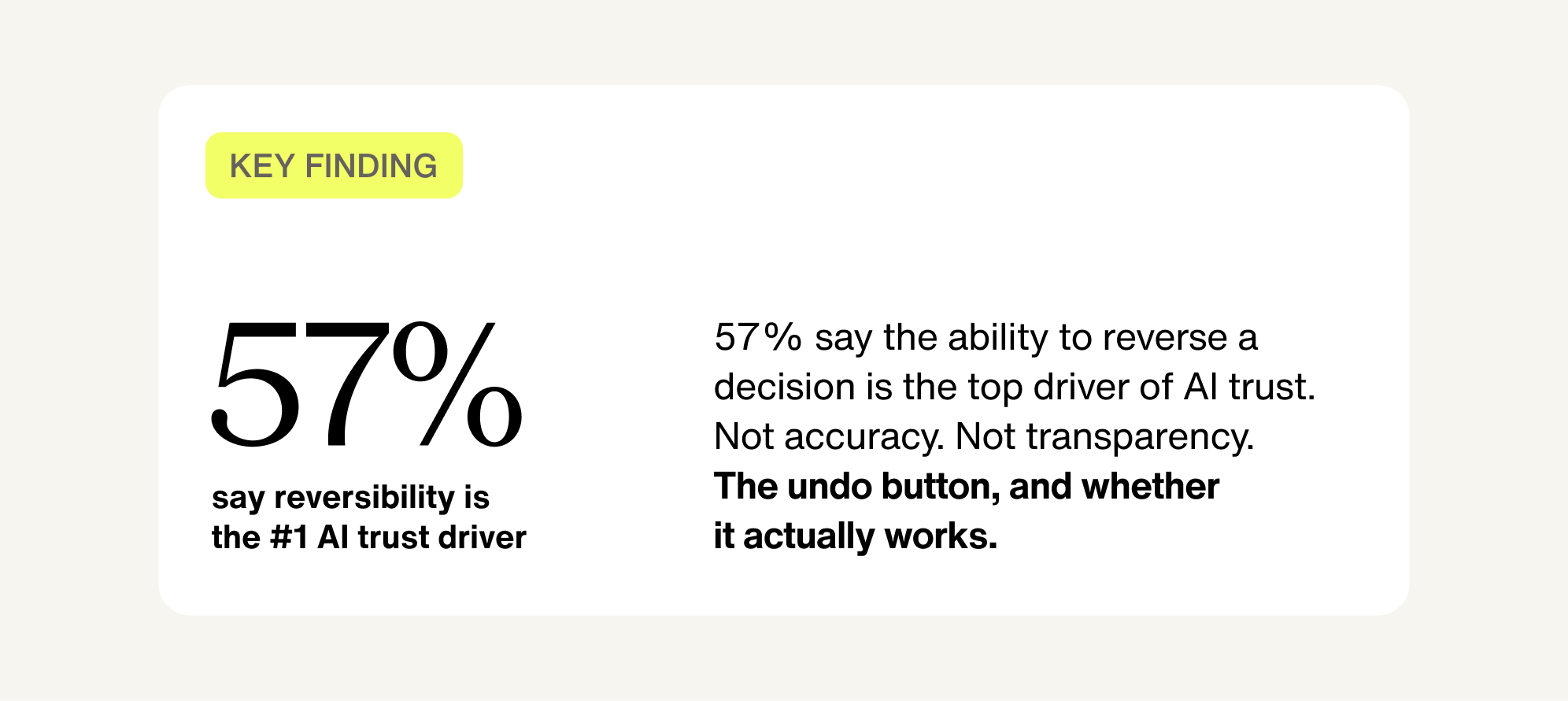
Reversibility is the number one trust driver in the entire Index, ranking above both accuracy and transparency. If consumers know they can take it back, they let AI go further. The mechanism has to be real and visible: a one-tap undo screen, a clear confirmation state, and a genuine rollback path. Use Gradual Rollout to validate changes against live traffic before committing, Dynamic Safeguards to contain high-stakes actions with context-aware fallbacks, and Desk AI Copilot to provide a clear escalation path to a human when the AI reaches its limit.
2. Show your reasoning before you act.
Consumers grant more autonomy when they can see the plan. "Based on your last order, I'm recommending X" dramatically outperforms a blank recommendation. "Here's what I'm about to do and why" outperforms silent execution at every stage. Thinking Messages make this concrete: real-time status updates while the AI works, so consumers always know what is happening. Activity Log 2.0 extends the same transparency internally, with full reasoning traces for every agent response. This is the mechanism that moves consumers from Recommends to Acts with Approval. When AI shows its reasoning, consumers feel in control even when they choose not to override.
3. Earn the next stage. Don't declare it.
Consumers don't grant Acts with Approval or Acts Autonomously permission because the capability exists. They grant it because the brand demonstrated competence and transparency at Answers and Recommends over time. Trust OS tracks this evidence: every conversation where AI performed accurately, every action the consumer confirmed. Human evaluators define what good looks like. Zero-Touch Improvement closes the loop autonomously, with human oversight built in. The result is an agent that earns full autonomy one proven decision at a time.
AI governance that scales with trust
Human-in-the-loop AI is not a permanent state. It is the starting architecture for systems that earn the right to operate autonomously. The governance layer that makes this work tracks evidence, not just rules: every confirmed action, every accurate resolution, every consumer who chose not to override.
The permission picture differs by industry. Where your vertical sits determines where you should start on the curve:
- Tech & media (60) — leads on AI trust; consumers most comfortable with autonomous action
- Retail (59) — at the inflection point; recommendations accepted, autonomous purchasing needs confirmation
- Travel (55) — moving fastest toward Acts with Approval; most to gain from closing the permission gap
- Financial services (50) — trust earned transaction by transaction; any action involving money requires explicit sign-off
- Healthcare (47) — furthest to close; consumers want AI to inform, not act without a visible human in the loop
Trust OS is built to govern at any stage, across any vertical.
The U.S. AI Delight Score of 51 reflects a system still catching up to where consumers are willing to go. The AI Permission Curve is the framework for closing that gap, one confirmed action at a time.